
Botox® Developer Regrets Missed Opportunity to Mint Money

Botox® is one of the most recognizable drugs in the world, but its inventor, Dr. Alan Scott, has openly shared that he regrets selling the rights long before it became a household name. In a 2012 Times of India interview, Dr. Scott explained that if he had known how big Botox® would become, he would have never sold the rights to Allergan back in 1991. At the time, the $4.5 million deal felt fair—“satisfactory,” as he put it—but as the drug’s global growth skyrocketed, he later reflected that he could have been “making a billion dollars a year now.”

Before Botox® became synonymous with wrinkle reduction, it had a very different purpose. In 1989, it was originally approved to treat two eye muscle disorders: uncontrollable blinking and misaligned eyes. The formulation worked by relaxing overactive muscles, which opened the door for a wide range of future applications. Today, that same mechanism makes Botox® effective for both cosmetic treatments, like smoothing facial lines, and therapeutic uses, including muscle spasms and swallowing issues.

When Dr. Scott first developed the product, then named Oculinum, he didn’t anticipate its potential as an aesthetic treatment. That turning point emerged in 1992 when Canadian ophthalmologist Jean Carruthers noticed her patients’ frown lines fading as a side effect. Roughly a decade later, the FDA officially approved Botox® for improving frown lines, marking a major milestone that shifted the landscape of cosmetic medicine.

How Botox® Opened the Door for Other Toxins


The FDA’s approval of Botox® didn’t just validate its cosmetic and therapeutic uses—it paved the way for other botulinum toxins to enter the market. Each formulation carries its own characteristics, approval timeline, and clinical uses, giving providers a broader toolbox to meet different patient needs.

Dysport®, for example, was approved by the FDA in 2009. Initially used to treat cervical dystonia, it was also cleared for improving moderate to severe glabellar lines in adults under 65. Its diffusion properties and dosing differences make it a popular alternative for certain patients and treatment areas.

A year later, the FDA approved Xeomin®, created by Merz Pharmaceuticals. Like Botox®, it treats frown lines, but it was first cleared for medical conditions such as blepharospasm (involuntary blinking) and cervical dystonia. Xeomin® is also known for being formulated without accessory proteins, which some clinicians appreciate for its “purified” profile.

Most recently, Jeuveau® entered the market in 2019 as another FDA-approved treatment for glabellar lines. Nicknamed a “cheaper rival to Botox®” when it launched, Jeuveau® quickly became a competitive option for providers focusing on aesthetic-only treatments.

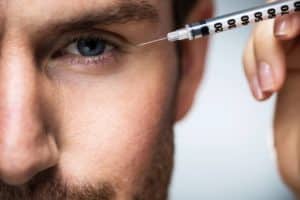
Training for Healthcare Professionals


With the rise of multiple botulinum toxin brands and formulations, proper training has become essential for safe and effective treatment. The American Academy of Facial Esthetics (AAFE) offers comprehensive courses in botulinum toxin and dermal fillers, teaching healthcare professionals how to inject using anatomical precision and proven safety protocols.

These courses provide hands-on experience, clinical guidance, and a deep understanding of how each toxin—Botox®, Dysport®, Xeomin®, and Jeuveau®—behaves in the body. For practitioners looking to expand their services, this training adds valuable skills that enhance patient care and increase practice offerings.

If you’re a healthcare professional interested in broadening your expertise, AAFE’s courses offer a clear path to mastering modern injectable techniques. Register for a course to learn more about the various botulinum toxins and gain the confidence to perform safe, effective injections.

👋 Have a question? Get instant answers here!
×
Start a Conversation ×