Bootox & Treat - Save Up to $500 on AAFE Training
Choose your course or Flex bundle, lock in your savings, and train on your timeline.
OCTOBER 19–31 ONLY!


Jaw pain can turn breakfast, a phone call, or a routine dental visit into work. Botox for TMJ may help when overactive jaw muscles drive that pain [3] [4] [5]. Yet temporomandibular disorders (TMD) include more than 30 conditions and affect an estimated 5% to 10% of U.S. adults, so a clear diagnosis must come first [6].
| Quick answer: Botox for TMJ may ease muscle-led pain, tension, and strong clenching in selected patients [3] [4] [5]. The injection temporarily lowers activity in targeted chewing muscles. It cannot correct disc displacement, arthritis, joint inflammation, or structural locking. |
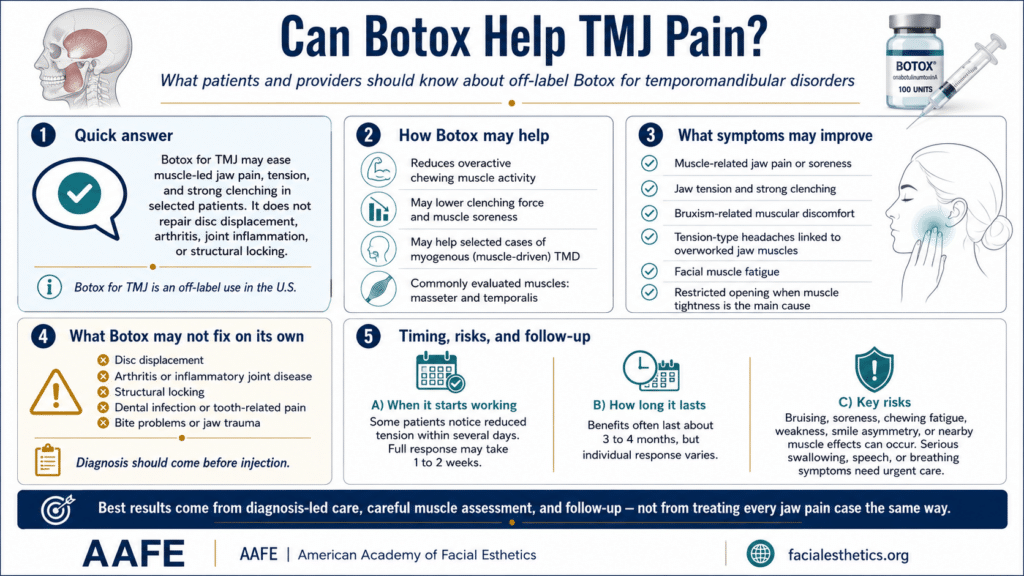
This Botox treatment for TMJ is off-label in the United States. The Food and Drug Administration has approved botulinum toxin for other uses, but not TMD [6] [7].
TMJ Botox refers to botulinum toxin injections used to manage selected TMD symptoms. TMJ names the temporomandibular joint, while TMD covers disorders of that joint, the chewing muscles, or both.
Botox blocks certain nerve signals for a limited time, so an injected muscle contracts with less force. This injectable treatment manages symptoms, but it does not always remove the cause or cure a temporomandibular disorder.
Overactive jaw muscles can fuel clenching, teeth grinding, tension, and muscle pain. A botulinum toxin injection limits acetylcholine release where a nerve meets muscle tissue. The treated muscle then contracts less strongly for several months [1] [2].
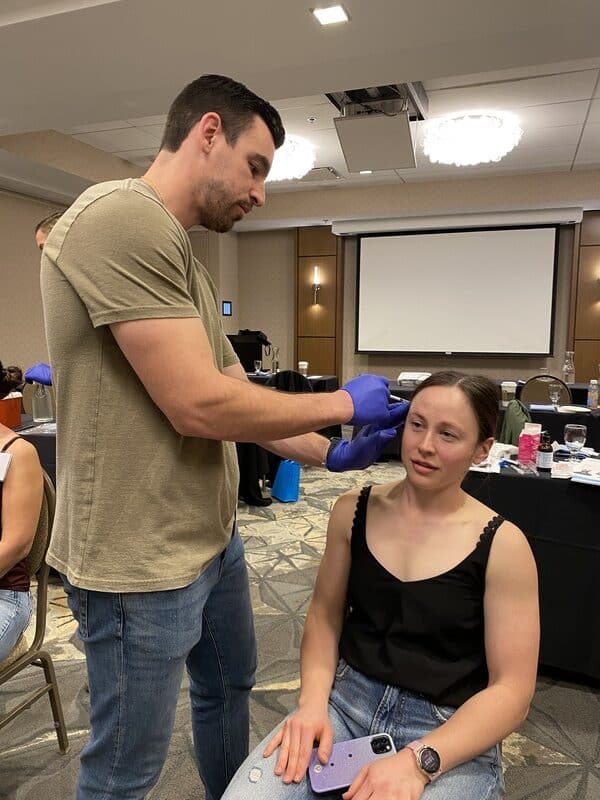
Less force may lower TMD pain or clenching intensity when muscles are the main driver [3] [4] [5]. As AAFE President Dr. Louis Malcmacher has written, Botox has “important clinical uses as an adjunct in TMJ and bruxism (teeth grinding) cases.”
Botox injections for TMJ are most relevant when the examination links symptoms to overworked chewing muscles.
The clearest potential benefit appears in muscle-driven, or myogenous, TMD that has not improved with conservative care; evidence for joint-led, or articular, TMD is much weaker [3] [4]. A 2024 meta-analysis of 14 randomized trials involving 395 patients found no significant advantage over placebo for pain, mouth opening, bruxism events, or bite force, so the overall evidence remains mixed [5].
The sound or location of pain can point to a different problem. These findings need diagnosis-led care, not an automatic injection.
A good candidate has a confirmed muscular component, not jaw pain alone. Because chronic pain can have overlapping causes, the provider should review dental, joint, sleep, neurological, and behavioral factors. Botox for TMJ may be considered for patients who:
A safe appointment starts with diagnosis and ends with a documented follow-up plan. The injection itself is only one short part.
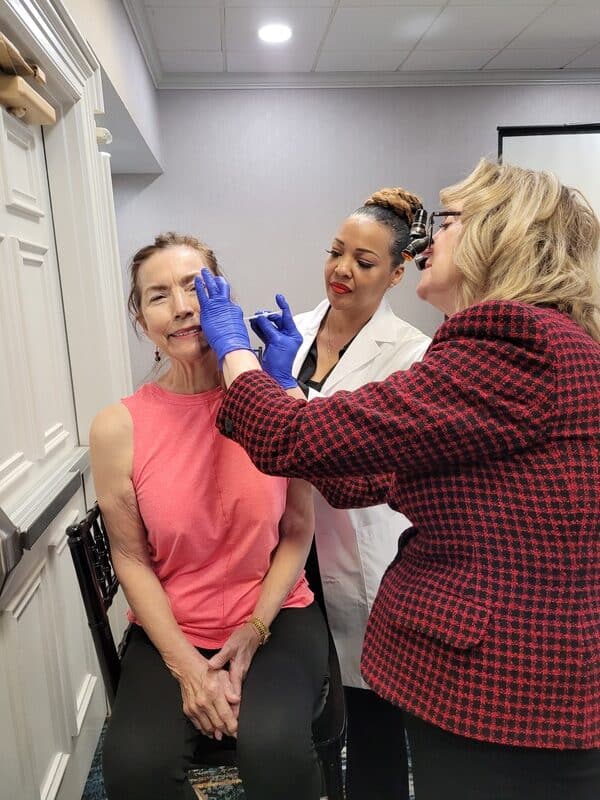
The provider maps where pain begins, when it occurs, and which movements reproduce it. The exam may measure comfortable and maximum opening, side-to-side movement, joint sounds, bite changes, muscle tenderness, tooth wear, and prior treatment results. Imaging is reserved for findings that suggest a joint or structural problem.
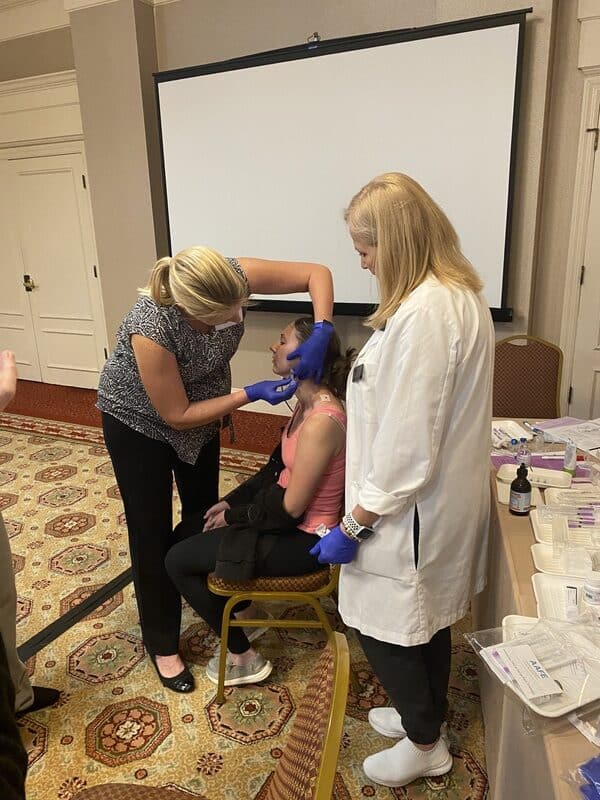
The masseter muscle and temporalis muscles are commonly assessed because they close the jaw. Pterygoid muscles may matter in selected cases, but their deeper anatomy raises the level of skill required. No universal map fits every face, and a provider should document goals for each planned injection site.
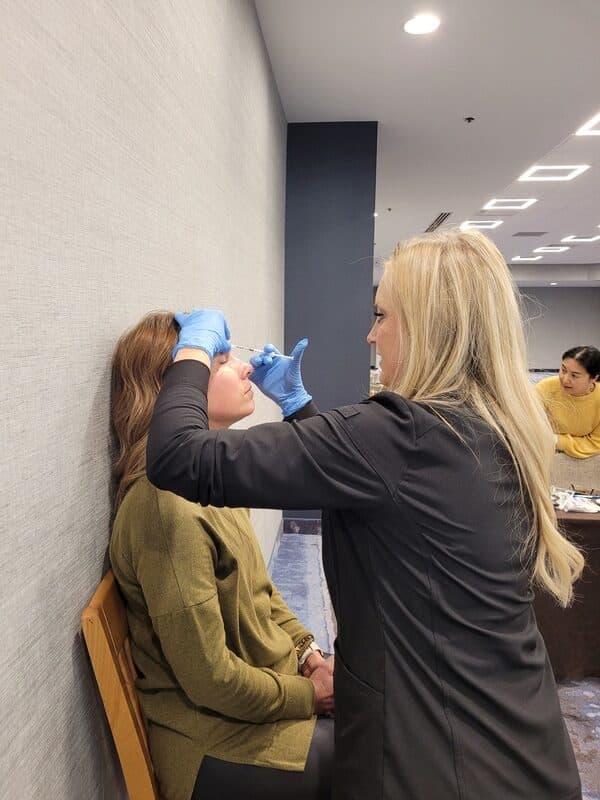
The clinician places small amounts into selected muscles with a fine needle. The number of injections and each injection site depend on anatomy, diagnosis, muscle strength, asymmetry, and treatment goals.
Most patients return to ordinary daily activities shortly after the appointment. They should follow written instructions and report marked weakness, trouble swallowing, speech changes, or breathing problems promptly. The provider should schedule follow-up to compare function, pain, chewing strength, and facial balance with baseline findings.
Effects are not immediate. Some patients notice reduced tension within several days, while the full response may take one or two weeks. Benefits often last about three to four months, although product, dose, metabolism, muscle strength, and individual response change that window.
Follow-up matters because less pain and unwanted weakness can appear together. Repeat treatment should depend on reassessment, not a fixed calendar.
| Potential benefits | Important limitations |
| Office-based, minimally invasive procedure | Off-label for TMD in the United States |
| Targets selected overactive muscles | Cannot repair a displaced disc or arthritic joint |
| Usually allows same-day routine activity | Results commonly last about three to four months |
| May reduce clenching force and muscle pain [3] [4] [5] | May not stop the clenching habit itself |
| Can complement an appliance, therapy, or behavior plan | Repeat injections raise cost and require reassessment |
| Plan can reflect anatomy and muscle strength | Chewing weakness, smile change, or facial asymmetry can occur |
Most adverse effects are local and temporary, but the treatment can affect chewing and facial movement.
The FDA warns that toxin effects can spread beyond the injected area, sometimes hours or weeks later. Urgent assessment is needed for swallowing, speech, or breathing problems [7].
Botox for TMJ usually belongs inside a broader pain management plan. Conservative options often come first because many TMD symptoms improve without invasive or permanent change.
| Option | Primary purpose | Important consideration |
| Self-care and habit change | Reduce gum chewing, daytime clenching, and other triggers | Often an early step; track triggers for two to four weeks |
| Physical therapy | Improve movement, posture, and muscular function | Exercises should match the diagnosis and measured limits |
| Oral appliance | Protect teeth or change selected mechanical loads | May protect teeth without stopping clenching |
| Medication | Short-term pain or inflammation control | Choice depends on diagnosis, other drugs, and health history |
| Behavioral care | Address awake clenching, stress, and pain habits | Often works best alongside dental and physical care |
| Botox | Temporarily reduce selected muscle activity | Off-label and unsuitable for many joint-led disorders |
| Specialist or oral surgery care | Evaluate structural locking or advanced joint disease | Reserved for selected cases after careful assessment |
Many U.S. sessions cost about $400 to $1,000, while complex plans may reach $1,500.
In our other guide, we explain the current masseter Botox costs, covering how provider location, product, muscles treated, plan complexity, and follow-up affect price.
Coverage is less predictable because this use is off-label. Insurers may review the diagnosis, medical necessity, records, and prior conservative treatments.
For patients, Botox for TMJ may be one part of a broader TMD plan. A careful evaluation separates jaw muscle overactivity from dental disease, sleep-related bruxism, nerve pain, and joint damage.
That same complexity requires providers to understand facial anatomy, function, case selection, records, and complication management before they inject.
The injection may take only a few minutes, but safe treatment starts well before the needle comes out. Jaw pain can come from overworked muscles, joint damage, a dental problem, sleep-related bruxism, nerve pain, or several causes at once. Providers need to identify the main driver before deciding if botulinum toxin belongs in the treatment plan.
Dr. Louis Malcmacher explains the clinical standard clearly: “It’s about three things: anatomy, safety, and technique.” In practice, that means assessing jaw movement, muscle strength, tenderness, tooth wear, facial balance, and previous care. It also means knowing when an injection could help and when the patient needs another form of treatment or a referral.
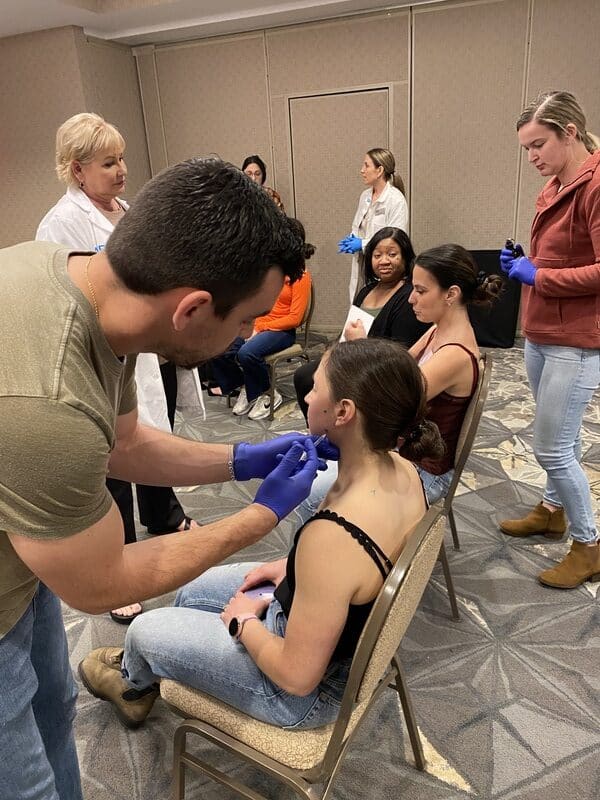
AAFE has trained more than 18,000 dental and medical professionals through anatomy-based, live-patient facial esthetics and therapeutic education. Our small-group training helps providers connect diagnosis, anatomy, conservative treatment planning, documentation, and complication management before treating patients in their own practice.
It may help selected patients when overactive muscles drive the symptoms, but results vary. Reviews find more potential benefit for myogenous TMD than articular TMD, while the 2024 meta-analysis found no significant overall advantage over placebo [3] [4] [5].
No. Botox for TMJ is an off-label use in the United States [6].
Providers commonly evaluate the masseter and temporalis muscles. Selected cases may involve other jaw muscles, including pterygoid muscles.
There is no universal dose. Product, anatomy, diagnosis, muscle strength, prior response, and goals must guide an individualized plan.
Benefits often last about three to four months. Muscle activity, metabolism, product, and treatment plan can shorten or lengthen that period [1].
It may reduce the force produced by selected muscles. It may not end the behavior or protect teeth from physical wear [2] [3] [4] [5].
Possible adverse effects include bruising, soreness, chewing fatigue, weakness, bite sensation changes, and an uneven smile. Serious swallowing or breathing symptoms need urgent care.
Qualified dentists may provide treatment in some jurisdictions. Scope, training, supervision, documentation, and facility rules vary by state and can change.
A patient-focused clinical overview of off-label use, timing, duration, patient selection, and possible risks.
A clinical review of proposed mechanisms, treated muscles, therapeutic uses, and available evidence.
A systematic review of 24 randomized trials involving 698 patients, with findings separated by TMD type.
A systematic review covering treatment effectiveness, clinical methods, study quality, and reported adverse effects.
A 2024 analysis of 14 randomized trials involving 395 patients, including pooled pain and function outcomes.
U.S. guidance on TMD prevalence, symptoms, diagnosis, conservative care, and off-label botulinum toxin treatment.
Official contraindication, adverse reaction, boxed warning, and distant-spread safety information for onabotulinumtoxinA.