Summary
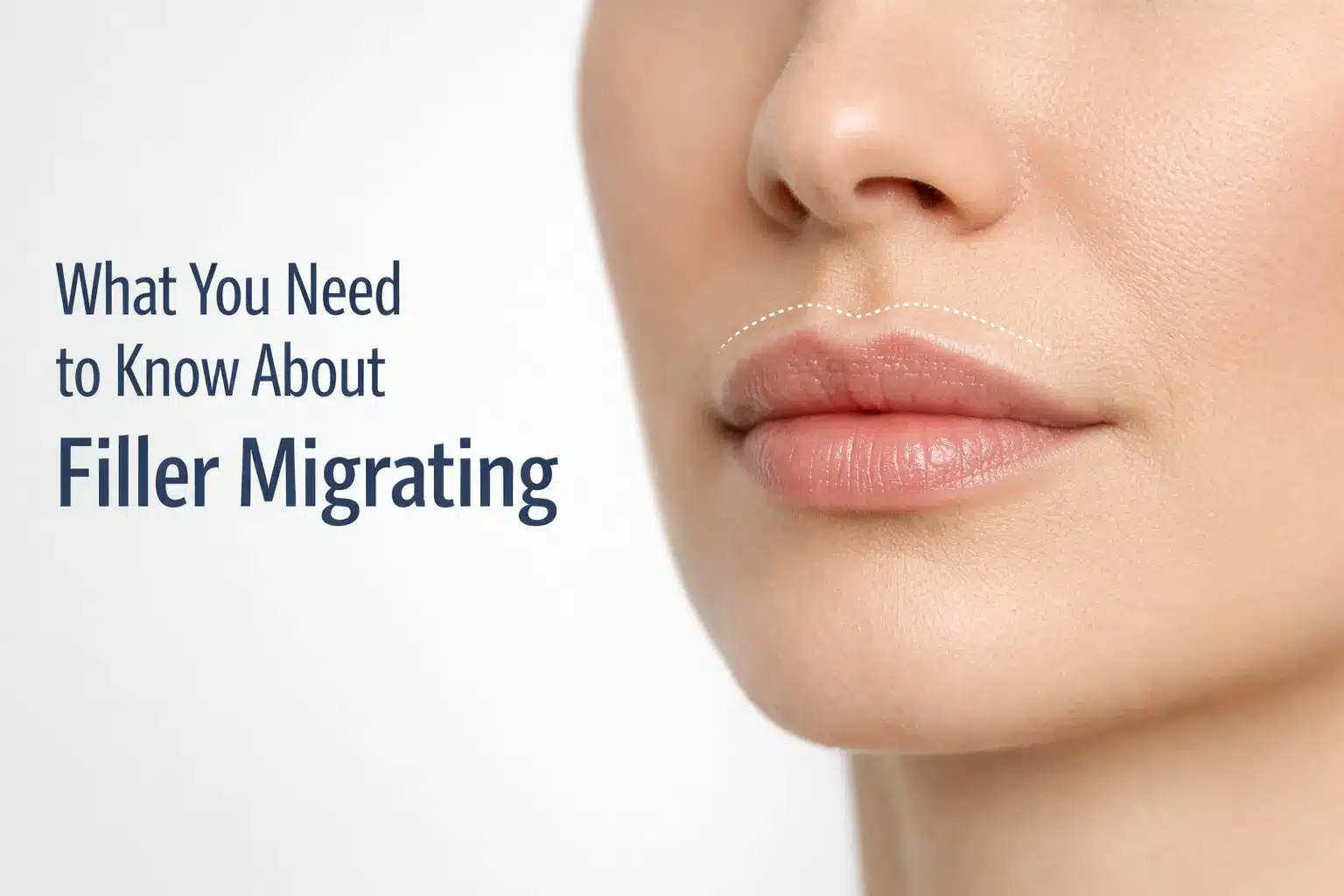
Lip filler migration occurs when injected filler moves beyond the intended lip area, while overfilling happens when too much product creates an unnatural, heavy, or uneven appearance. Both risks can be reduced by choosing an experienced injector, starting with a conservative amount, selecting an appropriate hyaluronic acid filler, communicating realistic goals, and following aftercare instructions carefully. Patients should allow swelling to settle before judging results or adding more filler. When significant migration or overfilling occurs, hyaluronidase may be used to dissolve hyaluronic acid filler before creating a safer, more natural treatment plan.
Lip filler injections have become one of the most popular non-surgical aesthetic treatments, allowing individuals to enhance the shape, size, and volume of their lips.
Whether you’re looking to plump up thin lips or correct asymmetry, lip fillers offer a convenient and relatively low-risk way to achieve your desired look. However, like all cosmetic procedures, dermal fillers come with certain risks, including the possibility of filler migration and over-treatment with too much filler.
These two complications can lead to unsatisfactory results, with migrated filler shifting away from the intended injection site and overfilling creating an unnatural, exaggerated appearance. Fortunately, several steps can be taken to minimize the risk of lip filler migration and ensure your lip enhancement looks natural and beautiful.
In this guide, we’ll explore the causes of filler migration and overfilling, how to avoid them, and practical tips for achieving the best possible lip filler results.
Read more: Lip Filler vs. Lip Fill
What Causes Filler Migration?
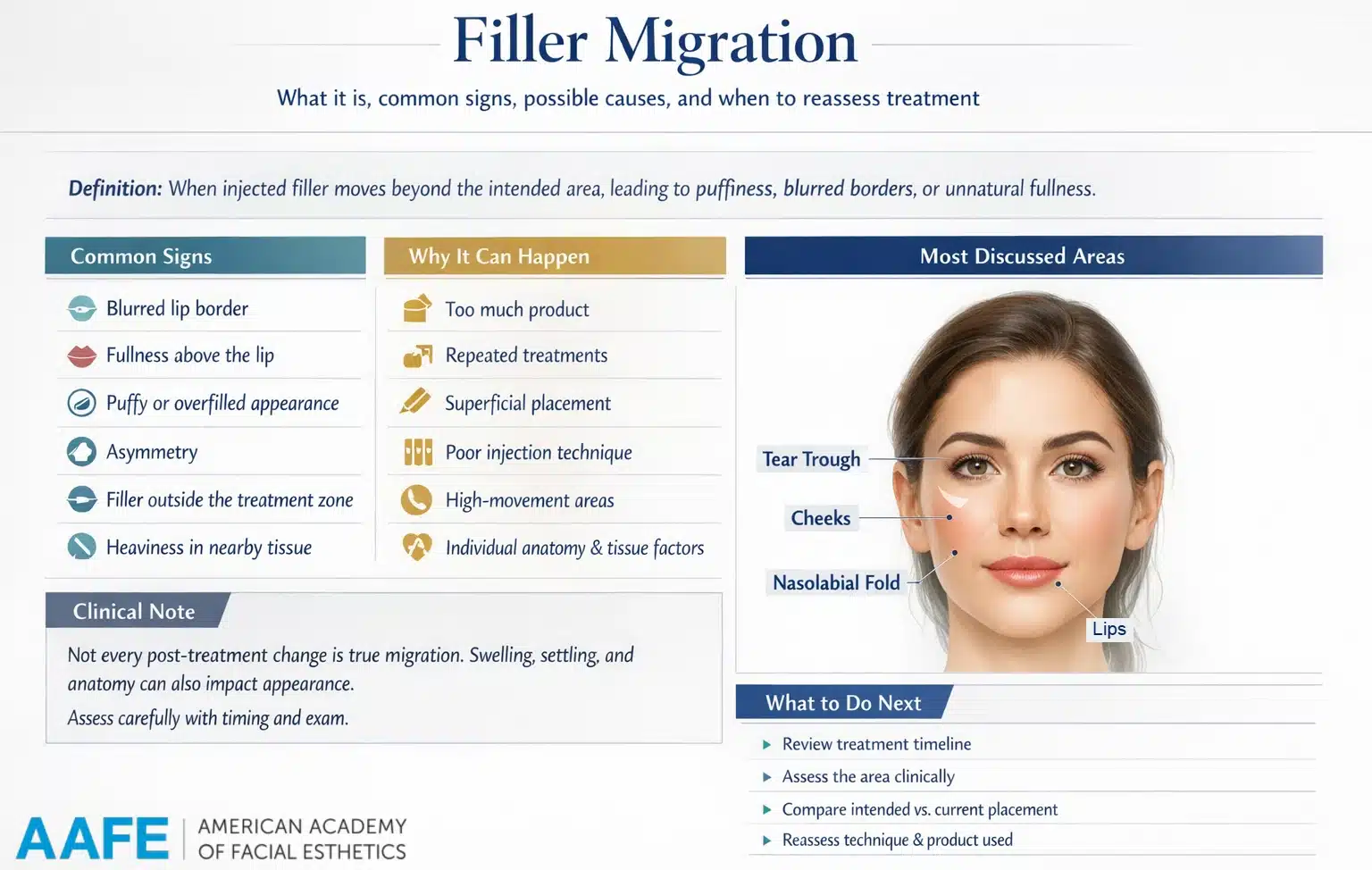
Filler migration occurs when the injectable substance, typically hyaluronic acid, moves away from the intended area and shifts into nearby tissues. This can lead to noticeable changes in appearance, such as soft lumps or swelling in areas where the filler wasn’t meant to go.
Several factors can contribute to filler migration:
- Improper injection technique: HA filler can migrate if injected too close to the skin’s surface.
- Pressure-induced displacement: Massaging or pressing the area after treatment can cause the filler to shift.
- Overfilling: Injecting too much filler can create pressure that encourages migration.
In a recent patient case study at AAFE, we observed significant lip filler migration that developed months after initial treatment. The migrated filler moved into the upper lip and surrounding tissues, causing a heavy, uneven appearance. This case highlights the importance of correct technique, conservative application, and ongoing evaluation post-treatment.
What is Overfilling?
Overfilling refers to injecting too much filler into the lips, causing them to look unnaturally full, heavy, or disproportionate.
Consequences of overfilling include:
- Asymmetry: Too much filler can create unevenness between the upper and lower lips.
- Tissue damage: Overstretched skin may lose elasticity and suffer long-term effects.
- Compromised function: Overfilled lips can interfere with natural movements like speaking and smiling.
Avoiding overfilling is critical to maintaining a youthful, natural appearance — and to preventing filler migration.
How to Prevent Filler Migration and Overfilling: Key Tips for a Natural, Safe Look
1. Choose an Experienced and Reputable Injector
Selecting a highly trained injector is the most important step. Choose a board-certified dermatologist, facial esthetics expert, or licensed injector with extensive experience in soft tissue fillers and lip anatomy. Review before-and-after photos and patient testimonials to ensure you’re choosing someone skilled in natural-looking results.
At the American Academy of Facial Esthetics (AAFE), our providers have advanced training in dermal fillers and managing filler complications, including filler migration and correction.
2. Start with a Conservative Approach
Less is often more when it comes to lip filler. Begin with a small, conservative amount of filler to avoid overfilling. You can always add more volume at a later appointment if desired.
A careful, gradual enhancement minimizes the risk of unnatural results or complications like lip filler migration.
3. Understand Your Desired Outcome and Communicate Clearly
Know what you want and communicate those goals with your injector. A detailed consultation ensures your results are achievable and tailored to your anatomy, reducing the risk of unnatural proportions or migration.
4. Avoid Overfilling the Lips
While dramatic lips may look appealing initially, overfilling can cause the filler to migrate and disrupt facial harmony. Maintaining a natural proportion between the lips and the rest of the face is key to achieving long-lasting, beautiful results.
5. Choose the Right Type of Filler
Different types of fillers have different properties. At AAFE, we recommend hyaluronic acid-based fillers such as Juvederm or Revanesse for lip enhancement. These fillers offer smooth integration with the lips’ natural tissues, reducing migration risk.
Non-HA fillers carry higher risks, including rare but serious complications. Discuss your filler options thoroughly with your provider.
6. Follow Aftercare Instructions Carefully
After your procedure, avoid massaging, pressing, or manipulating the lips. Follow your provider’s aftercare instructions exactly, including avoiding high-heat activities like hot yoga or saunas for a few days. Good aftercare helps the filler settle properly and reduces migration risks.
7. Be Patient and Allow Swelling to Subside
Initial swelling can make lips appear larger than intended. Wait at least two weeks before evaluating your final results. Premature touch-ups may lead to overfilling or unexpected filler displacement.
8. Avoid Smoking After Treatment
Smoking can impair healing and promote filler migration. If possible, avoid smoking entirely — especially in the first few days following lip filler injections.
Real Case Example: When It’s Time to Start Fresh
In some cases of significant filler migration or overfilling, the best approach is to dissolve the existing filler and start over. Hyaluronidase injections can effectively dissolve misplaced filler, restoring a natural baseline before carefully reinjecting for improved results.
In the AAFE case mentioned earlier, dissolving the migrated filler provided a clean slate. Re-treatment with proper technique produced a beautifully natural, rejuvenated appearance.
If you notice signs of filler migration — such as unnatural lumps, swelling above the lip border, or a heavy, distorted look — consult with your injector immediately to discuss options like filler correction or dissolution.
Filler Injections: Enhancing Natural Beauty
Lip filler injections can enhance your natural beauty and boost your confidence. By following best practices — choosing an experienced injector, starting conservatively, using the right filler, and practicing good aftercare — you can minimize the risk of filler migration and achieve a stunning, natural result.
If you suspect you may have experienced lip filler migration or overfilling, the American Academy of Facial Esthetics is here to help. Our expert providers can assess your situation, recommend the best corrective steps, and guide you toward safe, effective, and beautiful results.
Frequently Asked Questions
More Information