Summary
Some peptide-based medications are FDA-approved, but approval applies only to specific drug products and uses; compounded and investigational peptides are not FDA-approved. Providers should verify the exact product in Drugs@FDA and separately confirm compounding rules, sourcing, and state scope requirements.
Last reviewed: September 17, 2026
Some peptide-based medications are FDA-approved, but peptides are not approved as one broad category. FDA approval belongs to a specific drug product and the uses listed on its label.
That difference matters. An approved ingredient does not make every product containing it FDA-approved, and approval for one use does not cover every other use. Compounded peptides are not FDA-approved. Products being studied are still investigational, even if they are available or promoted online.
This guide is for licensed clinicians evaluating peptide products for their practices. Since regulatory status can change, check the exact product in Drugs@FDA and review the FDA’s current compounding policies. You must also confirm what your license and state rules allow.
Disclaimer: This article is for education only, not medical or legal advice. Check current FDA information, state rules, professional requirements, and product labeling before making clinical or business decisions.
What Does “FDA-Approved” Actually Mean for a Peptide?
FDA approval means reviewers determined that a particular drug’s benefits outweigh its known and potential risks for the intended population.
The review covers submitted clinical evidence, proposed labeling, manufacturing information, product quality, and plans for managing known risks. [1]
FDA Approval Applies to a Drug Product and Its Approved Uses
Approval follows a specific application, not a familiar ingredient name appearing on a vial or supplier catalog. Providers should match the active ingredient, strength, dosage form, route, indication, and current prescribing information. [1] [2] An approved drug used for another indication, route, or dose is being used off-label for that purpose. [2]
FDA Approval Is Not the Same as FDA Registration or FDA Oversight
Registration shows that FDA received required facility information, but it does not approve the facility or its compounded products. An FDA-registered 503B outsourcing facility still produces individual compounded preparations without standard FDA premarket approval. [3] Likewise, an NDC number does not prove FDA approval, legal marketing, verified quality, or insurance coverage. [2]
Are There FDA-Approved Peptide Drugs?
Yes, numerous peptide and peptide-based drug products have completed FDA review for defined uses within the United States. [2]
| Active ingredient | Approved product | Dosage form and route | Approved indication(s) |
| Semaglutide | Ozempic | Once-weekly subcutaneous injection | Improves blood sugar control in adults with type 2 diabetes. It also reduces major cardiovascular events in adults with type 2 diabetes and established cardiovascular disease, plus certain kidney and cardiovascular risks in adults with type 2 diabetes and chronic kidney disease. [2] |
| Semaglutide | Wegovy | Once-weekly subcutaneous injection; once-daily oral tablet | Both forms support long-term weight reduction in eligible adults and reduce major cardiovascular events in adults with cardiovascular disease and obesity or overweight. The injection is also approved for eligible patients aged 12 and older and for certain adults with noncirrhotic MASH and moderate to advanced liver fibrosis. [15] |
| Semaglutide | Rybelsus | Once-daily oral tablet | Improves blood sugar control in adults with type 2 diabetes and reduces major cardiovascular events in adults with type 2 diabetes who are at high risk for these events. [2] |
| Tirzepatide | Mounjaro | Once-weekly subcutaneous injection | Improves blood sugar control in adults and patients aged 10 and older with type 2 diabetes. [2] |
| Tirzepatide | Zepbound | Once-weekly subcutaneous injection | Supports long-term weight reduction in eligible adults and treats moderate to severe obstructive sleep apnea in adults with obesity. [2] |
| Liraglutide | Victoza | Once-daily subcutaneous injection | Improves blood sugar control in adults and patients aged 10 and older with type 2 diabetes. It also reduces major cardiovascular events in adults with type 2 diabetes and established cardiovascular disease. [2] |
| Liraglutide | Saxenda | Once-daily subcutaneous injection | Supports long-term weight reduction in adults with obesity, adults with overweight and at least one weight-related condition, and eligible patients aged 12 and older with obesity who weigh more than 60 kg. [2] |
| Teriparatide | Forteo | Once-daily subcutaneous injection | Treats certain forms of osteoporosis in people at high risk for fracture, including postmenopausal women, men with primary or hypogonadal osteoporosis, and adults with osteoporosis linked to ongoing systemic glucocorticoid therapy. [2] |
| Glucagon | Baqsimi | Intranasal powder | Treats severe hypoglycemia in adults and children aged 1 and older with diabetes. [2] |
| Glucagon | Gvoke | Subcutaneous injection | Treats severe hypoglycemia in adults and children aged 2 and older with diabetes. [2] |
Indications and dosage forms were summarized from FDA labeling as of September 17, 2026. Approved uses, forms, and strengths can change. Confirm current labeling in Drugs@FDA. [2] [15]
Are Compounded Peptides FDA-Approved?
No, compounded peptides are not FDA-approved, even when their active ingredient appears in an approved medication. FDA does not premarket-review compounded drugs for safety, effectiveness, manufacturing quality, or labeling like approved products. [3]
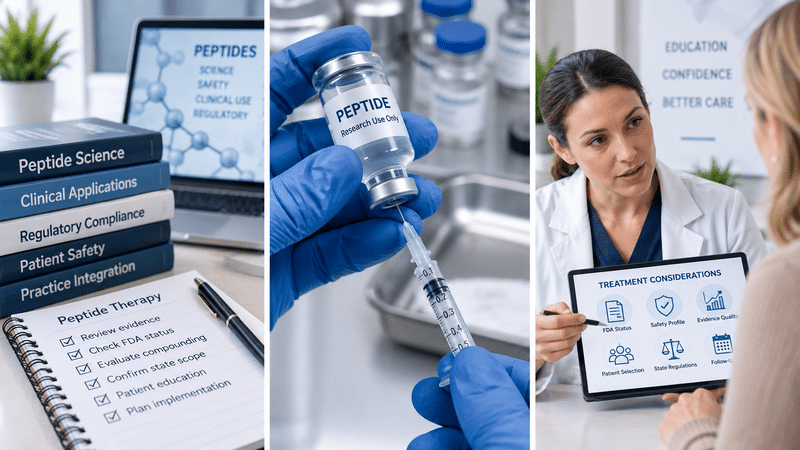
The shortcut, “approved ingredient equals approved compounded product,” fails because the finished preparation has no approved application. [2] [3] Supplier availability does not prove approval, lawful compounding, product quality, or provider scope within your state.
Why Are Drugs Compounded If They Are Not FDA-Approved?
Compounding can address a patient’s documented medical need when an available approved product cannot meet that need. However, the preparation must satisfy applicable federal conditions, state pharmacy rules, prescription requirements, and the provider’s scope. [3] [10] When applicable, document why available approved options could not meet the patient’s clearly identified medical need.
What Are Sections 503A and 503B?
Section 503A covers compounding by a state-licensed pharmacist or physician based on a valid prescription for an identified individual patient, with limited anticipatory compounding permitted based on prescribing history. [10] Bulk substances need an applicable USP or NF monograph, approved-drug component status, or 503A Bulks List placement. Each bulk substance also requires a valid certificate of analysis and manufacturing by an FDA-registered establishment. [4] [10]
Section 503B covers registered outsourcing facilities that may distribute office stock without patient-specific prescriptions when statutory conditions are satisfied. These facilities face current good manufacturing practice requirements, adverse-event reporting, inspections, and separate limits governing bulk substances. In most cases, 503B bulk compounding requires list placement or qualifying shortage status during compounding, distribution, and dispensing. [3] Eligibility under either pathway never turns the resulting compounded preparation into a standard FDA-approved drug product. [3]
Both pathways also restrict copying approved medications. A 503A pharmacy may not compound regularly or in inordinate amounts drugs that are essentially copies of a commercially available product, and a 503B outsourcing facility may not compound drugs that are essentially copies of an approved drug unless that drug appears on FDA’s drug shortage list. [11] [12]
What Does “Investigational Peptide” Mean?
An investigational peptide is being studied and has not gained marketing approval merely by entering a clinical trial.
An Investigational New Drug application permits interstate shipment for human research under FDA’s regulatory framework. Sponsors generally wait 30 calendar days after filing before trials begin, unless FDA places the study on hold. [5]
Investigational Does Not Mean FDA-Approved
An approved drug has an effective marketing application, while an investigational drug remains within an authorized research process. [1] [5] A compounded drug is also unapproved, but it is prepared under the federal compounding framework rather than an authorized research program. [3]
A ClinicalTrials.gov record shows study registration, not FDA approval, proven safety, or routine legal availability. Some development information may remain confidential, so an empty search cannot prove that no investigation exists. [5]
Why Peptide Regulatory Status Can Change
Drug approvals, shortage status, bulks lists, and enforcement policies can change the practical regulatory answer over time. [2] [3] [4]
In July 2026, FDA’s Pharmacy Compounding Advisory Committee reviewed seven peptide-related bulk drug substances for possible inclusion on the 503A Bulks List. The committee recommended BPC-157, KPV, TB-500, MOTS-c, Epitalon, and Semax, while it did not recommend emideltide, also known as DSIP. [6] Each review covered specific proposed uses, such as ulcerative colitis for BPC-157 and wound healing for TB-500, rather than every use promoted for those substances. [6] [8] [9]
FDA staff recommended that none of the seven substances be included, citing limited evidence of safety and effectiveness for the reviewed uses, along with unresolved questions about substance identity and quality. [6] [8] [9] The committee’s votes were advisory. They did not approve a drug or add a substance to the 503A Bulks List. Any listing change requires further FDA action through rulemaking. [4] [6]
In April 2026, FDA also proposed excluding semaglutide, tirzepatide, and liraglutide from the 503B Bulks List after finding no clinical need for outsourcing facilities to compound them from bulk drug substances. [7] [13] FDA later extended the public comment period through July 30, 2026. [14] The proposal had not become final as of September 17, 2026. [13] [14]
How to Check Whether a Peptide or Peptide Product Is FDA-Approved
Step 1: Search Drugs@FDA
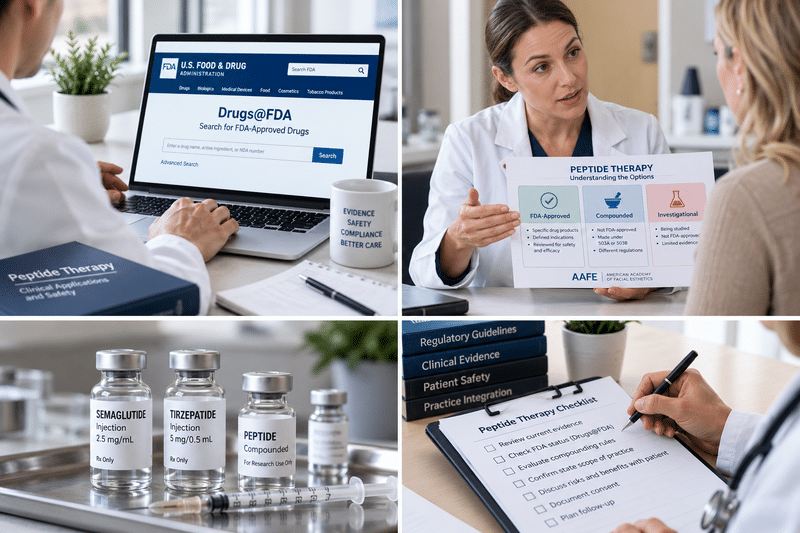
Start with Drugs@FDA. Search the ingredient and brand, then open the application, approval history, and latest approved label.
Match the dosage form, route, strength, applicant, and indication, because a familiar ingredient name alone cannot confirm approval. [2]
Step 2: Check FDA’s Human Drug Compounding Resources
For compounded products, review current 503A or 503B bulk-substance materials and the applicable federal compounding policies. [3] [4]
Check safety-risk pages and the Drug Shortage Database, because shortage status can affect certain conditions. [3] [12] Similar names can describe different substances, so match the exact substance and salt form. A substance under FDA evaluation is not listed, approved, or covered by an enforcement policy until FDA takes that action. [4]
Step 3: Check for Recent FDA Updates
Search safety communications, Federal Register notices, advisory materials, warning letters, and compounding announcements from the past twelve months. Record whether each action is proposed, recommended, final, withdrawn, or under review before describing its current regulatory status. [4] [6] [13]
Step 4: Verify State and Professional Requirements Separately
FDA status explains the product, while scope rules explain what a particular licensed provider may do. Confirm applicable prescribing, administration, delegation, supervision, facility, and pharmacy requirements directly with each relevant professional board.
AAFE’s state medical board contact directory can help physicians locate their state authority. Dentists, nurses, and pharmacy-related practices should also consult the applicable state dental, nursing, and pharmacy boards, then seek counsel when licenses, pharmacy models, or telehealth rules overlap.
A Simple Framework for Evaluating a Peptide Claim
Before accepting a vendor or social-media claim, write down clear answers to these four questions:
- Is there an FDA-approved product containing this exact active ingredient and substance form?
- Is the exact product itself FDA-approved for the stated use?
- If compounded, which current federal pathway and conditions apply?
- Have I separately confirmed what my license, state, and setting permit?
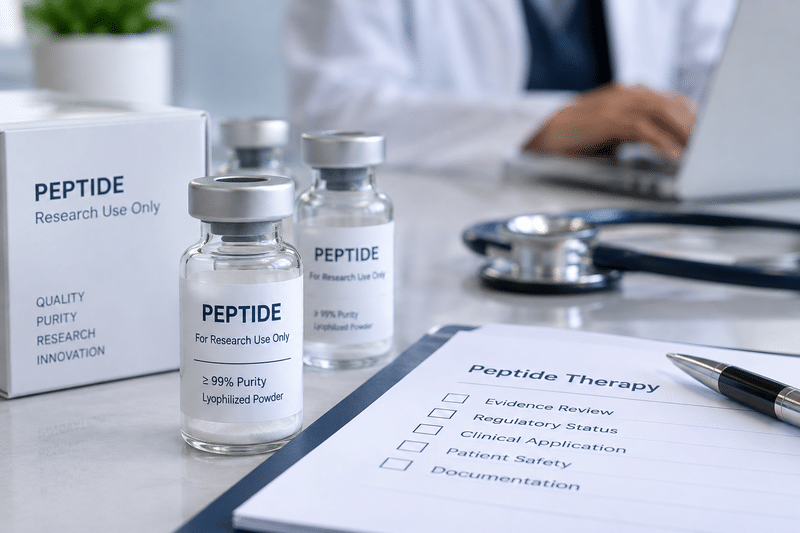
Labels such as “research use only” and “not for human consumption” do not make a peptide lawful for patient treatment. FDA has warned peptide vendors that it may still treat these products as unapproved drugs when the seller’s claims, packaging, or related supplies show that they are intended for human use. These products are not FDA-approved, and research-use labeling does not place them within the 503A or 503B compounding pathways. Providers should verify the exact product and its legal source rather than relying on a disclaimer printed on a vial or website.
What Healthcare Professionals Should Know Before Adding Peptide Therapy
Offering peptide therapy responsibly requires scientific grounding, regulatory literacy, verified product sourcing, and clear patient communication. You need to understand the science, know how each product is regulated, review its source, and explain its status clearly to patients. Your practice also needs solid documentation and a process for checking regulatory changes. When these pieces are in place, peptide services may expand patient care and create recurring revenue while reducing avoidable compliance risks.
AAFE’s Peptide Cellular Medicine Certification helps licensed professionals build that foundation. AAFE has trained more than 18,000 dental and medical professionals since its founding in 2007.
Authority to prescribe or administer peptide therapies depends on license type and state law. Physicians, nurse practitioners, and physician assistants prescribe within their state scope and any supervision or collaboration requirements; registered nurses typically administer under a prescriber’s order; and dentists should confirm with their state dental board whether systemic peptide therapy falls within dental practice.
The program is online and self-paced, so you can complete it around your schedule and keep lifetime access to the materials. It includes regulatory education, patient scripts, consent forms, handouts, and business planning resources. The activity was planned and implemented by Medical Education Resources (MER) and AAFE. MER is jointly accredited by ACCME, ACPE, and ANCC, and learners receive 10 IPCE credits. AAFE also designates the activity for 10 continuing education credits.
Enroll in AAFE’s Peptide Cellular Medicine Certification

Frequently Asked Questions
More Information
- Development and Approval Process for Drugs
FDA’s overview explains benefit-risk review, clinical evidence, intended populations, approved labeling, and available approval pathways. - Resources for Information About Approved Drugs
The resource explains Drugs@FDA content, including regulatory approval history, current labeling, and detailed FDA scientific reviews. - Human Drug Compounding Laws
The legal overview explains why compounded drugs remain unapproved and distinguishes sections 503A and 503B. - Bulk Drug Substances Used Under Section 503A
The guidance covers bulk-substance criteria, nomination categories, interim enforcement policy, required documentation, and ongoing list development. - Investigational New Drug Application
The overview covers IND purposes, required information, research safeguards, sponsor responsibilities, and standard FDA review timing. - July 23-24, 2026 Meeting of the Pharmacy Compounding Advisory Committee
The official meeting page identifies the seven substances and the specific uses FDA evaluated. It also links to the meeting recordings, agenda, presentations, and substance-specific briefing documents. - FDA Proposes to Exclude Semaglutide, Tirzepatide, and Liraglutide From the 503B Bulks List
The April 2026 announcement explains FDA’s proposal to exclude these substances after finding no clinical need for outsourcing facilities to compound them from bulk substances. - FDA Evaluation of BPC-157-Related Bulk Drug Substances
The FDA briefing reviews the identity, historical use, available effectiveness evidence, and safety concerns surrounding BPC-157 free base and BPC-157 acetate. - FDA Evaluation of TB-500-Related Bulk Drug Substances
The FDA briefing reviews the chemical identity, available evidence, proposed uses, quality concerns, and safety risks surrounding TB-500 free base and TB-500 acetate. - Section 503A of the Federal Food, Drug, and Cosmetic Act
The federal statute covers patient-specific prescriptions, limited anticipatory compounding, bulk-substance requirements, and restrictions on copying commercially available drugs.
- FDA Guidance on Essentially Copies Under Section 503A
The guidance explains when a compounded drug is considered essentially a copy of a commercially available product under Section 503A.
- FDA Guidance on Essentially Copies Under Section 503B
The guidance explains the restriction on outsourcing facilities compounding drugs that are essentially copies of FDA-approved products, including the shortage-list exception.
- Proposed 503B Bulks List Determination for Semaglutide, Tirzepatide, and Liraglutide
The May 2026 Federal Register notice gives FDA’s full basis for proposing not to include these three substances on the 503B Bulks List.
- Extension of the 503B Proposal Comment Period
The official notice extended the public comment period for the GLP-1 proposal through July 30, 2026. - WEGOVY Prescribing Information
The current FDA label lists Wegovy as a once-weekly subcutaneous injection and a once-daily oral tablet. It also shows which approved indications apply to each form.