Summary
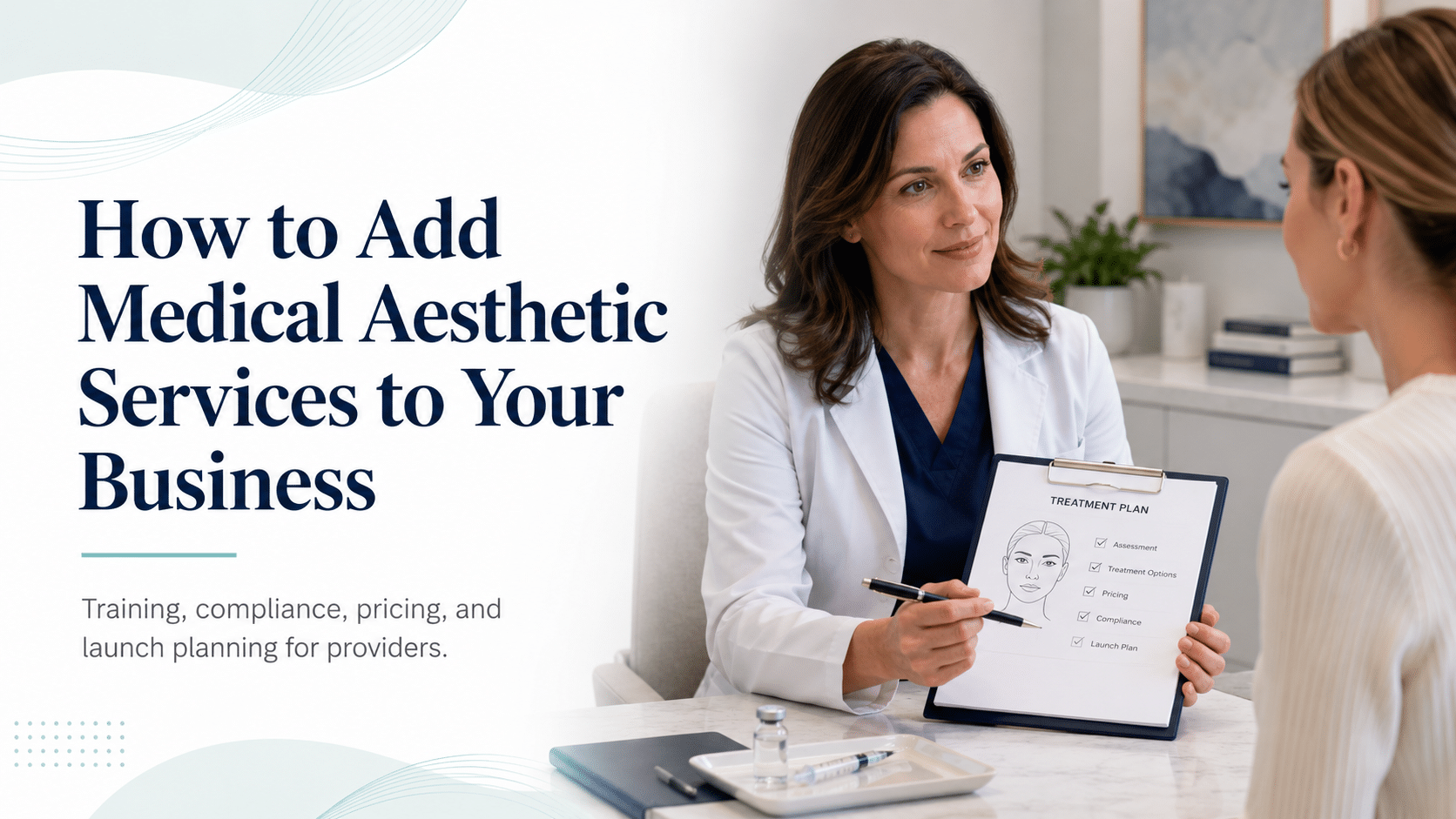
Adding medical aesthetic services can create a profitable cash-pay revenue stream for dental, medical, wellness, and nurse-led practices, especially when existing patients already trust the provider and ask about Botox, fillers, skin treatments, or TMJ care. A successful launch requires more than buying products: providers must confirm state scope-of-practice rules, complete hands-on training, choose a focused starting menu, price services accurately, create consultation and follow-up systems, prepare the treatment space, train staff, and market services responsibly. Starting small with one to three treatments, tracking real costs and patient demand, and expanding only after the workflow is stable can reduce risk and improve long-term profitability.
Many providers think about aesthetics after the same moment: a loyal patient asks, “Do you offer Botox here?” That one question can open a serious business opportunity, but only when training, compliance, pricing, and workflow are handled with care.
Should You Add Medical Aesthetic Services to Your Business?
Medical aesthetics can give providers a cash-pay service line that is less tied to insurance reimbursement. For dentists, physicians, NPs, PAs, and nurses, it can also create a stronger reason for patients to stay inside the practice for appearance, comfort, and facial wellness needs.
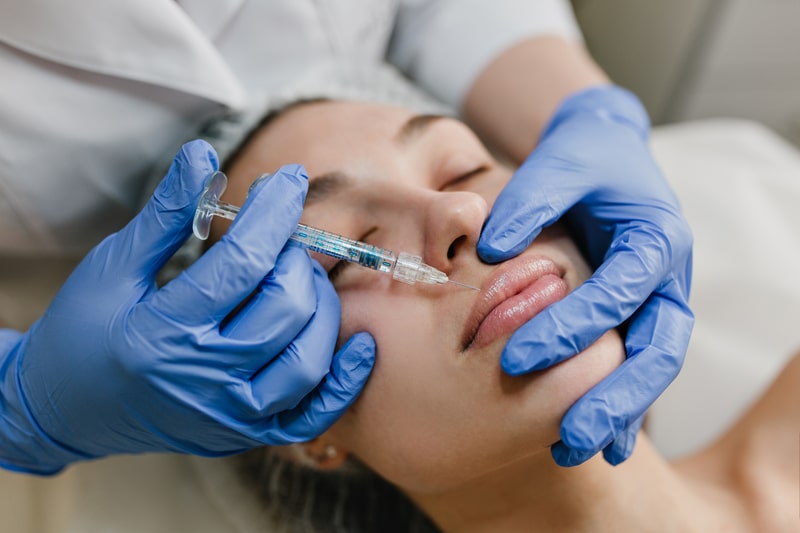
Demand is already strong. The American Society of Plastic Surgeons reported more than 28.5 million minimally invasive procedures in 2024.
For many providers, the strongest starting point is the patient base they already have. A dental patient asking about smile lines, a wellness patient asking about skin aging, or a TMJ patient asking about jaw tension may already trust your clinical judgment. That trust can make adoption easier than starting a cold aesthetic clinic from scratch.
The opportunity is real, but aesthetic medicine needs legal clarity, hands-on training, proper insurance policies, safe protocols, pricing, photography, consent forms, and a follow-up system. If those pieces are missing, the service can create risk faster than revenue.
Best-Fit Businesses for Aesthetic Services
Some businesses can add aesthetic services more naturally because they already have clinical trust and patient flow. These are usually the best starting points:
- Dental practices: Already understand facial anatomy, injections, occlusion, smile design, and patient comfort.
- Medical practices: Because patients already ask about skin, aging, muscle tension, facial balance, or wellness.
- Wellness clinics: If the clinic offers cash-pay services and has a consult-based patient model.
- Medical spa businesses: When clinical leadership, protocols, supervision, and provider training are already in place.
- Dermatology-adjacent businesses: When patients already ask about skin texture, acne scars, sun damage, aging changes, or non-surgical facial rejuvenation.
- Nurse-led aesthetic practices: Possible in some states, depending on ownership, supervision, scope, and medical director rules.
- Concierge or cash-pay clinics: When patients already pay directly for longer visits, easier access, and more personalized treatment planning.
Signs Your Business Is Ready
- You have an existing patient base that trusts your clinical judgment.
- Patients already ask about Botox injections, dermal fillers, or facial esthetics.
- You have a private treatment room with good lighting and clean surfaces.
- Licensed providers are available to assess, treat, and follow up with patients.
- You are willing to invest in supervised clinical training, not short video-only courses.
- Your team has a plan for consultation, pricing, consent, and follow-up.
Step 1: Choose the Right Medical Aesthetic Services to Offer First
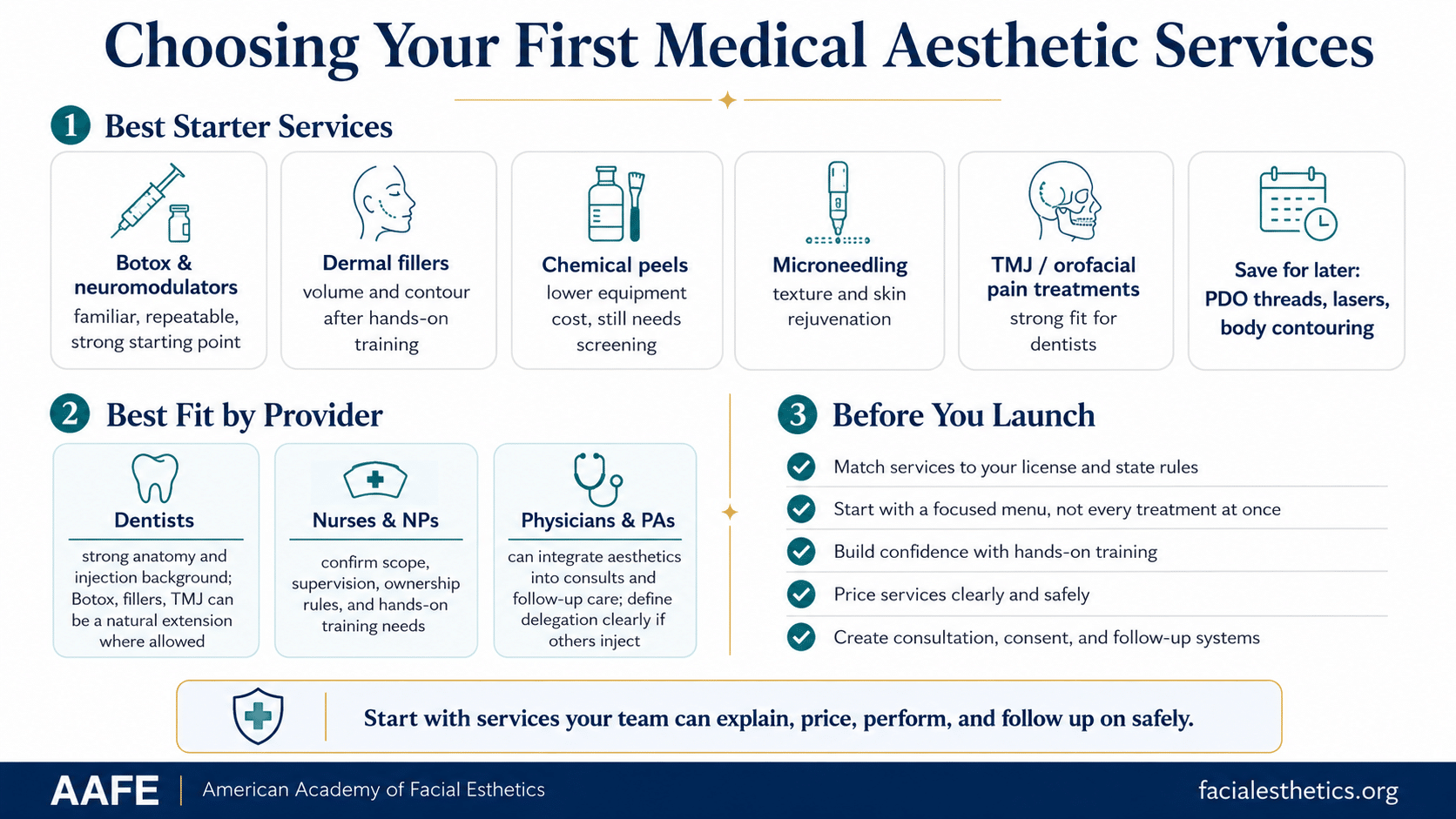
New providers should not try to offer every aesthetic treatment at once. You need services that match your license, patient base, training level, state rules, and clinic business model.
A focused first menu is easier to explain, easier to price, and safer to manage. It also helps your team build confidence before you expand into advanced aesthetic procedures.
Common Entry-Level Aesthetic Services
- Botox and neuromodulators: Often used for facial esthetics and some therapeutic cases, depending on scope.
- Dermal fillers: Useful for volume, contour, smile lines, and facial balance after proper hands-on training.
- Chemical peels: Lower equipment cost, but still require patient selection and skin-risk screening.
- Microneedling: Often used for texture, acne scars, and skin rejuvenation services.
- Skin rejuvenation services: May include peels, topical protocols, and select device-based options.
- TMJ and orofacial pain treatments: Strong fit for dentists when clinically appropriate and legally allowed.
- PDO threads: Better saved for providers with advanced training and established injectable confidence.
- Laser treatments and body contouring: Consider later because equipment, licensing, cost, and risk are higher.
For Dentists
Dentists often have a practical advantage because they already work around the oral and maxillofacial area every day. They understand injections, head and neck anatomy, occlusion, patient anxiety, and small procedural details.
That makes Botox, dermal fillers, and TMJ-related services a natural extension where state dental board rules allow them. Dental scope for cosmetic injectables varies meaningfully by state and remains contested in some jurisdictions, so dentists should confirm current board position before launching cosmetic services. The key is learning how facial esthetics changes treatment planning, not just where to place a syringe.
That’s why structured training matters. AAFE’s Botulinum Toxins & Dermal Fillers Level I course gives dentists a hands-on path through patient assessment, anatomy, dosing, live patient training, and therapeutic or esthetic case planning.
For Nurses and NPs
Nurse practitioners and nurses often enter aesthetic medicine for career flexibility, cash-pay clinical work, and more patient-facing procedure time.
The main difference is legal authority. NPs may have more room to assess, prescribe, or manage treatment plans in many states, while RNs and LPNs usually need prescriber orders, written protocols, and required supervision.
Before nurses start their own aesthetics business, they should confirm three things: what their license allows, who must supervise, and who can legally own or direct the practice. They should also check malpractice coverage, employer credential rules, and whether their training includes hands-on injection practice.
For Physicians and PAs
Physicians and PAs can often add aesthetics without changing the whole practice model. Botox, fillers, chemical peels, and skin services can fit into consult blocks, follow-up visits, or dedicated aesthetic days.
The real value is control. Physicians and PAs can build treatment plans, screen for contraindications, manage complications, and decide when a patient is not a good fit.
If other providers will inject, delegation needs to be written before launch. Define who performs the exam, who orders treatment, who injects, who documents, and who handles adverse events. Those details protect patients, staff, and the business.
Step 2: Understand Licensing, Scope of Practice, and State Rules
Medical aesthetic rules vary by state, license type, business structure, and procedure. Botox, fillers, lasers, peels, and threads may each have different rules for who can evaluate, prescribe, inject, supervise, and own the business.
North Carolina is a good example. The state allows LPNs to perform prescribed cosmetic dermatology procedures, including neuromodulator injections, but only with on-site supervision from an RN, physician, NP, PA, or another licensed provider acting within scope.
Before launch, confirm the essentials:
- Register the business where required. This may include your Secretary of State, state revenue department, county, or city, depending on where the practice operates and collects revenue.
- File a DBA if you use a trade name. If the business operates under a name different from its legal entity name, some states or local offices require a DBA, fictitious name, or trade name filing.
- Confirm local licenses and permits. Counties and cities may require local business licenses or permits, especially if you open a new aesthetic clinic or medical spa location.
- Get an EIN when needed. The IRS says businesses need an EIN if they have employees, pay certain taxes, or operate as an LLC, corporation, partnership, or other covered entity.
- Set up hiring and payroll correctly. If you hire employees, you may need state employer registration, payroll withholding, workers’ compensation coverage, and clear employee versus contractor classification.
Compliance Note: This article is for educational purposes only and does not provide medical or legal advice. Always confirm requirements with your state board, legal counsel, and professional liability carrier.
Step 3: Get Hands-On Medical Aesthetics Training
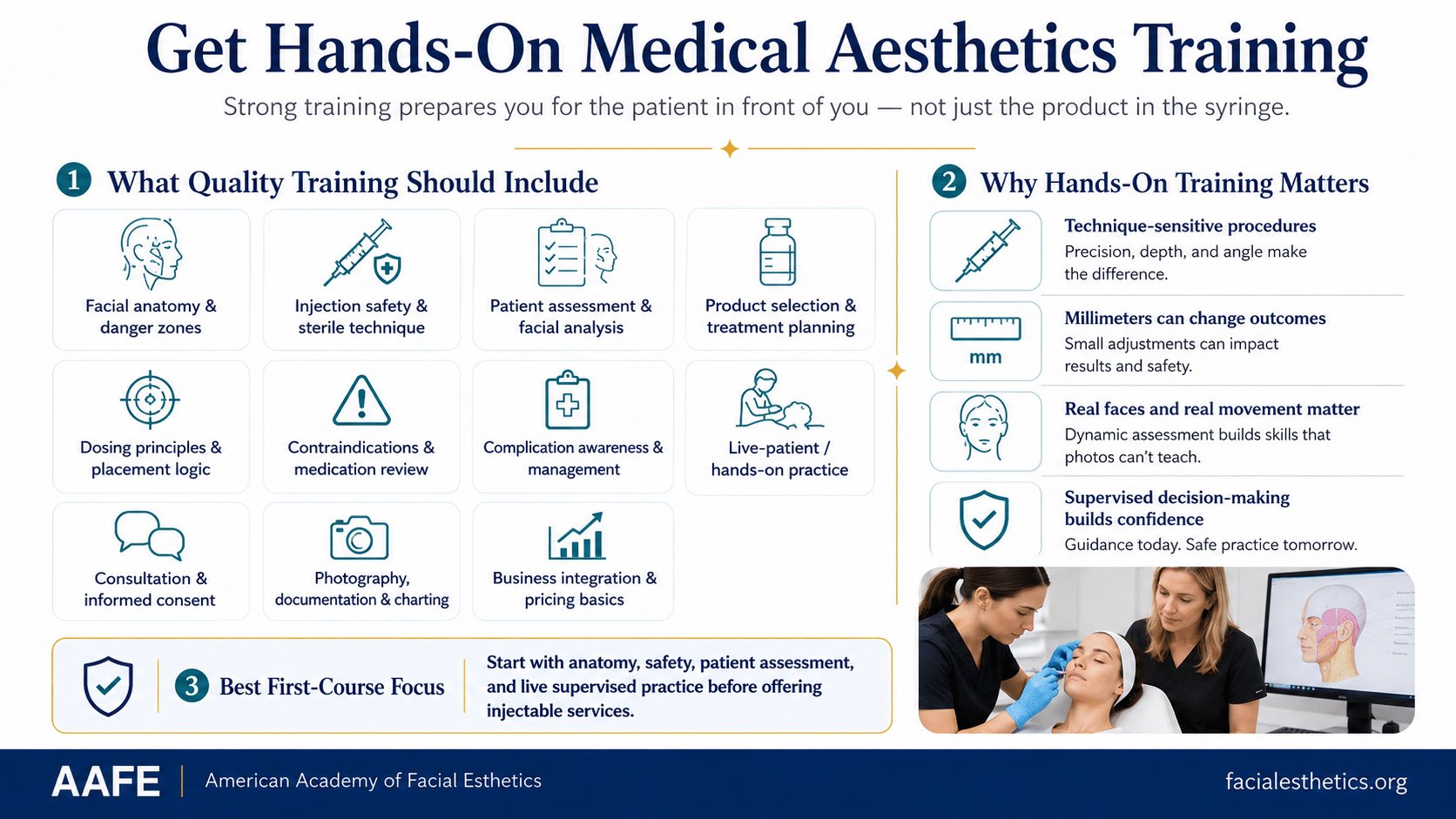
Aesthetic training should prepare you for the patient in front of you, not just the product in the syringe. You need to know how to assess facial movement, choose a safe dose, explain risks, document the visit, and respond when a result needs follow-up.
What Quality Aesthetic Training Should Include
- Facial anatomy and danger zones
- Injection safety and sterile technique
- Patient assessment and facial analysis
- Product selection and treatment planning
- Dosing principles and placement logic
- Contraindications and medication review
- Complication awareness and complication management
- Live-patient or hands-on practice
- Consultation and informed consent workflow
- Photography, documentation, and charting
- Business integration basics and pricing support
Why Hands-On Training Matters
Aesthetic procedures are technique-sensitive. A few millimeters can change the outcome, especially around the lips, eyes, masseter, lower face, or vascular risk areas.
That is why training should include real faces, real movement, and supervised decision-making. Providers need to practice how to evaluate muscle activity, mark injection points, adjust a plan, manage patient concerns, and document treatment clearly.
For a first injectable course, AAFE’s Level I Botox and dermal filler training gives providers a structured way to practice before adding services back at the office.
Step 4: Build a Simple Business Plan Before You Launch
Aesthetics can look simple from the outside because appointments are short and demand is strong. The business side gets messy when providers buy product, add menu items, and start marketing before they know their true break-even point.
Start with a simple launch plan that covers one to three services, not a full medical spa menu. Botox is often the easiest first service to explain because patients already know it, and ASPS reported that neuromodulator injections made up about 35% of cosmetic minimally invasive procedures in 2024. For example, a dental practice might begin with Botox for facial esthetics, masseter treatment, and one dermal filler option. That first menu is easier to train for, explain, price, stock, and track.
Your plan should include the real costs behind each treatment. That means product cost per unit or syringe, provider time, consultation time, assistant time, room turnover, photography, supplies, follow-up visits, and waste from opened product. A profitable service on paper can shrink fast when you forget the 20-minute consultation or the free adjustment visit.
Questions to Answer Before Launch
- Which services will you offer first?
- Who will perform each treatment?
- What training is required before launch?
- What is your startup budget?
- How will you price each service?
- How many patients do you need to break even?
- How will patients book consultations?
- Who handles follow-up and patient communication?
Avoid Overbuilding Too Early
The first goal is not to look like a large aesthetic clinic on day one. The first goal is to launch a safe, clean, profitable service line that patients understand and staff can support.
Avoid buying expensive devices, stocking too many filler types, or offering advanced procedures before the core workflow is stable. Start with services you can perform well, document clearly, and follow up on without stretching the team. After 60 to 90 days, use real appointment data before expanding the menu.
Step 5: Price Your Aesthetic Services Correctly
Pricing gets uncomfortable for many providers at first, especially when they are used to insurance-driven care. But aesthetics is different. You are pricing the full clinical visit, not just the product in the syringe.
For Botox and other neuromodulators, that means pricing by unit or by treatment area. For dermal fillers, most practices price by syringe. Either way, your fee needs to cover the consult, photos, consent, product, supplies, injection time, charting, room turnover, and follow-up.
A 40-unit Botox visit is a good example. The patient may think they are only paying for 40 units, but you are also using clinical judgment, anatomy knowledge, sterile technique, documentation time, and support after treatment. That is why copying the cheapest clinic nearby can quietly damage your margins.
Step 6: Set Up Your Patient Consultation Process
The consultation is where clinical quality and business quality meet. Every patient needs a medical history, medication review, contraindication screen, facial assessment, photo documentation, treatment plan, and informed consent.
What Patients Should Understand Before Treatment
What the treatment can and cannot do. Explain expected onset, duration, common side effects, rare risks, cost, aftercare, and follow-up timing.
Also, address patient concerns before treatment starts. A rushed consult can create mismatched expectations, lower patient satisfaction, and more post-treatment calls.
Step 7: Prepare Your Space, Supplies, and Workflow
Your treatment room should support clean clinical work and smooth patient flow. Set up lighting, mirror access, a reclining chair, sharps disposal, gloves, gauze, alcohol prep, cold packs, emergency supplies, and locked product storage.
Build the workflow before launch. Map the visit from intake to photos, consult, consent, treatment, checkout, follow-up scheduling, and post-care instructions.
Step 8: Market Your New Aesthetic Services to Existing Patients
Existing patients are usually the easiest first audience because trust already exists. Start with education before paid advertising.
A dentist or physician should not market like a generic beauty spa. Your strongest message is clinical: anatomy-based care, trained medical professionals, conservative planning, and natural-looking outcomes.
Marketing Channels to Use
- Website service pages for Botox, fillers, TMJ, and skin services
- Email list announcements to existing patients
- In-office signage in waiting and checkout areas
- Patient handouts after hygiene, exams, or wellness visits
- Google Business Profile updates with correct service categories
- Before-and-after galleries that follow consent and platform rules
- Social media education with realistic expectations
- Consultation CTAs instead of hard-selling treatments
- Staff scripts for phone and front desk questions
- Referral campaigns for happy patients, where legally allowed
Messaging That Works
- “Now offering facial esthetic consultations”
- “Ask us about Botox for facial esthetics”
- “Aesthetic services provided by trained medical professionals”
- “Natural-looking results start with anatomy-based care”
- “Facial esthetics consultations now available by appointment”
Messaging to Avoid
- Overly beauty-focused claims that ignore clinical care
- Unrealistic before-and-after promises
- Discount-only positioning that lowers trust
- Legal or medical claims outside your scope
- Generic medical spa copy that could fit any clinic business
Step 9: Train Your Team Before You Start Selling
Your front desk should understand the service without giving medical advice. Calls should route patients to a consultation, not a diagnosis or treatment promise.
Train the team on what services are offered, who performs them, how consultations work, basic pricing structure, booking steps, and what not to promise. Staff should also know when to escalate clinical questions to the provider.
Step 10: Launch With a Focused Offer, Then Expand
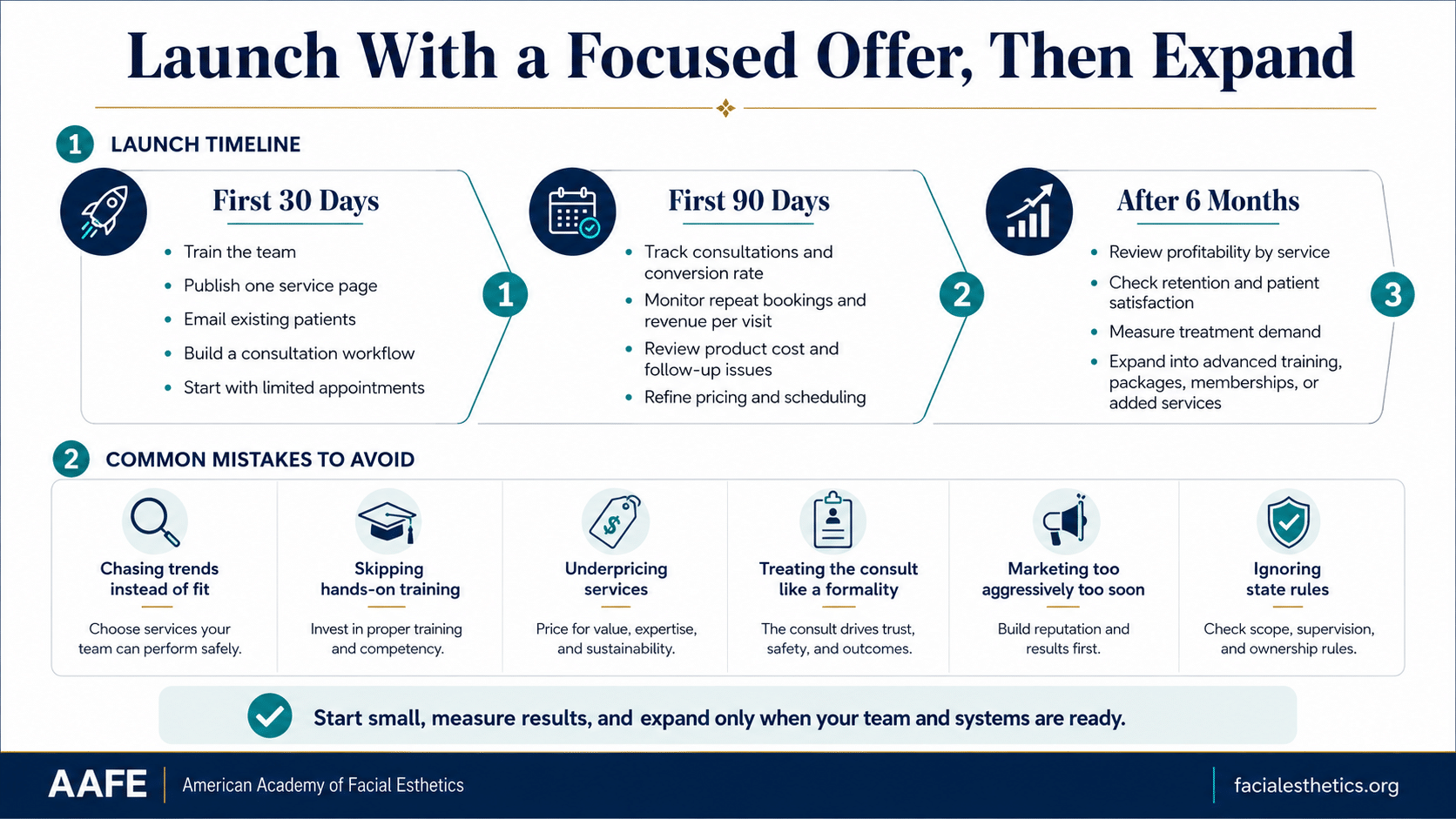
A controlled launch is safer than adding ten treatments at once. Start small, measure well, then expand when your team can handle demand.
First 30 Days
Train the team, publish one service page, email existing patients, and create a consultation workflow. Offer limited initial appointments so the provider has time to document, review, and improve each visit.
First 90 Days
Track consultations, conversion rate, repeat bookings, revenue per visit, product cost, and follow-up concerns. Use this operational data to refine pricing, improve patient education, and adjust scheduling.
After 6 Months
Review profitability by service, patient retention, client satisfaction, and treatment demand. Then consider advanced training, new service pages, packages, memberships, PDO threads, or additional skin services.
Common Mistakes When Adding Aesthetic Services
- Choosing services only because they are trending: A treatment may be popular online, but that does not mean it fits your license, patients, budget, or skill level. Start with services your team can explain, perform, document, and follow up on safely.
- Skipping hands-on training: Aesthetic treatments are practical, visual, and anatomy-based. Providers need supervised practice with facial assessment, injection planning, dosing, contraindications, and complication management, not video lessons alone.
- Underpricing the service: Low prices can fill early appointments, but they can also damage margins and attract price-shopping patients. Your fee should cover product, time, supplies, documentation, follow-up, insurance, training, and clinical judgment.
- Treating the consultation like a formality: The consult is where you screen risk, set expectations, review medications, explain downtime, take photos, and document consent. Skipping this step often leads to unhappy patients and messy follow-up calls.
- Marketing too aggressively too soon: Avoid dramatic claims, heavy discounts, and unrealistic before-and-after promises while your service line is new. Education-based marketing builds more trust for dentists, physicians, nurses, NPs, and PAs.
- Ignoring state rules: Scope, supervision, ownership, and delegation rules can change by state and license type. Check the state board, medical board, malpractice carrier, and employer policy before offering any aesthetic procedure.
How Much Does It Cost to Add Medical Aesthetic Services?
Startup cost depends on whether you add services to an existing office or launch a new aesthetic clinic. A focused in-office launch may be modest, while a full medical spa buildout can cost much more.
| Cost Category | What It May Include | Estimated Cost Range |
| Training | Certification, hands-on courses, advanced education | $1,500 to $8,000+ |
| Product | Toxins, dermal fillers, skincare, consumables | $2,000 to $10,000+ |
| Supplies | Needles, syringes, gloves, sharps disposal, prep supplies | $500 to $2,500 |
| Insurance | Professional liability insurance and business coverage | $1,500 to $6,000+ per year |
| Marketing | Website pages, email, local SEO, patient education | $1,000 to $7,500 |
| Operations | Scheduling, forms, photography, documentation tools | $500 to $5,000 |
| Room setup | Chair, lighting, storage, mirror, photography area | $2,000 to $15,000 |
| Legal setup | LLC, registered agent, contracts, compliance review | $500 to $5,000+ |
Disclaimer: These ranges are planning estimates only. Your actual startup costs can change based on state rules, training level, product volume, insurance providers, room setup, software, marketing needs, and whether you are adding aesthetics to an existing practice or opening a new clinic.
Is Adding Medical Aesthetics Profitable?
Medical aesthetics can be profitable, but only when the numbers are managed before the schedule fills up. A busy injectable day can still underperform if pricing is too low, product is wasted, or follow-up visits take more time than expected.
Skin-focused services also have a strong labor-market signal behind them. The U.S. Bureau of Labor Statistics projects skincare specialist employment to grow 7% from 2024 to 2034, with about 14,500 openings each year, which suggests steady demand for skin and appearance-related services.
But you should know your break-even point. If your launch costs are $15,000 and each paid visit leaves about $200 after product and supplies, you need about 75 paid visits to recover that first investment. If you see 10 aesthetic patients per week, that break-even point could take around eight weeks. If you see three per week, it may take six months.
Track more than revenue. Watch product cost per visit, average treatment value, consultation-to-treatment rate, rebooking rate, and follow-up time.
How AAFE Helps Providers Add Aesthetic Services
Adding aesthetics is easier when training is built around real practice, not just technique. Providers need to know how to choose the right patient, explain the treatment, plan the dose, manage expectations, document the visit, and handle follow-up.
AAFE trains licensed dentists, physicians, nurses, NPs, and PAs in Botox, dermal fillers, PDO threads, TMJ treatment, facial pain therapy, and other non-surgical facial esthetic procedures. The training is hands-on and small-group, so providers can ask questions, watch instructors work, and practice with live patient guidance.
Most providers start with Botulinum Toxins & Dermal Fillers Level I because it builds the foundation for safe injectable care. From there, many add Frontline TMJ and Facial Pain Therapy if they want a stronger therapeutic service line, or PDO thread training once they are ready for more advanced facial esthetics.
AAFE has been running live training courses for 15+ years and has trained over 18,000 medical professionals. That experience matters because providers are not just learning a procedure. They are learning how to bring a new service line back to a real office, with the right clinical judgment, patient flow, and safety habits.
Ready to plan your first aesthetic service line? Explore AAFE’s hands-on facial esthetics training options for licensed medical professionals.

Frequently Asked Questions
More Information
Reference: U.S. Bureau of Labor Statistics Career Outlook for Skincare Specialists
U.S. Bureau of Labor Statistics
Reference: IRS Guidance on Employer Identification Numbers (EINs) and Application Requirements
Employer identification number