Summary
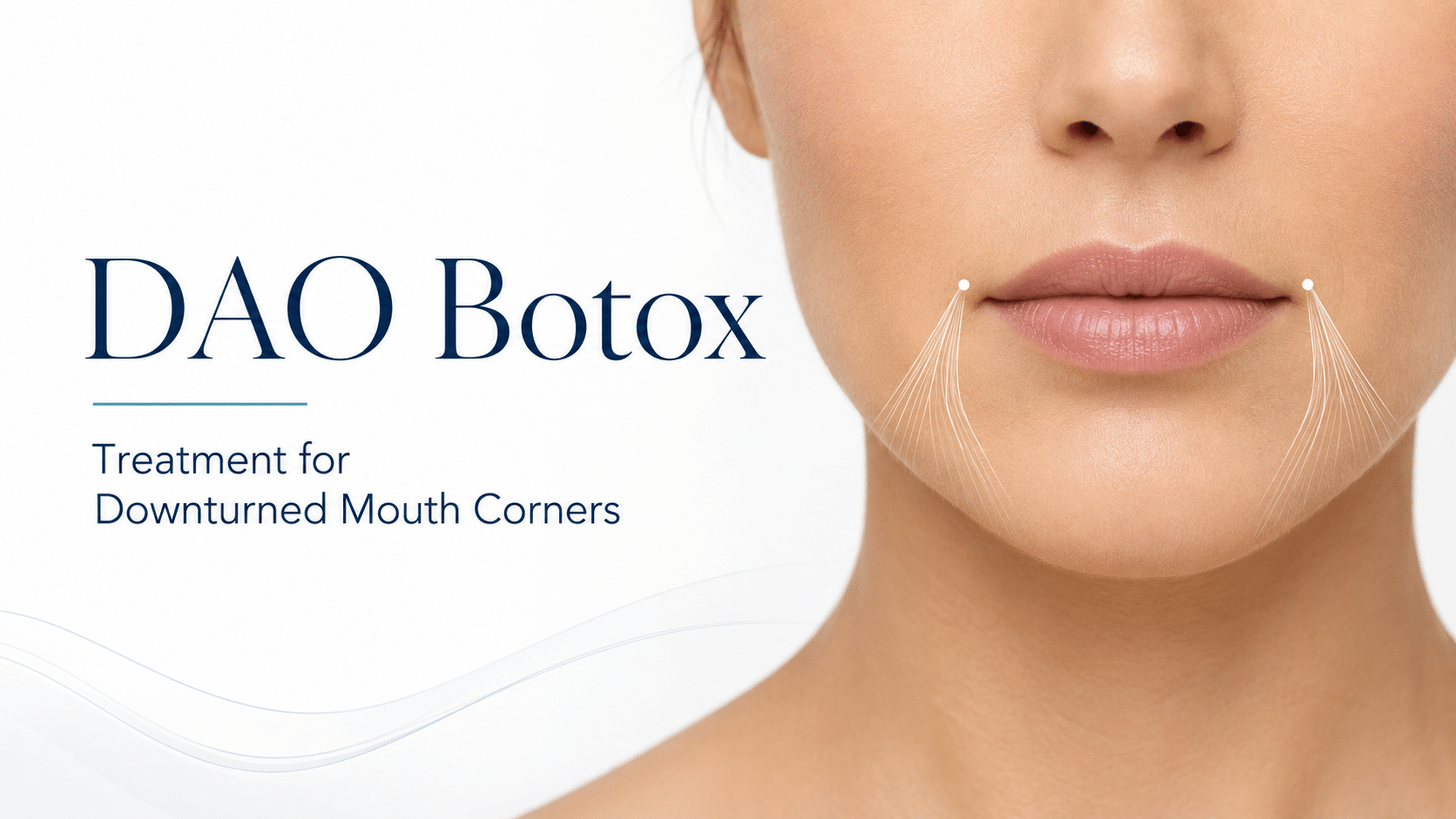
When a patient says, “I look sad even when I feel fine,” an overactive DAO muscle may be the cause.
DAO Botox can soften that downward pull without adding volume. Yet the treatment leaves little room for error because the muscles for smiling, speech, and lip control sit close together.
What Does DAO Mean?
DAO stands for depressor anguli oris, the lower-face muscle that pulls the mouth corners downward. Strong activity at rest can create a sad expression, tired expression, or tense resting expression [1] [2].
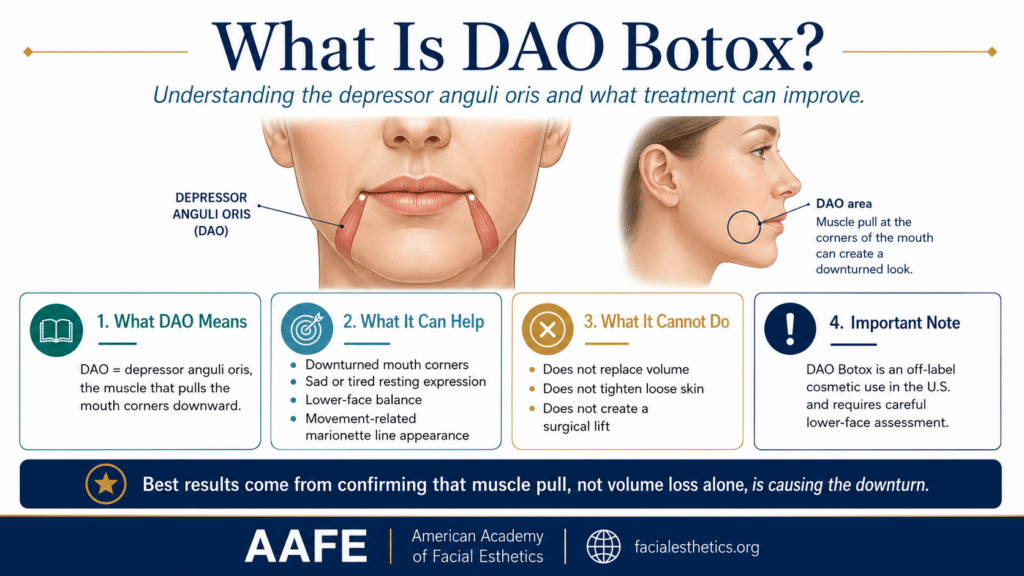
Botox for DAO muscle activity can soften that pull, but it cannot tighten loose skin or replace volume loss. The consultation must identify the cause before an injection is planned.
Important: DAO Botox is an off-label use of BOTOX Cosmetic in the United States because the depressor anguli oris is not an FDA-approved cosmetic treatment area [5].
What Can DAO Botox Treat?
Patients may ask for Botox for downturned mouth, Botox for mouth corners, or Botox for sad mouth. Each phrase points to the same goal: weaken DAO pull while preserving natural facial expressions.
Downturned Mouth Corners
A botulinum toxin injection can ease active downward pull and leave the corners of the mouth softer at rest [1] [3]. The expected result is a subtle lift, not a surgical change.
Sad or Tired Resting Expression
Treatment may help when DAO muscles drive the resting expression. The provider should compare the mouth at rest, during downward pull, and through a full smile before choosing injection sites.
Marionette Line Appearance
Botox for marionette lines may soften movement, but it will not fill a fixed fold. Deep marionette folds caused by volume loss or loose skin may need dermal filler or another face rejuvenation treatment.
Lower-Face Balance
DAO Botox may be combined with chin treatment, dermal fillers, or cheek support. Pairing DAO Botox with filler can address muscle pull and lost support when both affect the lower face [1].
How DAO Botox Works
Botulinum toxin type A blocks acetylcholine, the signal that tells a muscle to contract. As the depressor anguli oris relaxes, elevator muscles have more effect at the mouth corners. Botox works through muscle relaxation, not skin lifting or added volume.
In a placebo-controlled study, all 10 treated participants were rated improved at week 4, and 9 remained improved at week 12. However, only 10 people received onabotulinumtoxinA, so the evidence is promising but still small [3].
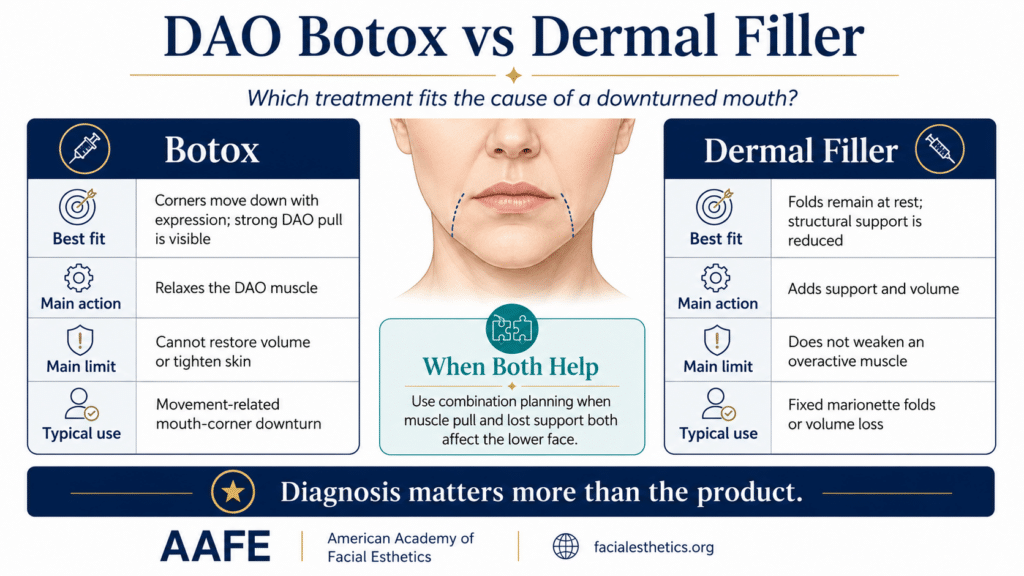
DAO Botox vs. Filler: Which Treatment Fits the Cause?
| Option | Best fit | Main limit |
| Botox | Corners move down with expression and strong DAO muscle activity is visible | Cannot restore volume or tighten skin |
| Dermal filler | Folds remain at rest and structural support is reduced | Does not weaken an overactive muscle |
| Both | Muscle pull and volume loss both affect the result | Needs careful sequencing and treatment planning |
What Happens During a DAO Botox Appointment?
The Botox injections take a few minutes, but assessment should take most of the appointment.
- Health review: Medical history, medicines, prior Botox treatment, and earlier side effects are checked.
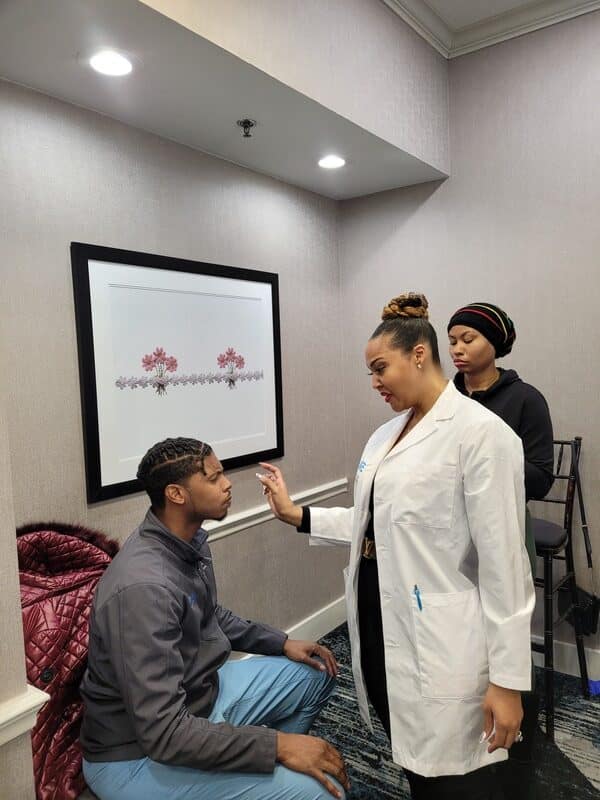
- Movement assessment: The patient relaxes, frowns, smiles, and pulls the mouth corners down. Photos record facial movement and baseline asymmetry.
- Treatment planning: Muscle activity, volume loss, skin laxity, and the patient’s goal guide the plan.
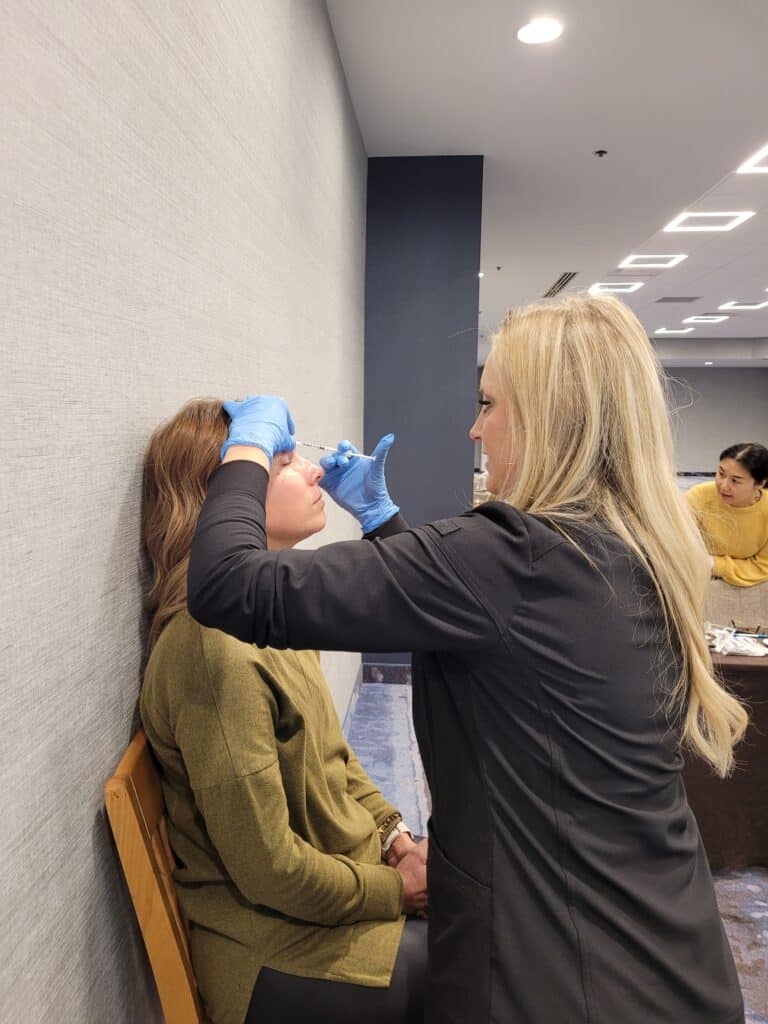
- Injections: The skin is cleaned before small botulinum toxin injections are placed at individualized injection sites.
- Aftercare: Written instructions and a follow-up plan are provided. A review near two weeks allows assessment of symmetry, speech, mouth movement, and the settled result.
When Does DAO Botox Start Working?
Early effects may appear in 3 to 7 days, but the result should be judged around day 14 [1].
Another injection should not be added before the first treatment settles. The two-week review shows how the dose and injection technique affected the smile, lip control, and resting expression.
How Long Does DAO Botox Last?
Results often last about three months, although some patients notice effects for three to four months.
Improvement may still be visible at week 12 but starting to fade [3]. Duration varies with dose, product, metabolism, muscle strength, and treatment history.
A fresh facial assessment is needed before every repeat treatment because movement and asymmetry can change.
DAO Botox Before and After: What Providers Should Record
| Before | After about two weeks |
| Mouth corners angle down at rest | Corners appear softer or more level |
| Strong DAO pull during expression | Less downward movement |
| Sad or tense resting expression | More neutral lower-face balance |
| Deep fold from volume loss | Little change unless support is treated |
The same lighting, camera distance, angle, and facial expressions should be used each time. A short smile video can reveal lip asymmetry that a still image misses.
Who Is a Good Candidate for DAO Botox?
Patient selection matters as much as proper injection placement.
| Better candidate | Poor or caution candidate |
| Clear DAO muscle pull during movement | Significant loose skin or deep volume loss |
| Early mouth-corner downturn | Advanced marionette folds at rest |
| Wants a subtle lift without dermal filler | Expects a facelift-level result |
| Normal smile, speech, and lip control | Prior poor lower-face Botox response |
| Cleared through medical review | Pregnancy, breastfeeding, neuromuscular disease, or another concern needing review |
DAO Botox Side Effects and Risks
Common DAO Botox side effects are bruising, redness, tenderness, or swelling at an injection site. These temporary side effects usually improve over several days [5].
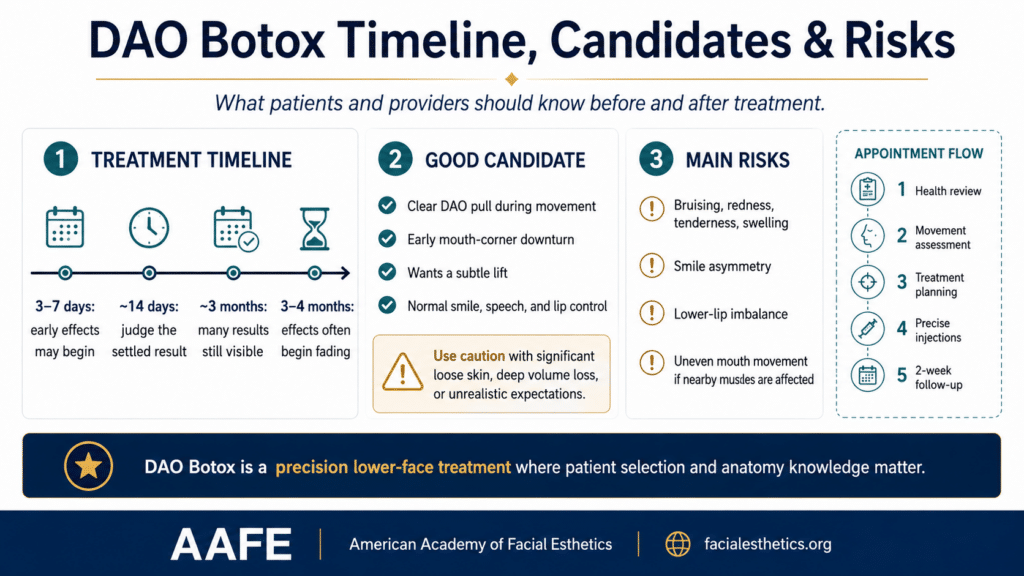
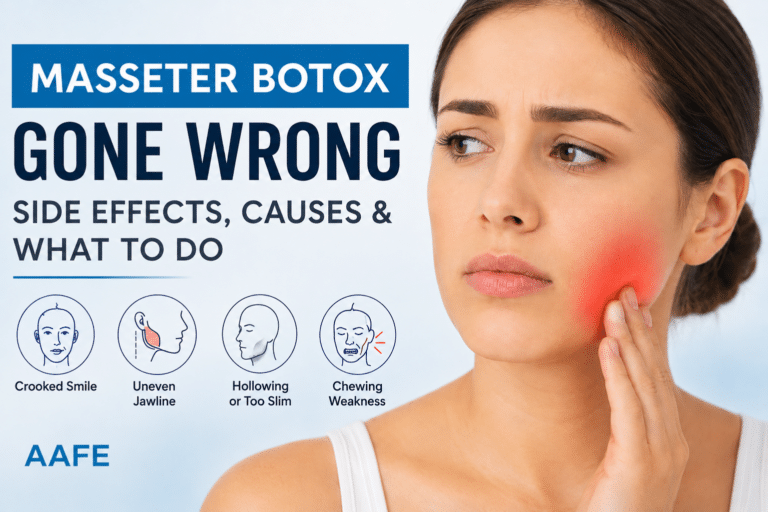
Toxin reaching the depressor labii inferioris or other nearby muscles can cause lower-lip imbalance, smile asymmetry, an uneven smile, a crooked smile, or trouble with certain mouth movements [1] [2] [4]. Uneven results should be reviewed after the treatment settles, usually around day 14.
DAO Botox Gone Wrong: What Injectors Should Assess
DAO Botox gone wrong may cause uneven mouth movement, lower-lip weakness, or over-relaxation. Poor patient selection, incorrect injection placement, excess treatment, or toxin spread may be responsible [1] [2] [4].
The treating provider should record when the change began and which facial movement is affected, then compare new photos and video with the pre-op record. More Botox injections should not be used as a quick correction before the cause is clear. Severe allergy symptoms or trouble breathing, swallowing, or speaking require urgent medical care [5].
How Much Does DAO Botox Cost?
Botox costs about $11 to $18 per unit in many U.S. markets and $15 to $25 in premium cities. DAO treatment may total about $60 to $120, although an office minimum, product, provider experience, and follow-up can change the fee.
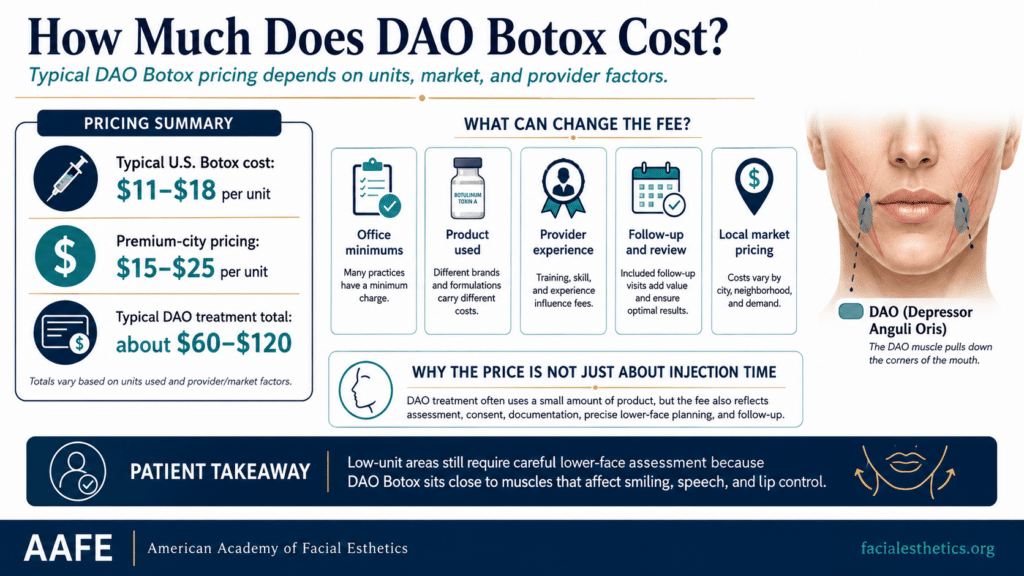
The area may use little product, but it still needs assessment, consent, documentation, and review. Practice pricing should reflect that clinical work, not only injection time.
Why Provider Training Matters for DAO Botox
DAO Botox requires advanced lower-face training because precise treatment depends on strong foundational injector skills.
A licensed provider must understand the depressor anguli oris, depressor labii inferioris, platysma, risorius, and how nearby muscles work together during speech and smiling.
AAFE founder and president Dr. Louis Malcmacher gives a direct rule for proper injection: “You want to really make sure that you are in the muscle that you’re targeting.” That requires facial anatomy, patient selection, dosing principles, consent, documentation, and complication management.
AAFE Botox training and Botox certification connect those skills through small-group, live-patient hands-on training. AAFE has trained more than 18,000 dental and medical professionals through anatomy-based facial esthetics and therapeutic education. Better training protects patient trust and reduces corrective chair time as providers add facial aesthetics.
Explore AAFE’s Botulinum Toxins and Dermal Fillers Level II course and train through anatomy-based, live-patient instruction.

Frequently Asked Questions
More Information
- Creating Lift in the Lower Face With Botulinum Toxin A Treatment: An Anatomical Overview With Videos and Case Studies Illustrating Patient Evaluation and Treatment
An expert anatomical overview with case examples of lower-face depressor treatment, customized assessment, muscle balance, and risks to speech, smiling, and facial movement. - Novel Anatomical Proposal for Botulinum Neurotoxin Injection Targeting Depressor Anguli Oris for Treating Drooping Mouth Corner
A narrative anatomy review covering DAO borders, overlap with nearby muscles, and individual variation. Its proposed injection approach had not yet been tested clinically. - A Novel 3-Point Injection Technique for OnabotulinumtoxinA in the Upper Depressor Anguli Oris
A placebo-controlled trial of 20 adults that tracked improvement, tolerability, and durability through 12 weeks. - Three-Dimensional Evaluation of the Depressor Anguli Oris and Depressor Labii Inferioris for Botulinum Toxin Injections
A 45-cadaver anatomy study examining muscle overlap, tissue depth, and landmarks relevant to safe targeting. - BOTOX Cosmetic Prescribing Information
Official indications, contraindications, safety warnings, and information about distant toxin spread.