Summary
Masseter Botox temporarily relaxes the strong chewing muscles along the jaw, which may reduce clenching, teeth grinding, jaw tension, headaches, and TMJ-related discomfort while gradually creating a slimmer lower-face shape. The best candidates have enlarged or overactive masseter muscles rather than jaw width caused mainly by bone or fat. Results usually begin with symptom relief within days to two weeks, while visible jaw slimming develops over four to eight weeks and commonly lasts three to six months. Because treatment is off-label and poor placement can cause chewing weakness, smile asymmetry, or facial imbalance, patients should choose a licensed provider with strong lower-face anatomy and hands-on injection training.
A wider jaw does not always start as a cosmetic concern. Sometimes it starts with clenching, sore chewing muscles, or a patient who says their face feels tense all the time.
Masseter Botox has become a popular option because it can address both appearance and function.
Below, we’ll break down how it works, who it may help, and what providers should know before offering it.
What Is Masseter Botox?
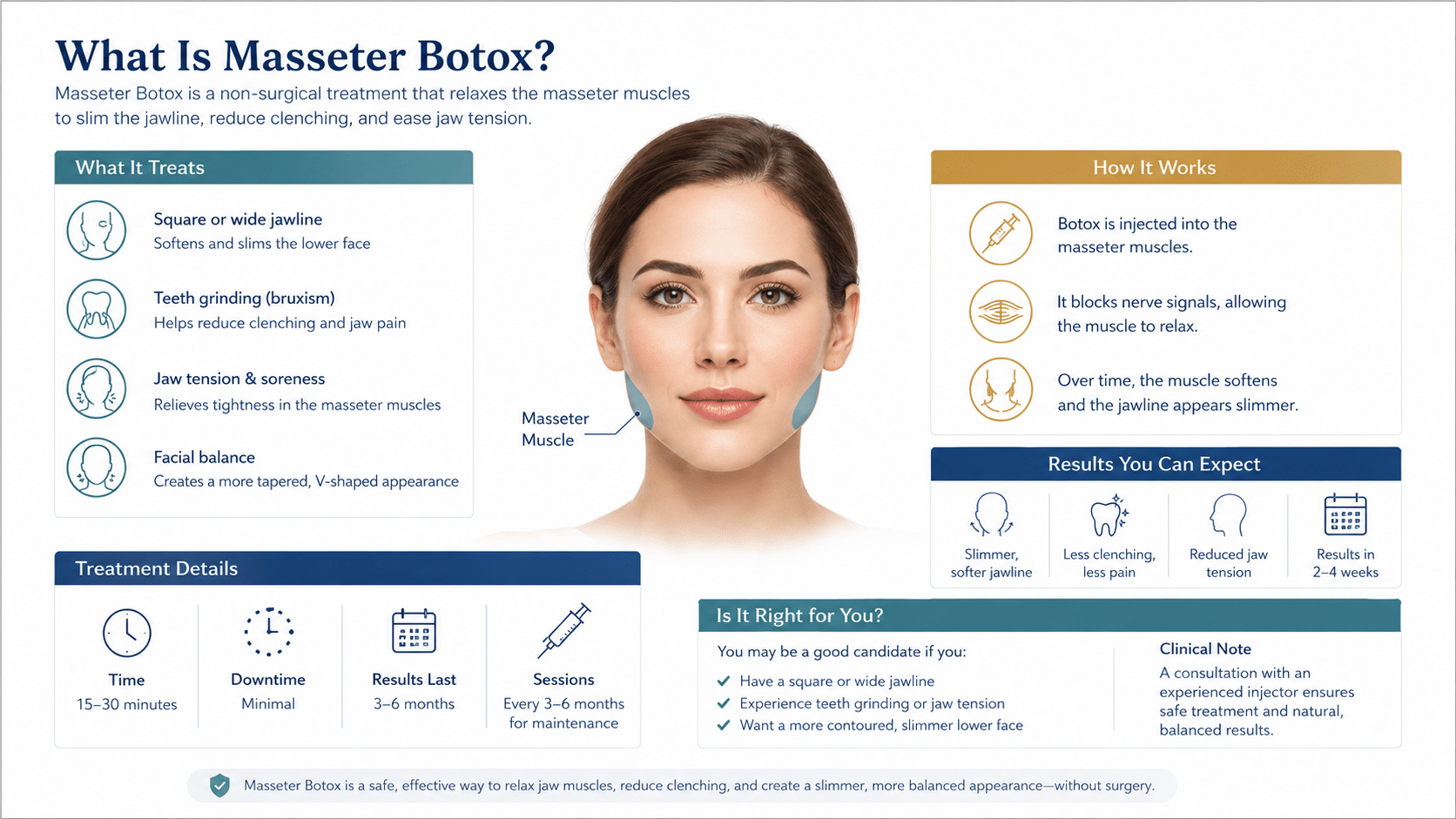
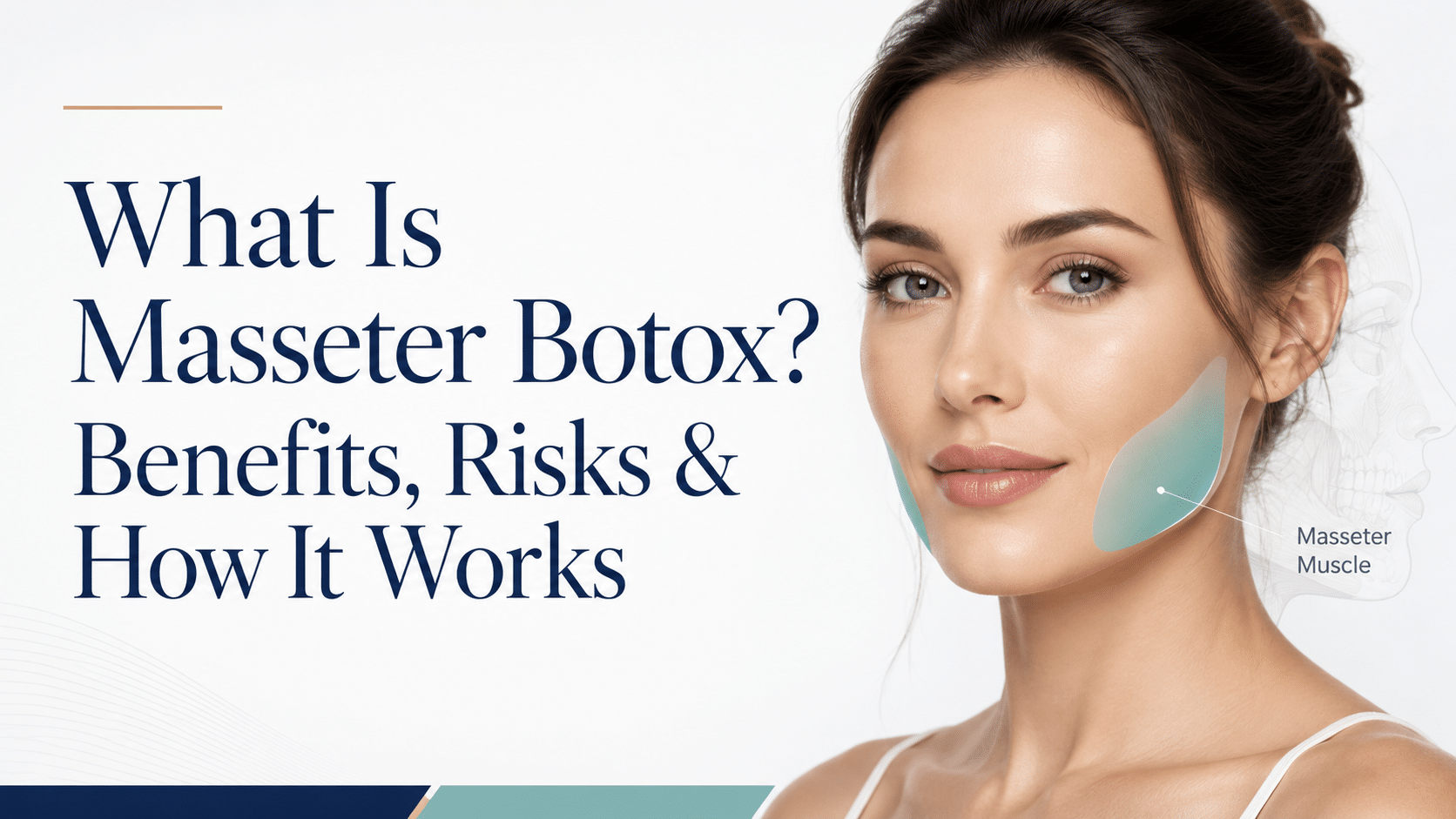
Masseter Botox is a treatment where a provider injects botulinum toxin into the masseter muscle, which is one of the main chewing muscles on the side of the face.
Masseter Botox can also be referred to as jaw Botox, jawline Botox, masseter reduction, or masseter muscle injection.
Once injected, the product temporarily reduces how strongly the muscle contracts, which can help soften a bulky jawline or ease clenching-related tension.
Understanding the Masseter Muscle
The masseter muscle runs from the cheekbone area down to the lower jaw. It helps close the jaw when you chew, bite, or clench.
When it gets overworked, it can become larger over time, just like any other muscle in the body. That can happen because of genetics, chronic teeth grinding, daytime clenching, constant gum chewing, or repeated heavy jaw use.
When that muscle gets bulky, it can make the lower face look wider or more square. This is why some patients ask for masseter Botox. They want a softer jawline, a slimmer jawline, or better facial harmony.
How Masseter Botox Works
Masseter Botox works by blocking the nerve signal that tells the muscle to contract. More specifically, botulinum toxin limits the release of acetylcholine at the neuromuscular junction, which lowers muscle activity so the masseter does not contract as strongly.
Over time, reduced use can make the muscle smaller, which is why the lower face can look narrower after treatment.
But of course, this is not an overnight change. Receptive patients notice early improvement in clenching, muscle tension, or jaw pain within a few days to two weeks. And the visible shape change usually takes longer, around four to eight weeks.
Benefits and Uses of Masseter Botox
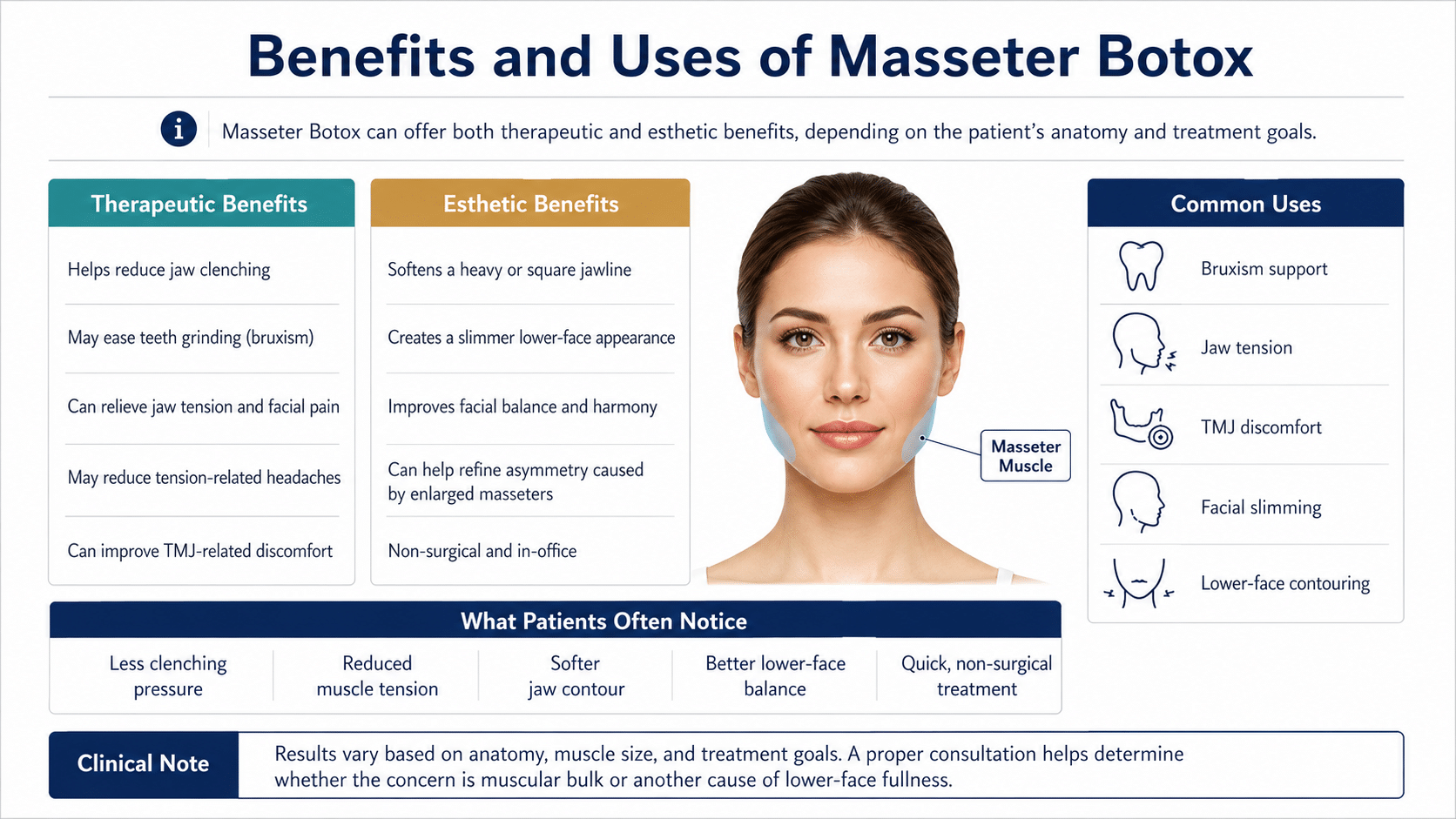
Masseter Botox can provide both esthetic and therapeutic benefits, but the results depend on the patient’s anatomy and reason for treatment. It tends to make the most sense for patients presenting with headaches, facial pain, jaw tension, teeth grinding, TMJ-related discomfort, or a wider lower face caused by enlarged masseter muscles.
Therapeutic Benefits
The main therapeutic use is for clenching and teeth grinding, also called bruxism. When the masseter is overactive, patients may wake up with a tired jaw, sore teeth, jaw pain, facial pain, headaches, or pressure near the jaw joint (temporomandibular joint).
Some patients also report ear pain, jaw locking, or tension that gets worse during stressful periods. By reducing force in the jaw muscles, masseter Botox may help ease symptoms of TMJ, lower clenching, and calm tension-related headaches.
Esthetic Benefits
Jaw Botox can soften a heavy lower face and create a more refined jawline. Patients with enlarged masseter muscles often want a slimmer jawline, a less square jaw, or better balance between the upper and lower face.
It can also improve facial harmony for patients whose masseter bulk makes one side of the face look heavier than the other.
For many adults, this feels like a more appealing option than surgery because it is quick, in-office, and temporary.
Ideal Candidates

Not every person with jaw discomfort is a good candidate, and not every square jaw needs toxin. A strong consultation matters here.
Good candidates are:
- Adults over 18 who want help with teeth grinding, jaw pain, facial pain, or a broad lower face
- People with enlarged masseter muscles from clenching, chewing habits, genetics, or chronic muscle overuse
- Patients with realistic expectations who understand the treatment is temporary
- Healthy adults who are not pregnant or breastfeeding
- Patients without neuromuscular disorders, active skin infection, known allergy to botulinum toxin products, or major bleeding concerns
In practice, the best candidate is someone whose complaints and anatomy line up. If the bulk is really bone, parotid fullness, or fat, the result may be limited.
Preparing for the Procedure
Good masseter Botox starts before the first injection. The consultation is where the provider figures out what is really driving the concern. Some patients mainly want a slimmer lower face. Others are dealing with teeth grinding, jaw pain, or constant muscle tension and only bring up the jawline after that.
During the visit, the provider should review the patient’s medical history, current medications, past Botox use, and any history of teeth grinding or jaw symptoms. They should also examine both sides of the face while the patient is relaxed and while they bite down. That helps show the size, strength, and shape of the masseter muscle before choosing the dose and injection points.
Before the appointment, patients should follow a few simple preparation steps:
- Make sure the treatment area is healthy. Patients should not have an active skin infection in the area being treated.
- Avoid alcohol and caffeine for at least 24 hours. Alcohol may increase bruising risk, and both should be avoided before treatment.
- Ask about blood-thinning medications or supplements. Aspirin, ibuprofen, naproxen, vitamin E, ginkgo biloba, St. John’s Wort, and similar products may increase bruising or swelling. Patients should never stop prescribed medication without medical guidance.
- Plan around important events. Schedule botulinum toxin treatment at least two to four weeks before a wedding, photo session, conference, or other special event.
What Happens During the Procedure?
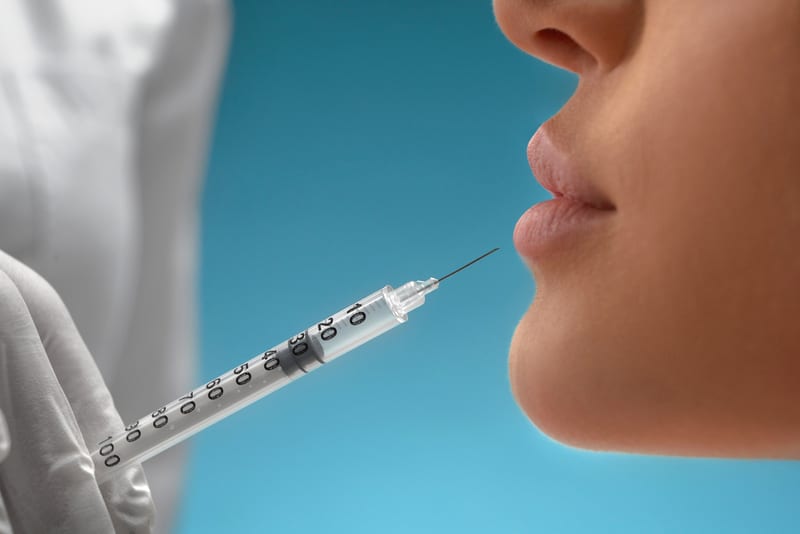
Masseter Botox is a non-surgical procedure done in the office.
The skin is cleaned, the injection sites are marked, and a fine needle is used to place the product into the muscle. Some providers use topical numbing, but many patients do well without it because the masseter botox injections are quick.
The number of injection points and units depends on muscle size, facial shape, and treatment goals. A common real-world range is about 15 to 40 units per side.
The whole visit often takes 15 to 30 minutes.
Although the procedure is brief, masseter injections require careful lower-face anatomy knowledge. The provider needs to understand the masseter muscle, nearby smile muscles, dose placement, and how toxin spread can affect chewing function or facial symmetry.
That is why we at AAFE put so much focus on hands-on learning through our live patient Botulinum Toxins and Dermal Fillers Level I course, where providers build real injection skills, study facial anatomy, and learn how to make sound treatment decisions.
Aftercare and Recovery
One reason masseter Botox has grown so much is that recovery is usually easy. Most patients return to normal daily activity right away.
Even so, the first 24 hours still matter. The goal is to let the neurotoxin stay where it was placed and avoid anything that may increase swelling, bruising, or unwanted movement of the product.
For the first 4 hours after treatment, patients should:
- Stay upright. Do not lie down during this window.
- Avoid touching the treated area. Do not rub, massage, or press on the jaw.
- Skip heat and sweating. Avoid exercise, hot tubs, saunas, direct sun, or anything that raises body temperature.
- Avoid facial treatments. No facials, chemical peels, or massages right after treatment.
- Keep the skin clean. Avoid makeup on the day of treatment to lower infection risk at the injection sites.
Patients can usually wash their face later that night, as long as at least 4 hours have passed. If there is mild swelling or tenderness, a cold compress can help, but it should be used gently. For masseter treatment, it can also help to avoid very hard or chewy foods for the first few days, especially if the jaw feels tired.
A simple results timeline looks like this:
- 2 to 10 days: The neurotoxin may start taking effect.
- 2 weeks: The result should be easier to judge, and this is the usual follow-up window.
- 4 to 8 weeks: Jaw slimming may become more noticeable as the masseter muscle relaxes.
- 3 to 4 months: Many patients schedule maintenance treatment to keep the result consistent.
Potential Side Effects and Risks

Masseter Botox is widely used, but it is still a real medical treatment with real risks. That point should never get lost in cosmetic marketing.
Possible side effects:
- Pain, swelling, or bruising at the injection site
- Headache or mild flu-like symptoms
- Chewing weakness, especially with hard foods
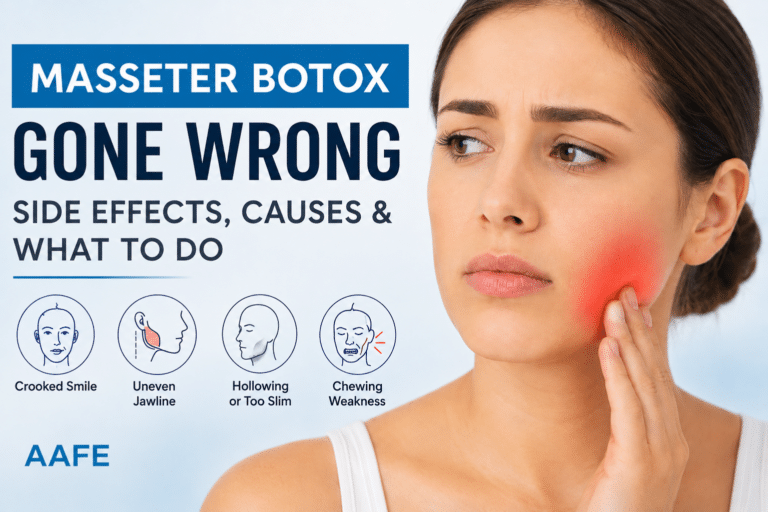
- Smile asymmetry or facial asymmetry if the injection is too low or spreads
- Drooling, lip changes, or trouble biting properly
- Rare but serious issues like trouble swallowing, breathing problems, or vision changes, which need urgent medical attention!
It is also important to say this clearly. Masseter Botox is an off-label use. Botox has FDA-approved cosmetic uses, but masseter reduction is not one of the labeled indications.
That does not make it unusual, but it does raise the bar for consent, documentation, clinical judgment, and training. Long-term repeated treatment in the lower face is still being studied, so providers should be thoughtful and conservative.
Cost and Maintenance
Masseter Botox usually costs more than upper-face toxin because the muscle is larger and stronger.
Most providers charge around $400 to $900, depending on location, dose, injector experience, and whether other services are added.
Many practices price by unit, often around $10 to $15 per unit, and patients may need 20 to 30 units per side or more, depending on anatomy. Since results are temporary, most patients need maintenance treatments every 3 to 6 months if they want to keep the same effect over time.
Just note that cosmetic treatment is usually not covered by insurance.
For providers… Offering masseter Botox is not just about knowing where to inject. It also has to make sense for your schedule, pricing, patient communication, and follow-up process. That is why at AAFE, we go beyond injection training in our courses.
If you want to sharpen this specific skill, the Magical Masseter virtual course takes a closer look at anatomy, dosing, technique, and common mistakes that can throw off the result.
Choosing the Right Provider
The masseter sits in an area where esthetics and function meet. If the provider treats the wrong part of the muscle, over-treats the area, or ignores bite patterns, the patient may end up with chewing trouble, a crooked smile, or a result that looks off.
For patients, that usually means looking for someone who understands the lower face well and has real training in this area. If you are trying to find a provider who offers masseter Botox, you can check out some of our partners… doctors and injectors who have completed AAFE training.
For licensed medical professionals, it means getting trained the right way before offering it. If you want to add masseter Botox or other lower-face botulinum toxin treatments to your practice, AAFE’s live patient Botulinum Toxins and Dermal Fillers Level I course is a strong place to start. For providers who want a deeper look at this specific treatment, we also offer the Magical Masseter training, focused on anatomy, dosing, technique, and common pitfalls.

Frequently Asked Questions
More Information
Does Health Insurance Cover Cosmetic Surgery?
Insurance guide explaining when cosmetic and reconstructive procedures may be covered, how medical necessity affects eligibility, common exclusions, and India-specific insurance considerations.
Health insurance coverage for cosmetic surgery
Botulinum Toxin
Clinical overview covering botulinum toxin pharmacology, mechanisms of action, therapeutic and cosmetic applications, administration, contraindications, adverse effects, toxicity, and patient monitoring.