Summary
The article explains that nurse practitioners can start a Botox business, but the legal requirements vary significantly by state, especially around prescribing authority, supervision, delegation, and practice ownership. It emphasizes that the safest path is to confirm state rules first, complete hands-on clinical training, secure proper insurance and compliance systems, and only then launch and gradually expand the practice.
Yes, many nurse practitioners can start a Botox business, but the legal path varies by state. The AANP classifies states as full, reduced, or restricted practice environments based on NP authority [1].
Most NP aesthetic practices launch with botulinum toxin type A products such as Botox, Dysport, Xeomin, and Daxxify, often called neuromodulators or wrinkle relaxers. Cosmetic botulinum toxin treatment is the practice of medicine, and an NP-owned aesthetic business carries the same clinical, legal, and documentation obligations as any other practice.
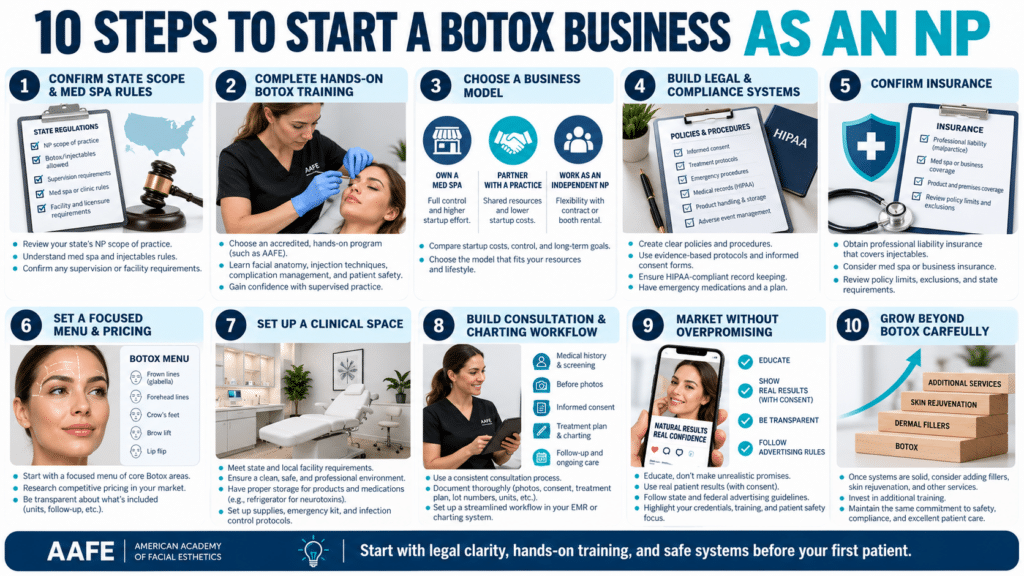
Use these ten steps to build those systems before treating your first patient.
Disclaimer: This article reflects general guidance available as of October 2026 and provides education, not legal or medical advice. State laws, prescribing authority, ownership rules, and insurer requirements change. Confirm current requirements with licensing boards, counsel, and your carrier.
Step 1: Confirm Your State’s NP Scope and Med Spa Rules
Confirm your state’s legal requirements before filing any business entity paperwork. Full practice authority may let an NP diagnose, prescribe, and treat independently [1], but it does not settle who may own or control the clinical entity.
Ask healthcare counsel whether corporate practice of medicine (CPOM) rules apply to your model. These rules can affect who may own or control a medical practice. Get written answers to the following questions before signing a lease:
| What to confirm | Where to confirm it |
| Practice authority, including full, reduced, or restricted status | State board of nursing; AANP map for definitions [1] |
| Collaboration or supervision requirements | State board of nursing and board of medicine |
| Who may own the clinical entity under CPOM rules | Healthcare attorney and applicable state law |
| Whether you can purchase neuromodulators and delegate administration to an RN or LPN/LVN | State board of nursing |
| Coverage for aesthetic treatment, off-label use, and delegation | Malpractice carrier, in writing |
AAFE’s state requirements provide a useful starting point, but NPs should confirm all ownership, supervision, prescribing, and delegation rules directly with the appropriate state boards.
Step 2: Complete Hands-On Botox Training
NP programs do not typically include cosmetic injection training, so an NP license establishes legal eligibility rather than clinical preparation for aesthetic treatment. Training should cover anatomy, patient selection, product labeling, technique, complications, consent, and charting.
AAFE’s Botulinum Toxins & Dermal Fillers Level I course pairs on-demand online modules with supervised live-patient instruction, offers up to 20 CE/CME credits across both modules, and includes one vial of neurotoxin and one syringe of dermal filler in tuition.
The standalone Botulinum Toxin Level I course is $1,797. Through October 31, 2026, AAFE’s Bootox & Treat promotion can save you up to $500 on qualifying training. You can secure the offer now, choose your course date later, and move closer to launching your Botox business with supervised, live-patient experience behind you.
Explore Botox Training for Nurse Practitioners
Step 3: Choose a Botox Business Model
Pick the smallest model that can deliver safe, compliant care.
- Clinic sublease: A sublease inside an established practice lowers fixed costs and lets you test local demand.
- Solo suite or concierge practice: A dedicated suite offers more control, but you are responsible for every clinical and business system.
- Mobile aesthetic practice: A mobile model lowers space costs where state rules, product storage, patient privacy, emergency planning, and insurance coverage allow it.
- Med spa or partnership: A med spa or partnership supports a broader service menu but carries higher facility, payroll, and oversight requirements.
The SBA recommends separating one-time expenses from recurring costs when calculating startup needs [7]. The following AAFE planning example shows how that distinction changes the budget:
| Line item | Planning allowance | Notes |
| Hands-on training | $1,797* | Standard AAFE tuition before promotional savings; excludes travel |
| Legal review and entity setup | $2,000 | One-time; varies widely by state and structure |
| Insurance | $1,500 per year | Replace with a written carrier quote |
| Clinical room setup | $3,000 | One-time |
| Software for charting, scheduling, and payment | $600 per year | Confirm that vendors support HIPAA compliance |
| Launch marketing | $1,000 | One-time |
| Subtotal | $9,897 | Planning estimate, not a quote |
| Not included | N/A | Rent and deposits, initial product inventory, collaborating physician or medical director fees where required, and payroll |
These are illustrative planning allowances, not quotes. Replace each line with written estimates for your market. The Bootox & Treat promotion may reduce the training cost by up to $500, depending on the qualifying course or training package selected.
Step 4: Build the Legal and Compliance Foundation
Have a healthcare attorney approve the entity before filing an LLC, corporation, or PC. Complete any collaboration agreement, standing protocols, tax registration, and licenses.
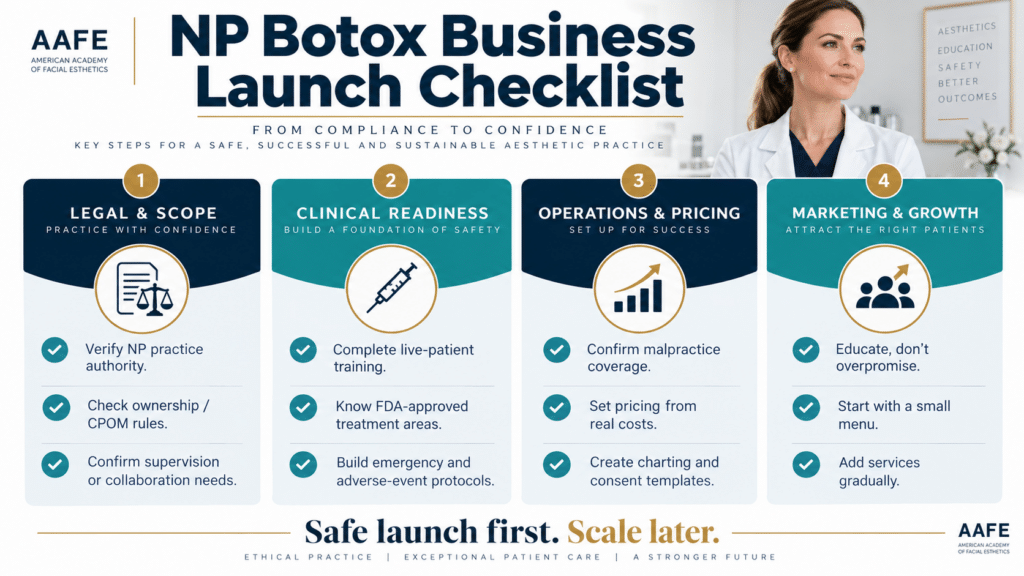
Build HIPAA policies for patient information [5] and OSHA procedures for sharps and exposure control [4]. Add consents, photo releases, chart templates, adverse-event procedures, including reporting serious events to FDA MedWatch [9], storage logs that follow the product label [2], and a recall process. Buy FDA-approved product through an authorized U.S. source. Counterfeit Botox has caused hospitalizations [3].
Step 5: Confirm Insurance Before the First Appointment
Do not assume NP malpractice coverage includes aesthetics. Get written confirmation for Botox, planned dermal fillers, off-label uses, complications, delegation, mobile care, and every business address.
Also price general liability, property, cyber coverage, and workers’ compensation. Send the carrier your training certificate and protocols before opening.
Step 6: Create a Focused Treatment Menu and Pricing Formula
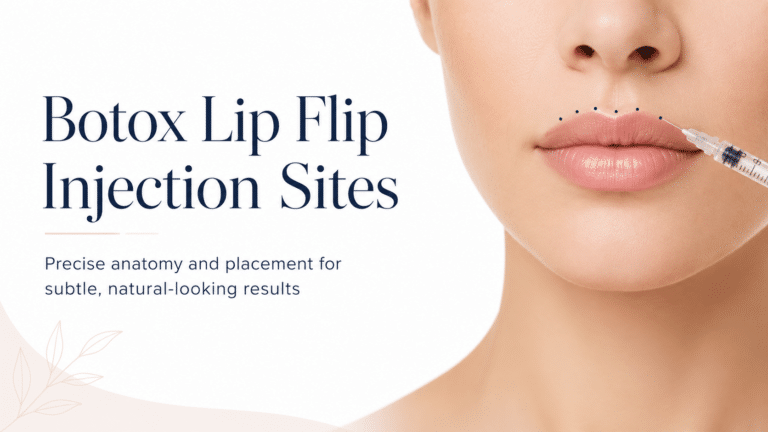
Begin with areas supported by your training, your scope, and the label of the specific product you purchase. BOTOX Cosmetic is FDA-approved for glabellar lines (frown lines or “11s”), lateral canthal lines (crow’s feet), frontalis lines (forehead lines), and platysma bands [2]; other botulinum toxin type A products carry different approved indications. Glabellar, lateral canthal, and frontalis lines form a focused starting menu. Lip flips, gummy smile treatment, depressor anguli oris (DAO) treatment, brow shaping, and masseter reduction are off-label and require additional training, specific informed consent, and documentation.
Price by unit or area, but do the math first:
| Minimum price = product + supplies + clinical time + overhead + card fees + follow-up allowance + target margin. |
Do not copy another practice’s price without knowing its costs, follow-up policy, or market.
Step 7: Set Up a Clinical Treatment Space
A polished aesthetic room helps, but safety comes first. Set up hand hygiene, wipeable surfaces, locked product storage, and emergency supplies. Follow the product label for temperature monitoring [2], and OSHA requirements for sharps disposal and exposure control [4].
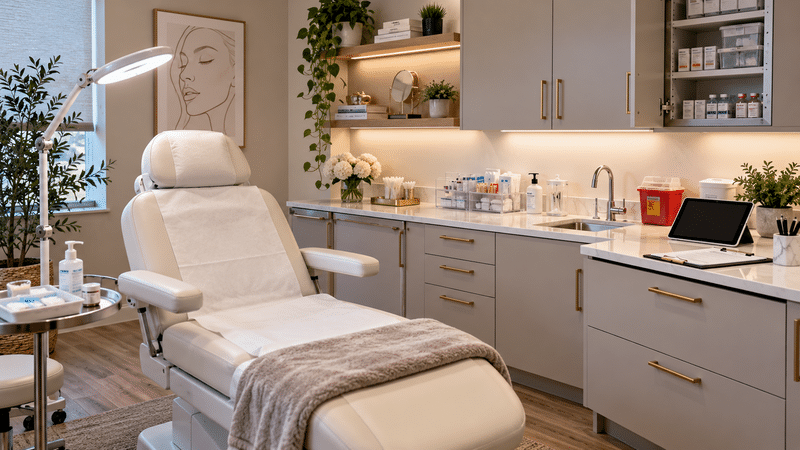
Add fixed lighting for photos and HIPAA-ready charting, intake, payment, and communication tools [5]. Test the full visit before opening your calendar.
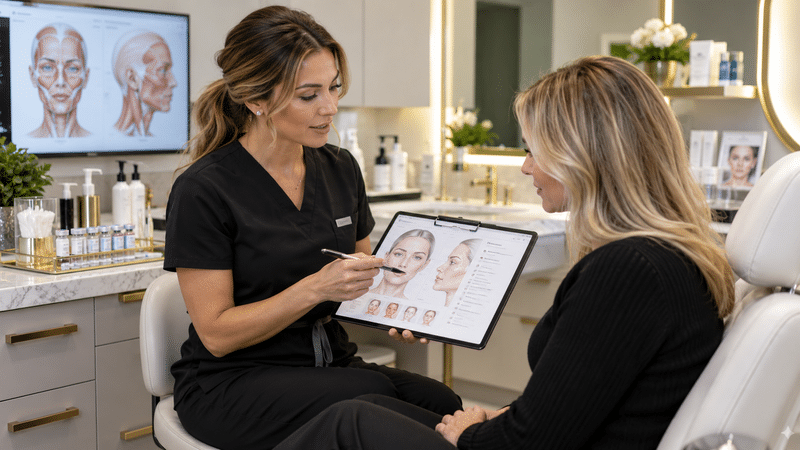
Step 8: Build the Consultation and Charting Workflow
Use one checklist for every patient:
- Medical history, medications, and allergies
- Prior Botox and dermal filler treatment
- Pregnancy or breastfeeding status
- Pre-existing neuromuscular disorders, such as myasthenia gravis
- Treatment goals and facial movement
- Contraindications and product warnings
The BOTOX Cosmetic label should guide screening and counseling [2]. The label carries a boxed warning for distant spread of toxin effect, and patients should be counseled to seek immediate medical care for difficulty swallowing, speaking, or breathing [2]. Record the product, lot number, expiration date, units, treatment map, consent, photographs, aftercare, and follow-up date. State who answers urgent clinical calls after hours.
Step 9: Market the Practice Without Overpromising
Start with one local landing page and a complete Google Business Profile. Add useful social media education on Instagram and Facebook, consented photos, patient reviews, and local referral partners.
Effective marketing educates and sets limits. Do not guarantee a “Botox transformation,” edit results, or imply everyone is a candidate. Health claims need adequate support [8], and paid relationships must be disclosed [6]. Track consultations, bookings, repeat visits, and cost per new patient monthly.
Step 10: Grow Beyond Botox Carefully
Botulinum toxin treatment works well as an entry service, and most sustainable aesthetic practices add services gradually as experience and demand grow. Add one service only after you put the right training, insurance, protocols, and emergency systems in place.
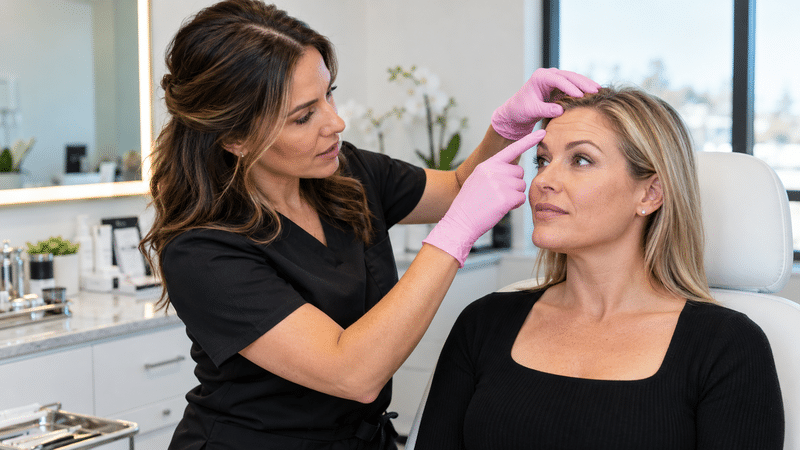
When you are ready to add another service, it helps to follow one connected training path instead of piecing together unrelated courses. Since 2007, AAFE has trained more than 25,000 dental and medical professionals. AAFE’s Level I through Level III botulinum toxin and dermal filler pathway can help you build on your first Botox skills before expanding into TMJ care, regenerative esthetics, or other services that fit your license and business goals.
Common Mistakes NPs Make When Starting a Botox Business
- Treating full practice authority as permission to own a med spa
- Filing an LLC before legal review
- Using online-only training before treating live patients
- Opening without written malpractice confirmation
- Buying product through an unclear supply chain
- Launching too many services at once
- Using weak consent, incomplete charts, or aggressive claims
- Ignoring waste, follow-up, fees, and team time when pricing
- Delegating to RNs or LPNs/LVNs before checking state rules
Is Starting a Botox Business Worth It for an NP?
It can be worth it for an NP ready to manage clinical care and business operations. Botox may support long-term relationships because results are temporary and patients may return for maintenance.
That potential still depends on safe care, ethical marketing, pricing, retention, and compliance. Take the safest route: start with legal review and hands-on training, then grow from real demand.
Frequently Asked Questions
More Information
- State Practice Environment
AANP’s current map and definitions for full, reduced, and restricted NP practice authority. - BOTOX Cosmetic Prescribing Information
FDA-approved indications, contraindications, warnings, product-specific units, storage, and patient counseling information. - Counterfeit Version of Botox Found in Multiple States
FDA safety information on counterfeit Botox, linked adverse events, and authorized product sourcing. - Bloodborne Pathogens Standard, 29 CFR 1910.1030
Federal requirements for exposure-control plans, safer sharps, employee protection, and sharps disposal. - HIPAA Guidance Materials
HHS privacy and security guidance for healthcare organizations, including small providers. - Endorsements, Influencers, and Reviews
FTC guidance on reviews, paid endorsements, and required disclosures. - Calculate Your Startup Costs
SBA guidance for identifying startup expenses and separating one-time costs from monthly expenses. - Health Products Compliance Guidance
FTC guidance on keeping health-related claims truthful, not misleading, and supported by appropriate evidence. - MedWatch: The FDA Safety Information and Adverse Event Reporting Program
FDA guidance for healthcare professionals and patients on reporting serious problems involving medical products.