Summary
A mouth guard and masseter Botox address different parts of bruxism treatment. A custom mouth guard physically protects teeth, enamel, crowns, and restorations from nighttime grinding, while masseter Botox may reduce the muscle force, jaw tension, soreness, and facial pain caused by strong clenching. Neither option fully replaces the other, and patients with both tooth damage and overactive jaw muscles may benefit from a combination plan. The right approach depends on the patient’s symptoms, bite, dental wear, muscle tenderness, sleep history, and possible TMJ or airway concerns, so treatment should be guided by a provider with strong dental and facial anatomy training.
A patient may call it “grinding,” but the mouth often tells a bigger story. Worn enamel, cracked restorations, sore masseters, morning jaw soreness, and flattened bite edges can all point to bruxism.
The real question is not whether a mouth guard or masseter Botox is “better.” It is which problem you are trying to control first: tooth damage, muscle force, jaw pain, or all three.
Quick Comparison: Mouth Guard vs Masseter Botox
A mouth guard protects against the effects of grinding. Masseter Botox may reduce the muscle force behind clenching.
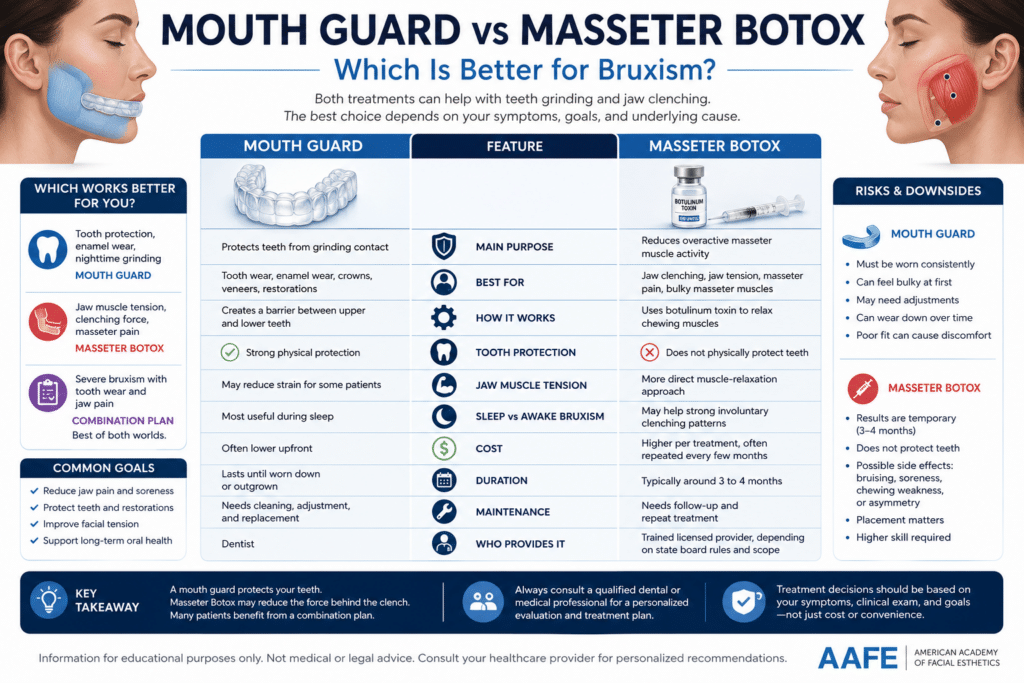
For many patients, the best bruxism treatment depends on whether the main problem is tooth damage, jaw tension, muscle pain, or all three.
| Factor | Mouth Guard | Masseter Botox |
| Main purpose | Protect teeth from grinding contact | Reduce overactive masseter muscle activity |
| Best for | Tooth wear, enamel wear, crowns, veneers, restorations | Jaw clenching, jaw tension, masseter pain, bulky masseter muscles |
| How it works | Creates a barrier between upper and lower teeth | Uses botulinum toxin to relax chewing muscles |
| Sleep bruxism vs awake bruxism | Most useful during sleep | May help strong involuntary clenching patterns |
| Tooth protection | Strong physical protection | Does not physically protect teeth |
| Jaw muscle tension | May reduce strain for some patients | More direct muscle-relaxation approach |
| Cost | Often lower upfront, especially compared with repeated injections | Higher per treatment, often repeated every few months |
| Duration | Lasts until worn down or outgrown | Often around 3 to 4 months |
| Maintenance | Needs cleaning, adjustment, and replacement | Needs follow-up and repeat treatment |
| Who provides it | Dentist | Trained licensed provider, depending on state board rules, scope of practice, and required supervisio |
How Mouth Guards Help With Bruxism
A custom night guard or bite guard is usually worn during sleep to keep the upper and lower teeth from grinding directly together. Because sleep bruxism can quietly damage tooth enamel, crowns, veneers, implants, fillings, and other dental work.
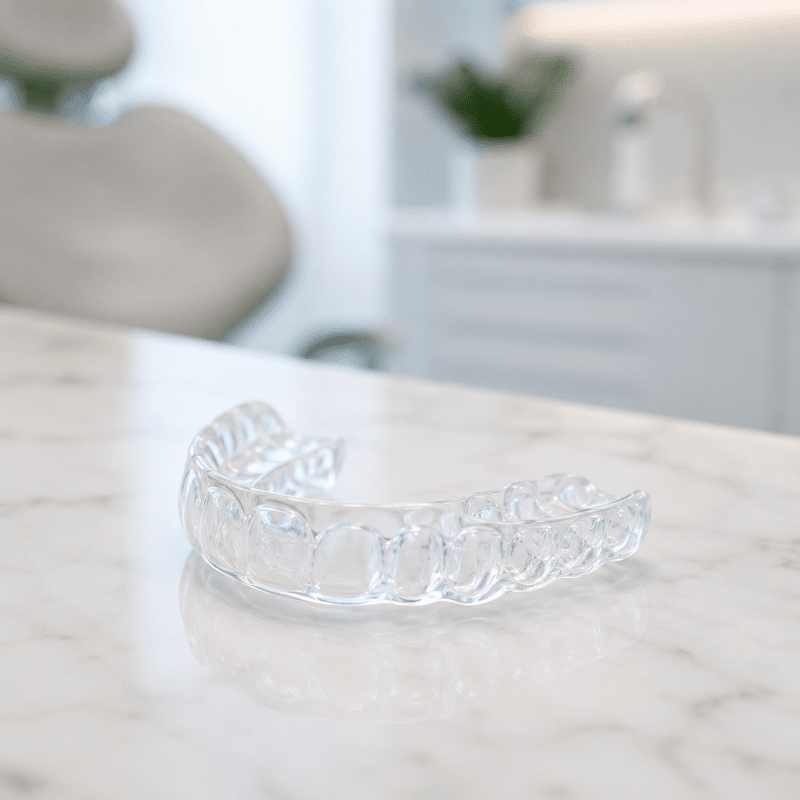
A mouth guard can help protect teeth from the damaging effects of nighttime grinding and clenching by reducing tooth-on-tooth wear. Many patients also experience improved jaw comfort by minimizing the impact of excessive forces during sleep. For patients with tooth sensitivity caused by enamel wear, a mouth guard may also help reduce further damage.
While a mouth guard is effective at protecting the teeth, it does not necessarily stop grinding or eliminate the muscle activity responsible for clenching.
Proper fit is essential for both comfort and effectiveness. A custom mouth guard fabricated by a dentist is typically more secure and comfortable than an over-the-counter alternative. An ill-fitting guard can cause discomfort, trigger gagging, affect the bite, or discourage regular use, reducing the benefits of treatment.
How Masseter Botox Helps With Bruxism
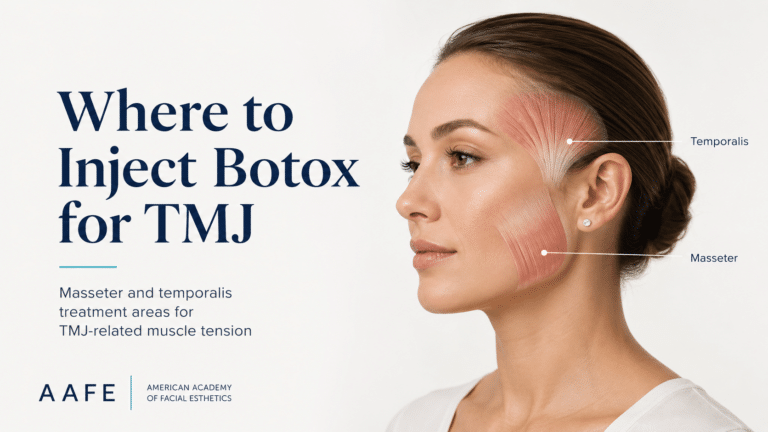
Masseter Botox is injected into the masseter muscles, the strong chewing muscles on the sides of the jaw. The goal is temporary muscle relaxation, which may reduce clenching force, jaw tension, jaw soreness, and pain from overactive chewing muscles.
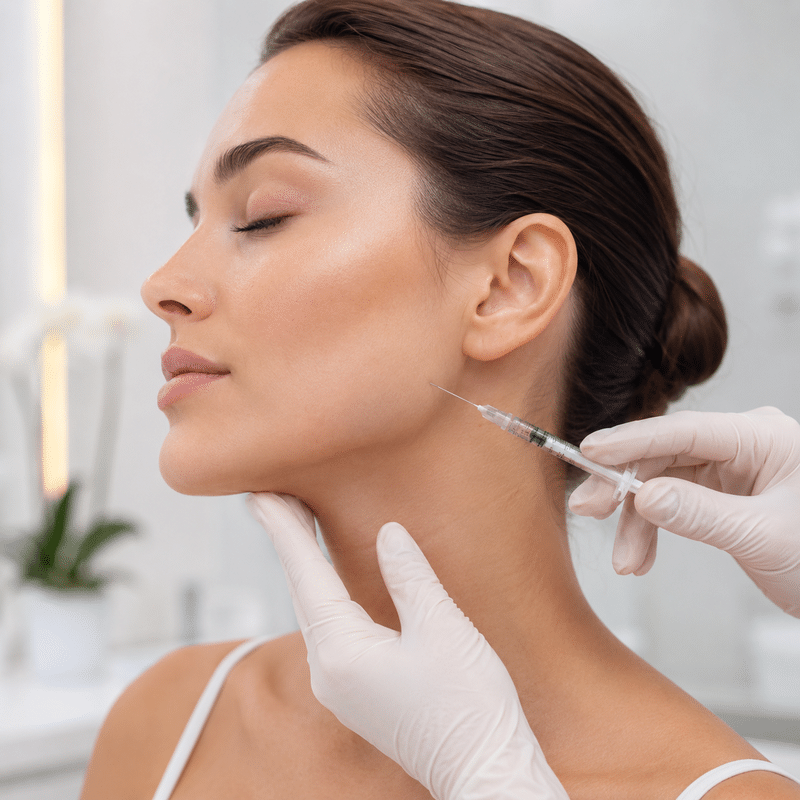
This can be useful when treating bruxism that includes enlarged masseters, morning headaches, facial tension, or TMD-related discomfort.
Temporomandibular disorders can involve the temporomandibular joint, chewing muscles, and headaches linked with TMD, which is why muscle evaluation matters in these cases.
Masseter Botox does not protect teeth like a mouth guard. A patient can have less clenching force and still need protection for enamel wear, lower teeth, restorations, or tooth sensitivity. Results are temporary, and repeat Botox injections are usually needed.
Botox for TMD is commonly discussed as off-label. Botulinum toxin type A is approved by the Food and Drug Administration for some medical conditions, but not for TMD. That makes training, informed consent, documentation, and patient selection especially important.
Which Works Better for Teeth Grinding?
If the goal is to protect against grinding teeth at night, a mouth guard is usually the first option.
If the goal is reducing jaw pain, clenching force, or facial tension from strong masseter activity, masseter Botox may be considered as a therapeutic tool.
| Concern | Usually Stronger Option | Why |
| Tooth protection | Mouth guard | It creates a physical barrier between teeth during sleep. |
| Enamel wear | Mouth guard | It helps protect tooth enamel from direct grinding contact. |
| Jaw muscle tension | Masseter Botox | It targets overactive masseter muscles more directly. |
| Nighttime grinding | Mouth guard | It protects teeth while the patient is asleep and unaware. |
| Severe bruxism with masseter pain | Combination plan | A guard protects teeth while Botox may reduce muscle load. |
| Morning headaches | Case-dependent | Temporalis, masseter, sleep apnea, and TMD screening may matter. |
| Long-term care | Broader treatment plan | Many patients need behavior changes, dental evaluation, and physical therapy. |
Dentists should also screen for warning signs that point beyond basic bruxism treatment. Jaw locking, changing bite, suspected sleep apnea, severe morning headaches, neurologic symptoms, or major facial pain may need referral or broader care.
Can You Use a Mouth Guard and Masseter Botox Together?
Yes, some patients use both. This makes sense when the patient has tooth wear and strong jaw muscle symptoms. The mouth guard continues protecting teeth, while Botox treatment may reduce masseter overactivity.
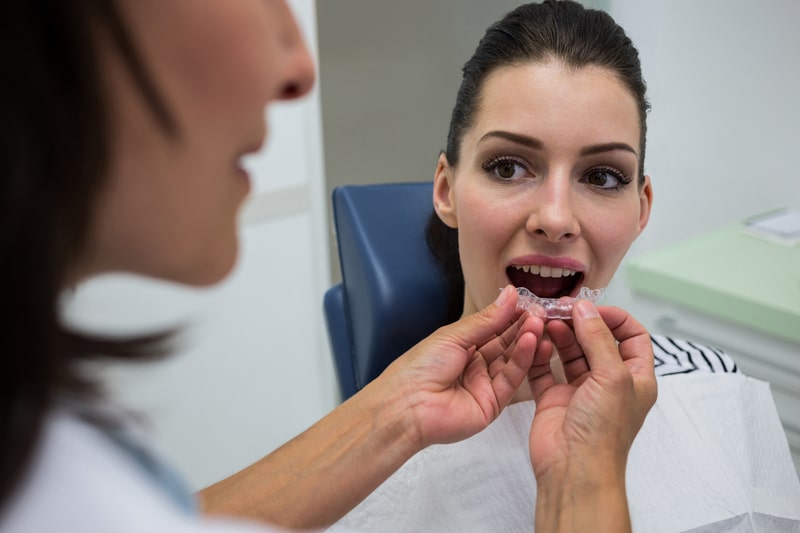
The combination is especially practical when a patient has cracked restorations, visible wear facets, jaw soreness, and strong clenching during the exam. The dentist can keep the custom night guard in place for tooth protection while considering Botox for muscle force.
This should still be a planned clinical decision. The provider should review symptoms, bite, dental work, jaw movement, Masseter and temporalis muscle tenderness, medical history, and previous treatment response before recommending both.
Risks, Downsides, and Cost Differences
The main trade-off is protection versus muscle control. A guard shields the teeth, while masseter Botox may reduce the force behind the clench.
Mouth Guard Downsides
- Consistent use is required: A guard only protects teeth when the patient actually wears it.
- It can feel bulky: Some patients remove it during sleep or stop using it after a few nights.
- Adjustments may be needed: A new guard may need chairside refinement for comfort and bite balance.
- It can wear down: Severe bruxism can create holes, rough spots, or thinning material over time.
- Poor fit can create problems: Loose or uneven guards may cause discomfort, soreness, or poor protection.
Masseter Botox Downsides
- Results are temporary: Many patients need repeat treatment about every 3 to 4 months.
- It does not create a tooth barrier: Tooth damage can still happen without a guard.
- Side effects can occur: Bruising, soreness, swelling, chewing weakness, or asymmetry may happen.
- Placement matters: Poor targeting can affect chewing comfort, smile balance, or final results.
- Skill level is higher: Lower-face Botox requires facial anatomy knowledge, not casual injection habits.
Cost also differs. A custom night guard often costs less upfront than a full masseter Botox plan. Masseter Botox may cost more because it commonly uses more units than smaller cosmetic areas. Many functional cases involve about 20 to 50 units per side, depending on muscle size, symptom burden, and treatment plan.
Why Bruxism Treatment Requires Dental and Facial Anatomy Knowledge
Bruxism is not just a jaw-slimming concern. It can involve tooth wear, restorations, occlusion, jaw movement, chewing muscles, the temporomandibular joint, facial pain, sleep habits, stress, and airway screening.
That is why dentists are central to treating bruxism. They already evaluate enamel wear, sensitive teeth, broken restorations, bite changes, morning jaw soreness, and signs of severe bruxism. They also know when a patient needs a splint, warm compress use, physical therapy, sleep apnea screening, or referral.
For dentists, the first step is learning how to separate simple tooth protection from a larger bruxism, sleep, or facial pain pattern. Our Frontline Dental Sleep and Bruxism Therapy Course fits that foundation because it covers bruxism screening, dental sleep medicine, oral appliance selection, head and neck anatomy, and patient workflow.
When TMJ symptoms and muscle-based pain are part of the case, our Frontline TMJ and Facial Pain Therapy Level I helps providers connect diagnosis, trigger point therapy, orofacial pain patterns, and treatment planning.
For providers ready to add injectable treatment safely, our Botulinum Toxins & Dermal Fillers Level I adds hands-on Botox education, facial anatomy, dosing, live patient care, and practice integration.

Frequently Asked Questions
More Information
Reference: FDA Approval Letter for Botox Cosmetic Treatment of Glabellar Lines
US FOOD AND DRUG ADMINISTRATION