Summary
Masseter Botox is typically injected into the lower, active portion of the masseter muscle, with placement customized through clenching, palpation, facial assessment, and the patient’s treatment goal. The safest working area is generally the lower central and posterior muscle belly, while injections placed too far forward, too high, or too close to the mandibular border may affect smile muscles, the parotid region, lower-face function, or facial balance. Dose and injection points should be adjusted for muscle size, clenching strength, bruxism, TMJ symptoms, asymmetry, and whether the goal is jaw slimming or pain relief. Because poor placement can cause chewing weakness, an uneven smile, bulging, or facial hollowing, masseter Botox requires anatomy-based, hands-on training rather than reliance on a fixed diagram.
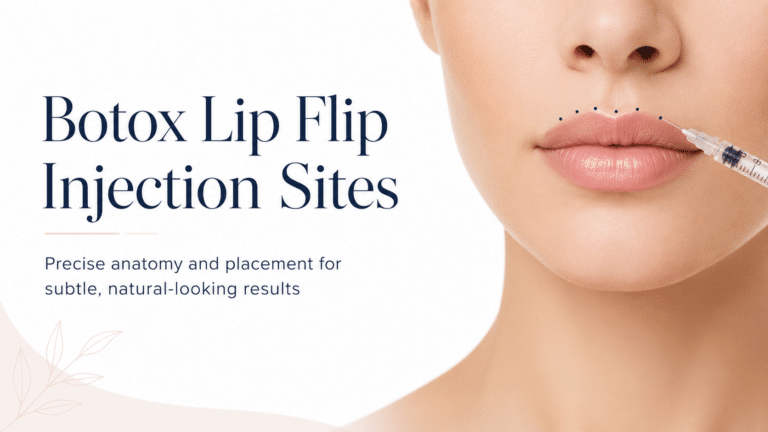
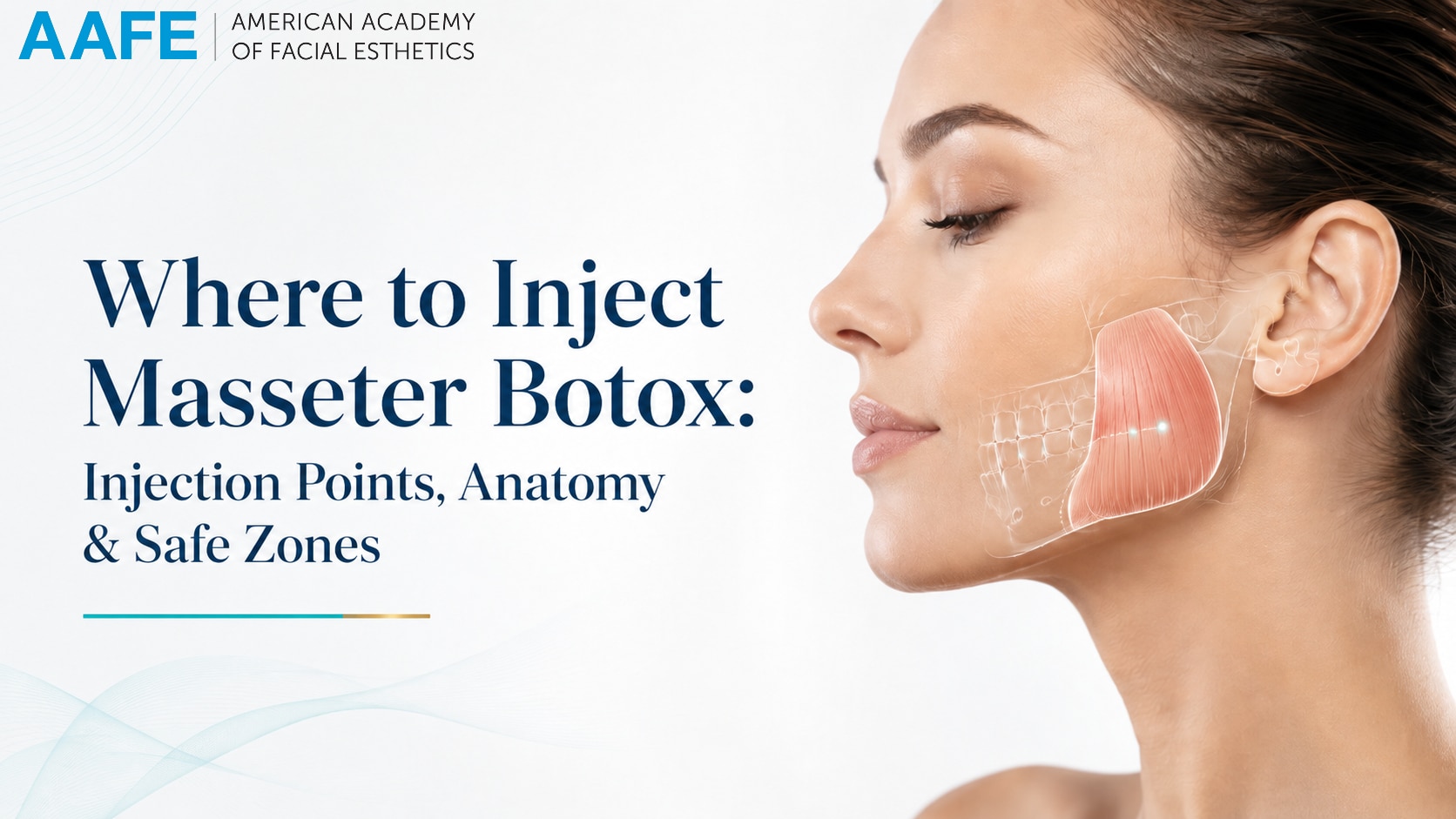
Masseter Botox can look simple because the muscle is easy to feel when the patient clenches. The real skill is knowing where to inject masseter Botox, where to avoid, and how much of the muscle should be treated.
In most cases, botulinum toxin injections are placed in the lower, bulky portion of the masseter muscle, usually across 1 to 3 planned injection points per side. The key is staying within the active masseter belly while avoiding the anterior smile muscles, superior parotid region, and overly inferior lower-face structures.
Masseter Muscle Anatomy for Botox Injection
The masseter muscle is one of the main masticatory muscles. It runs from the zygomatic arch down to the ramus and angle of the mandible, where it helps elevate the jaw during chewing and clenching.
For injection planning, the provider should identify the anterior border, posterior border, inferior border, and the strongest contracting muscle belly while the patient clenches. This is exactly why palpation matters before marking. A patient with one focal “rock-hard” masseter belly should not be mapped the same way as a patient with broad, diffuse hypertrophy.
Clinically, the masseter is often discussed in superficial and deep portions. Research also describes the deep inferior tendon as an internal structure that can affect toxin spread and contribute to paradoxical masseteric bulging when toxin does not distribute evenly through the active muscle fibers.
That is where anatomy, safety, and technique meet. The provider is not trying to shut down the whole masseter. The goal is to reduce excessive contraction while preserving chewing, speech, and normal jaw movement.
The 5 Masseter Botox Injection Points
These points are better understood as clinical zones that are adjusted after palpation, facial assessment, and treatment planning.
1. Inferior Central Masseter Belly
This is often the main treatment point because it sits in the lower masseter bulk that becomes firm during clenching. It is usually a useful starting point for both jaw slimming and bruxism-related treatment.
The needle tip should be placed into the masseter muscle, not superficially in the skin or soft tissue. A superficial inadvertent injection can increase diffusion risk and may affect nearby facial expression muscles.
2. Posterior-Inferior Masseter
The posterior-inferior point targets the lower back portion of the masseter, closer to the mandibular angle but not directly on the border. This area often carries significant contraction in patients with large masseter muscles or strong clenching patterns.
This point must still respect the inferior mandibular border. Going too low may increase the risk of lower-face diffusion and unwanted effects near muscles that influence the lower lip.
3. Anterior-Inferior Masseter
The anterior-inferior point may be used when the active masseter bulk extends forward, but it should stay clearly inside the palpated masseter. This point requires extra care because the risorius muscle and muscles near the oral commissure can be affected by poor placement or diffusion.
If toxin reaches the risorius muscle, the patient may develop an asymmetrical smile. That is why we at AAFE, as injectors and providers, emphasize staying in the masseter belly and keeping clear of smile-related muscles during lower-face treatment.
4. Posterior-Middle Masseter
A posterior-middle point may be added for larger or stronger masseters when the lower points do not cover the full contracting bulk. This can help distribute the dose across a broader muscle without placing too much toxin into one location.
This point should still remain below the higher-risk superior region. Placement too high moves the injection process closer to the parotid gland and duct region.
5. Central-Middle Masseter
A central-middle point may be useful when the patient has broad hypertrophy or more than one active muscle belly. It can also help reduce uneven activity when the provider sees stronger contraction above the lower third.
This point should be chosen with care. In patients with deep inferior tendon variation, toxin distribution can be less predictable, and ultrasound may be useful in complex or repeat-problem cases.
Where to Inject Masseter Botox Safely
The safer working area is usually the lower masseter belly, especially the lower posterior and central bulk that becomes firm during clenching. Many injectors use a visual line from the tragus region toward the corner of the mouth as a guide, keeping most masseter injections below that line.
This approach helps protect the smile by keeping toxin away from the risorius and nearby muscles. It also helps avoid the superior parotid region, where placement may be less useful and potentially riskier.
The clinical goal is controlled distribution across the active masseter muscle. That means the pattern should follow the patient’s anatomy, not a memorized diagram.
Safe Zones vs Danger Zones
Masseter Botox should be planned around both the target muscle and the nearby structures that can change the result.
Safe Zone
The safest zone is usually the lower central and lower posterior masseter, confirmed by clenching and palpation. This area gives the provider a clear working target because the muscle is easy to feel and isolate.
The provider should keep the injection points inside the muscle borders. Holding or bracketing the anterior and posterior borders during palpation can help confirm that the target is truly the masseter.
Danger Zone 1: Too Anterior
Anterior placement increases the risk of diffusion toward the risorius muscle and other muscles near the oral commissure. This can change facial expression and create an asymmetrical smile.
This is one of the most important safety points in masseter Botox. The masseter may look wide, but not every visible part of the lower face is safe to treat.
Danger Zone 2: Too Superior
Placement too high can move the injector closer to the parotid gland and duct region. It may also miss the strongest lower masseter bulk that is usually driving jaw width and clenching force.
Superior placement should be approached carefully, especially in patients with less obvious hypertrophy or complex facial anatomy.
Danger Zone 3: Too Inferior
Placement too close to the mandibular border may increase the risk of lower-face diffusion. This region sits closer to structures that can influence lower lip position and facial balance, including facial nerve branches and nearby muscles such as the mentalis muscle complex.
The goal is not just to avoid complications, but to preserve function while reducing excessive masseter activity.
Masseter Botox Dosage Guidelines
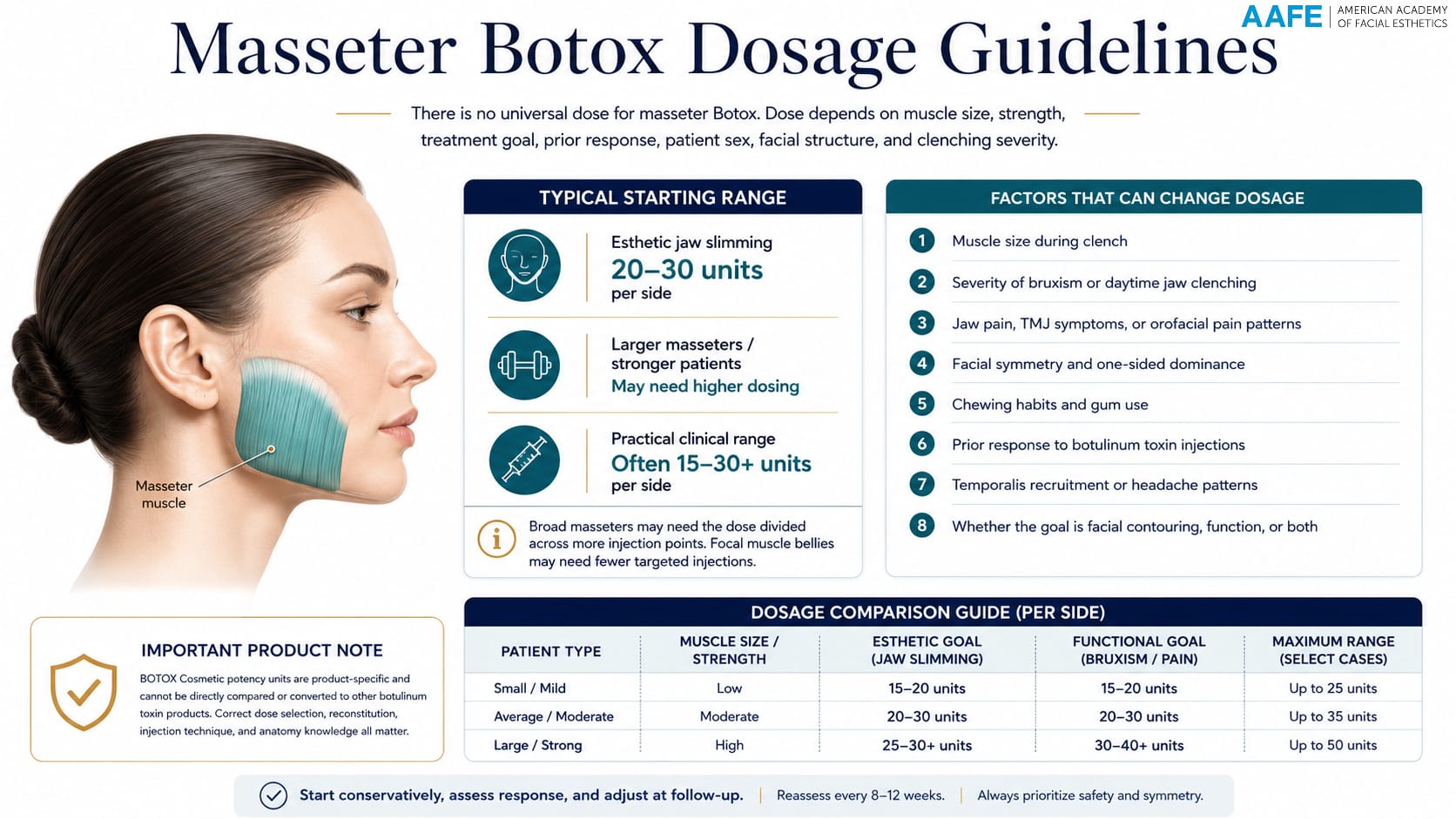
There is no universal dose for masseter Botox. Dose depends on muscle size, strength, treatment goal, prior response, patient sex, facial structure, and clenching severity.
Many esthetic jaw-slimming cases start around 20 to 30 units per side. Larger masseters, stronger male patients, severe bruxism, and TMJ-related cases may require higher dosing, often but an appropriate range is between 15-30+.
The dose should also match the map. A broad masseter may need the dose divided across more injection points, while a focal belly may need fewer targeted Botox injections.
Factors that can change dosage include:
- Muscle size during clench
- Severity of bruxism or daytime jaw clenching
- Jaw pain, TMJ symptoms, or orofacial pain patterns
- Facial symmetry and one-sided dominance
- Chewing habits and gum use
- Prior response to botulinum toxin injections
- Temporalis recruitment or headache patterns
- Whether the goal is facial contouring, function, or both
Product labeling also matters. BOTOX Cosmetic explains that potency units are specific to the product and cannot be compared or converted to other botulinum toxin products. It also emphasizes correct dose selection, reconstitution, administration technique, and anatomy knowledge.
Step-by-Step Clinical Workflow for Providers
A clean masseter result starts before the syringe is prepared. The provider should assess the face, the jaw, the symptoms, and the reason for treatment.
Patient Assessment
Start by asking the patient to bite down firmly. Palpate the anterior and posterior borders of the masseter and feel where the strongest contraction appears.
Then assess whether the patient is seeking jaw slimming, relief from jaw pain, help with bruxism, or a combination of esthetic and therapeutic benefits.
Marking Injection Points
Mark inside the confirmed masseter borders, usually in the lower third to lower half of the muscle. A compact triangle may work for a smaller muscle, while a diamond or broader 1 to 3 point map may suit larger masseters.
The anterior border deserves special attention. Staying too close to the risorius increases the risk of smile imbalance.
Injection Execution
Masseter injections are intramuscular. A perpendicular approach is commonly used, with the needle tip seated in the active muscle belly.
The provider should avoid rushing the placement. Good control matters because a few millimeters can change the clinical result in the lower face.
For larger muscles, dividing the dose across several points can help prevent overloading one site. For patients with prior bulging, uneven response, or complex anatomy, ultrasound-guided evaluation may help identify deep inferior tendon patterns and functional compartments.
Post-Treatment Instructions
Patients should avoid rubbing or manipulating the treated area, heavy exercise, heat exposure, and lying flat too soon after treatment. These instructions help reduce unwanted spread while the neurotoxin begins binding at the neuromuscular junction.
Many patients feel early functional changes within several days. Visible jaw slimming usually takes longer because the masseter must relax and reduce activity over time.
Masseter Botox for TMJ, Bruxism, and Jaw Slimming
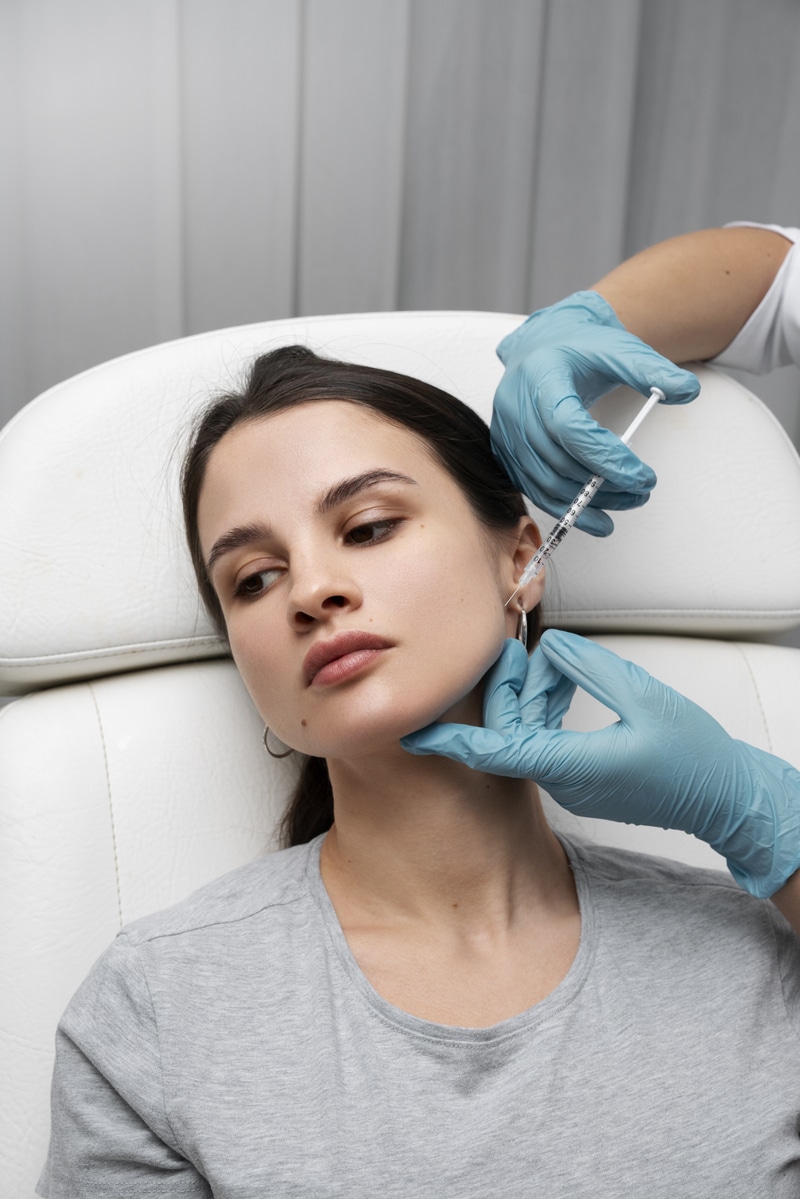
The same muscle can be treated for different reasons. That does not mean the injection map should be identical.
TMJ and Bruxism Treatment
For TMJ-related pain, jaw clenching, and bruxism, the provider is usually treating excessive muscle activity. The map may need broader coverage across the active masseter belly, and the temporalis may also need assessment.
Aesthetic Jaw Slimming
For jaw slimming, the provider targets hypertrophic zones that widen the lower face. Precision matters because the goal is to reduce bulk without creating chewing weakness or hollowing.
This treatment should preserve facial balance. A patient with a strong square jaw from muscle hypertrophy may respond well, while a patient with skeletal width may show less visible change.
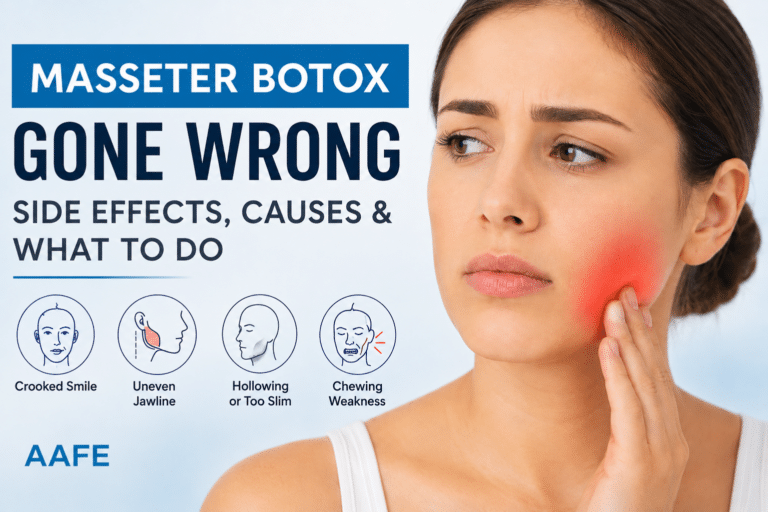
What Can Go Wrong With Poor Placement?
Most masseter Botox problems come from anatomy, dosing, placement, or patient selection. The product may be standardized, but the outcome depends on clinical judgment.
Common problems include:
- Asymmetrical smile: Often linked to toxin spread toward the risorius or nearby smile muscles.
- Chewing weakness: More likely when too much of the masseter is weakened.
- Paradoxical bulging: Can happen when some fibers remain active while others are weakened.
- Sunken or hollow lower face: More likely when a patient is over-slimmed or poorly selected.
- Limited result: Can occur when the true width is skeletal, fatty, or outside the treated muscle.
If problems occur, the provider should document the result, reassess muscle recruitment, compare before-and-after photos, and adjust the next treatment plan. For mild smile imbalance or chewing weakness, time is often part of management because the toxin effect gradually wears down.
Injection Mapping Diagram
- Safe injection points: Lower central and lower posterior points inside the active masseter belly.
- Avoid zones: Anterior zone near the risorius, superior parotid region, and overly inferior mandibular border.
- Muscle borders: Anterior border, posterior border, mandibular border, and upper working line that helps define the lower masseter target area.
The diagram is a planning guide, not a fixed prescription. Providers should confirm landmarks with palpation during clench and adjust the map to the patient’s anatomy, symptoms, and treatment goal.
Training for Masseter Botox Injection
Masseter Botox is a practical treatment to add, but it should be learned through anatomy-based instruction and supervised hands-on training. Providers need to understand facial muscles, lower-face risk zones, dosing, patient assessment, adverse reactions, and the difference between esthetic and therapeutic treatment planning.
AAFE’s Botulinum Toxins & Dermal Fillers Level I course includes patient assessment, oral and maxillofacial anatomy, sterile technique, botulinum toxin safety, treatment planning, live patient training, and therapeutic treatment for bruxism and TMJ syndrome.
For providers who want a deeper masseter-specific focus, AAFE’s Magical Masseter training is a natural next step. It gives clinicians a more focused look at masseter anatomy, dosing, technique, and common mistakes that can affect both results and patient safety.
Ready to build safer lower-face injection skills? Train with AAFE →

Frequently Asked Questions
More Information
Masseter Muscle
Anatomy reference covering the masseter muscle’s origin, insertion, innervation, blood supply, anatomical relationships, role in jaw closure, mandibular movement, and TMJ support.
Masseter muscle anatomy and function
Prevention and Correction of Paradoxical Masseteric Bulging Following Botulinum Toxin Injection for Masseter Hypertrophy
Clinical article examining paradoxical masseter bulging as a complication of botulinum toxin injections, including relevant anatomy, injection placement, prevention, and corrective treatment.
Botulinum toxin complications in masseter treatment
BOTOX Cosmetic Prescribing Information
FDA package insert covering approved cosmetic indications, recommended doses, injection techniques, product preparation, contraindications, warnings, adverse reactions, and the risk of distant toxin spread.