Summary
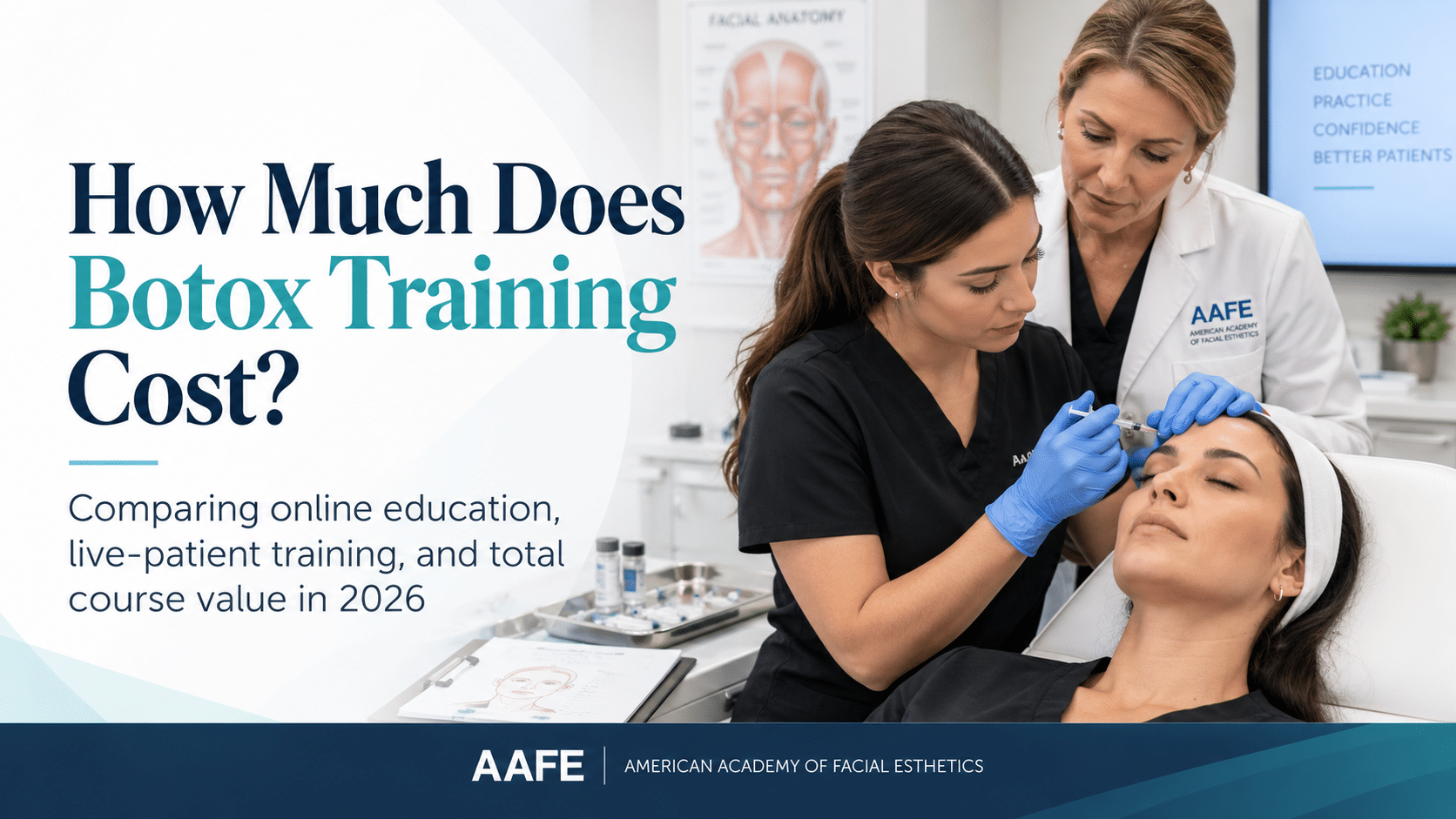
The article breaks down Botox training costs in 2026, from lower-cost online courses to comprehensive multi-level certification programs, while showing why live-patient experience, CE/CME credits, included product, and ongoing support matter when comparing value. It also explains profession-specific considerations for dentists, nurses, NPs, PAs, and physicians, plus hidden costs and a simple ROI example showing how providers can estimate when their training investment may break even.
In 2026, Botox training generally costs $200 to $1,000 for online education and $1,500 to $3,000 for introductory live-patient training. Multi-course programs may cost $3,300 to $12,000 or more. AAFE’s live-patient Botulinum Toxin Level I course is $1,797.
Beyond price, you need to compare supervised injections, CE/CME credit, included product, and post-course support.
Here, “Botox training” refers to education involving botulinum toxin type A products such as Botox, Dysport, Xeomin, and Daxxify. These injectable products are also known as neuromodulators.
Botox Training Cost in 2026: Typical Price Ranges
| Training type | 2026 range | Best fit |
| Online-only Botox course | $200-$1,000 | Theory, facial anatomy, training videos, and review |
| Introductory live program | $1,500-$3,000 | Licensed providers seeking supervised injections |
| Botox and dermal filler package | $1,750-$4,000 | A beginner foundation in injectable procedures |
| Advanced injectables | $1,500-$3,500 per class | Experienced injectors adding a treatment area or complication skills |
| Multi-level certification programs | $3,300-$12,000+ | Healthcare professionals building an aesthetic medicine service line |
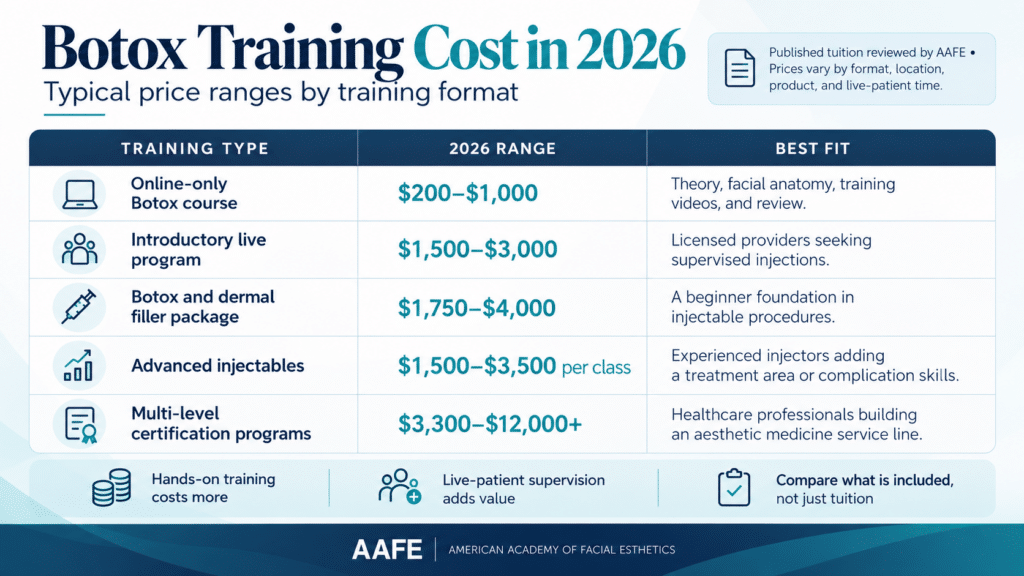
These ranges reflect published tuition from several U.S. Botox training programs reviewed by AAFE in September 2026. Prices may vary by format, location, course length, live-patient time, included product, and package benefits.
What Affects the Cost of Botox Training?
Course tuition is comparable only when you know what each price includes.
Online vs. Hands-On Format
Online training needs no clinic or chairside faculty, so it costs less. It can teach basic botulinum toxin science, safety, and anatomy. It cannot replace hands-on instruction or real-time correction of injection technique.
Live Patient Training
Live patient training lets providers assess movement, plan injection sites, and perform a cosmetic injection under supervision. That feedback strengthens the training experience. As AAFE President Dr. Louis Malcmacher, DDS, MAGD, says:
“Anatomy is everything. Technique is everything.”
— Dr. Louis Malcmacher, President, MAGD
CE/CME Credits and Accreditation
Accredited CE/CME can add professional value, but a course certificate does not expand a provider’s legal scope [5][6]. AAFE is an ADA CERP Recognized Provider and an approved AGD PACE Program Provider. Each individual Level I activity is designated for 10 dental CE credits [3].
The Level I activity is also jointly provided with Medical Education Resources, which is jointly accredited by ACCME, ACPE, and ANCC. Credit options are listed for physicians, nurses, nurse practitioners, and physician assistants. Attendees should confirm which credits apply to their license and claim only the hours tied to courses they complete. [4]
Course Length and Curriculum Depth
Compare hours, not labels such as “one day.” The curriculum should cover anatomy, contraindications, dosing principles, injection methods, adverse events, documentation, safe injection practices, and practice integration [1][2].
Product and Model Patient Requirements
Ask how much product is included and who brings the model patient. Separate supplies or treatment fees raise the real course cost.
Beginner vs. Advanced Training
A basic botulinum certification course costs less. Advanced injectable training in aesthetic medicine may add dermal fillers, TMJ, PDO threads, cadaver anatomy, ultrasound, or complication management. Required foundation work also raises the total.
What Should Be Included in a Botox Training Course?
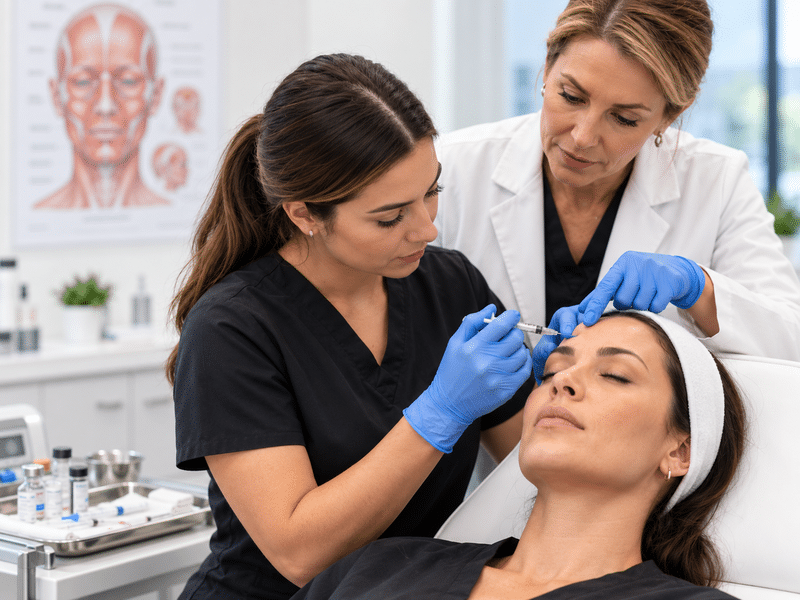
- Facial anatomy, assessment, and treatment planning
- Dosing principles, approved botulinum toxins, and product labeling [1]
- Injection techniques for common aesthetic procedures
- Contraindications, safety, and complication management [1][2]
- Consent, photography, and clinical documentation
- Live hands-on practice with faculty feedback
- Relevant CE/CME and post-course support [3][4]
- Treatment pricing and practice integration
Botox Training Cost for Dentists
Dental Botox training does not usually have a separate price, AAFE’s Level I course is $1,797 and includes six hours of online education, four hours of live-patient training, 10 CE/CME hours, and one 50-unit vial of neurotoxin.
Dentists should also budget for travel, a model patient, and time away from the chair. Since the live session lasts four hours, the lost practice time may be half a clinical day, although travel could require a full day or more.
Dentists begin aesthetic training with daily clinical experience in oral and facial anatomy, local anesthetic injection, the muscles of mastication, and patient consultation. That foundation can support training in masseter Botox, Botox for bruxism, TMJ-related pain, gummy smiles, and facial esthetics.
Before paying, dentists should confirm three points with their state dental board and malpractice insurer [9]:
- Whether the planned treatments fall within their scope.
- Whether extra training or permits are required.
- Whether therapeutic and cosmetic uses are covered.
Botox Training Cost for Nurses (RN and LPN/LVN), NPs, PAs, and Physicians
Pricing is the same, but what changes here is how each clinician may use the training after the course. A certificate proves course completion, but it does not change prescribing authority, supervision rules, or state scope of practice [5][6].
- An RN may need an authorized prescriber, a patient-specific order, and direct or indirect supervision [5].
- An NP should check state rules for prescribing, purchasing, and administering botulinum toxin [5].
- An LPN or LVN should confirm state rules before enrolling. Some states permit trained LPNs to inject neuromodulators under supervision, some exclude LPNs, and many have not issued explicit guidance.
- A PA may need to follow a supervising or collaborating physician agreement [6].
- Physicians may be legally eligible to inject, but they still need procedure-specific education in facial anatomy, product use, patient selection, injection technique, and complication management. They should also confirm malpractice coverage, facility rules, medication storage requirements, and product labeling [1][6].
Before enrolling, ask for clear answers to four questions:
- Can someone with my license inject during the live-patient session?
- Do the 10 CE/CME hours apply to my profession?
- What supervision or prescribing arrangement will I need afterward?
- Will my malpractice insurer accept this training certificate?
AAFE has written treatment protocols for major dental malpractice insurance carriers, and AAFE certification is accepted across major carriers.
Is Online Botox Training Cheaper?
Online Botox training is usually cheaper because it does not require a clinic, injectable product, model patients, or instructors at each treatment chair. It can still teach facial anatomy, product science, consultation, patient selection, contraindications, consent, and complication basics.

However, watching an injection is different from performing one. Online lessons cannot teach tissue feel or show how your hand position affects needle control. They also cannot give immediate feedback when a treatment plan needs to change.
For new injectors, the strongest option is often hybrid training: complete theory online, then safely assess and treat live patients under clinical supervision.
How to Compare Botox Training Programs by Value, Not Price
- How many live injection hours and patients are included?
- Are the instructors active injectors?
- Are CE/CME, product, supplies, and support included?
- Does it cover complications, consent, and documentation?
- Will the certificate help with malpractice and credentialing reviews?
Hidden Costs of Botox Training
The listed Botox course cost is only part of the investment. Add travel, missed clinic time, model logistics, product cost, insurance updates, board research, team education, and launch materials.
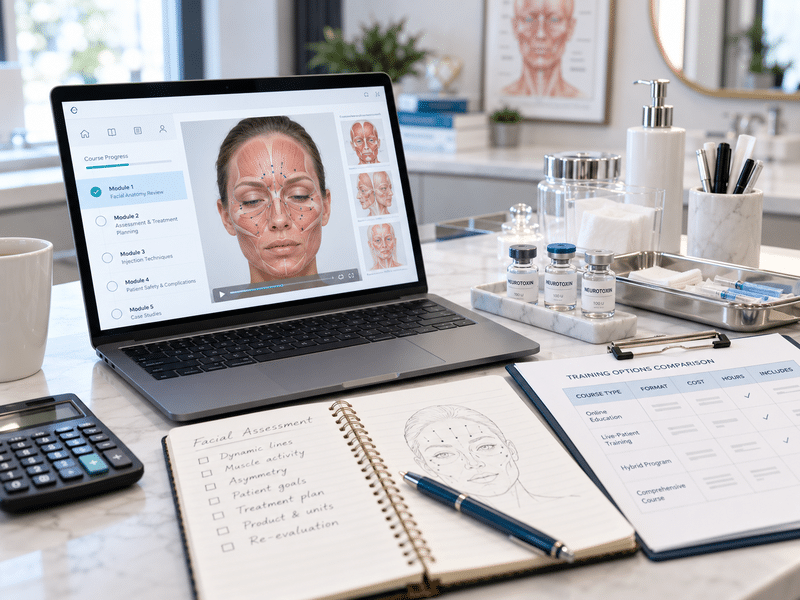
A $1,797 course plus about $850 in travel and $350 in launch costs brings the total investment to roughly $3,000.
Botox Training ROI: When Does the Course Pay for Itself?
Calculate the break-even point by dividing the initial investment by the amount left from each completed visit after product and supply costs [7].
| Illustrative Example | Amount |
| Total investment | $3,000 |
| Botox treatment fee | $450 |
| Product and supplies | $200 |
| Contribution per visit | $250 |
| Break-even point | 12 completed visits |
At two completed Botox treatments a week, 12 visits take six weeks. This is not an income promise. Patient volume, overhead, and cancellations change ROI.
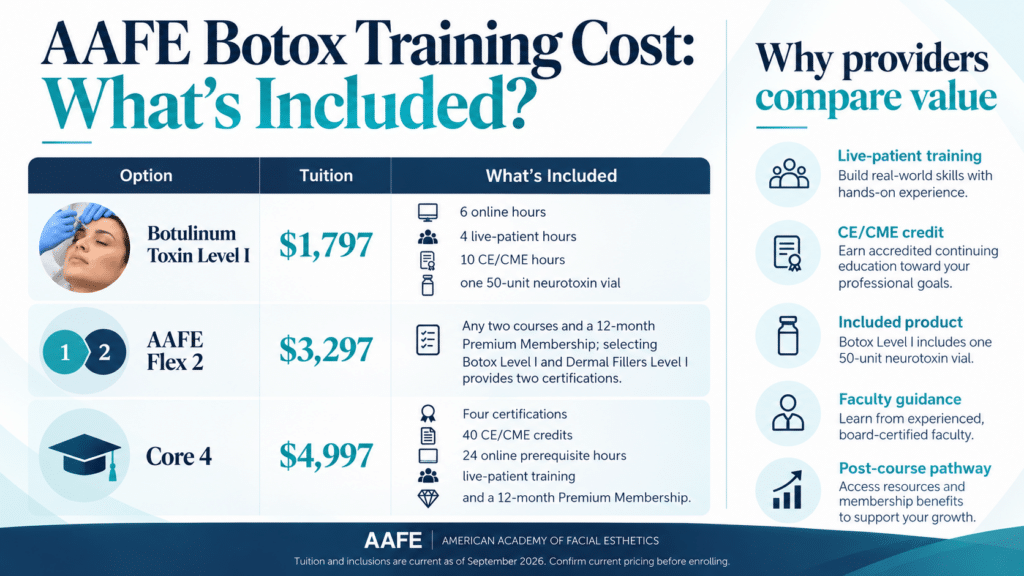
AAFE Botox Training Cost: What’s Included?
| Option | Tuition | What is included |
| Botulinum Toxin Level I | $1,797 | 6 online hours, 4 live-patient hours, 10 CE/CME hours, and one neurotoxin vial |
| AAFE Flex 2 | $3,297 | Any two courses and a 12-month Premium Membership; selecting Botox Level I and Dermal Fillers Level I provides two certifications |
| Core 4 | $4,997 | Four certifications, 40 CE/CME credits, 24 online prerequisite hours, live-patient training, and a 12-month Premium Membership |
Tuition and course inclusions are current as of September 2026. Confirm current pricing before enrolling.
Level II and Level III add advanced injection techniques, cadaver anatomy, dermal filler procedures, and complication management.
Is Botox Training Worth the Cost?
Botox training is worth the cost when the course fits your license, state scope of practice, and clinical setting. For clinicians entering aesthetic medicine, it is an investment in safer toxin injection, better planning, and repeat cash-pay services. Online-only education is most valuable as preparation for, or a supplement to, supervised live-patient training.
How to Choose the Right Botox Training Course in 2026
Choose a course that prepares you to assess and treat real patients. Online modules build the clinical foundation, while supervised live-patient sessions build injection technique and clinical judgment.
Before enrolling, confirm the exact live-patient hours, class size, CE/CME credit, included product, model requirements, complication training, and support available after class. The program should also fit your license, state scope of practice, and long-term clinical goals.
Since 2007, AAFE has trained more than 18,000 dental and medical professionals through hands-on, live-patient instruction led by practicing clinicians.
AAFE’s Level I course includes six hours of online education, four hours of supervised live-patient training, 10 CE/CME hours, and one 50-unit neurotoxin vial. Small-group faculty guidance connects facial anatomy, treatment planning, injection technique, consent, documentation, and complication prevention.
Providers can then continue into Level II and Level III instead of searching for a new training pathway as their skills grow.
Find a Botox Training Course Near You
Frequently Asked Questions
More Information
- BOTOX Cosmetic Prescribing Information
Official indications, warnings, dosing information, and administration requirements for onabotulinumtoxinA. - Preventing Unsafe Injection Practices
Federal infection-control guidance for medication preparation, syringe use, and safe injections. - ADA Continuing Education Recognition Program
Official standards and recognition information for dental continuing education providers. - Accreditation in Continuing Medical Education
Explains the U.S. accreditation system and quality standards for medical education. - Nursing Scope of Practice Decision-Making Framework
A board-developed framework for evaluating whether an activity falls within nursing scope. - State Scope of Practice Resources
Medical-board resources on state laws, professional roles, and scope questions. - Calculate Your Break-Even Point
The federal formula used to estimate units or visits needed to cover costs. - IRS Topic No. 513: Work-Related Education Expenses
Federal rules explaining when work-related education may qualify as a business deduction. - ADA Comprehensive Policy Statement on Dental Licensure
ADA policy recognizing state dental boards as the authorities that define and enforce dental scope and licensure requirements.